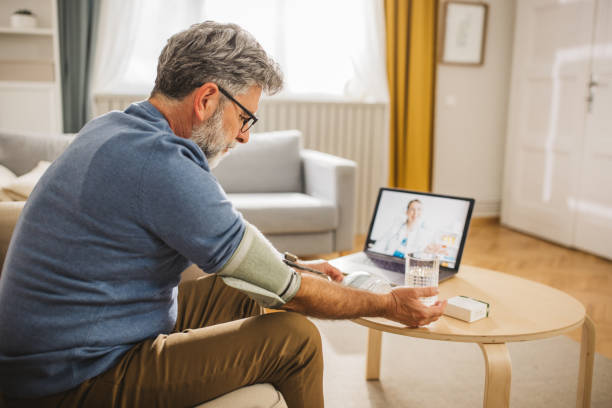
Remote patient monitoring in healthcare is reshaping how clinicians manage chronic conditions, deliver care at home, and reduce hospital readmissions. The global RPM services market is projected to reach $22.5 billion by the end of 2026, reflecting a structural shift toward health-at-home ecosystems. Leveraging sensors, wearables, and real-time data analytics, RPM empowers clinicians to monitor patients outside traditional settings for timely intervention and more efficient resource use.
This article explores the 2026 landscape of remote patient monitoring (RPM) in healthcare, highlighting how advanced technologies like AI and automated sensors are improving clinical outcomes, reducing hospitalizations, and requiring healthcare providers to stay informed on evolving technical and regulatory standards.
Why is Remote Patient Monitoring in Healthcare Important?
Staying on top of studies and research in remote patient monitoring is crucial for several reasons. Firstly, RPM is a rapidly evolving field. New technologies and applications are constantly emerging, and healthcare providers must stay current to provide the best possible care for their patients.
Secondly, remote patient monitoring in healthcare can be a complex field. It requires a deep understanding of technology and how it relates to healthcare. Healthcare providers must be familiar with various remote patient monitoring technologies to use RPM effectively. These technologies include FDA-cleared remote patient monitoring medical devices, wearables, sensors, data analytics, and machine learning. Health organizations and providers must also thoroughly understand clinical guidelines and best practices for patient care.
Thirdly, remote patient monitoring changes how patient care is delivered. By monitoring patients remotely, RPM can improve patient outcomes, reduce hospital readmissions, and lower healthcare costs. However, realizing these benefits requires a deep understanding of the technology and its application in clinical settings. Remaining aware of the top of studies and research in remote patient monitoring requires a commitment to ongoing learning and professional development. Healthcare providers must proactively seek new research and studies, attend conferences and workshops, and collaborate with other healthcare professionals to share knowledge and best practices.
Data on Remote Patient Monitoring in Healthcare
Recent data indicate that structured RPM programs for high-risk patients (such as those with Congestive Heart Failure) can slash hospitalizations by 67% and cut readmissions by as much as 52% compared to standard care. Clinical studies published in JMIR Cardio demonstrate that regular engagement with RPM tools leads to a systolic blood pressure (SBP) reduction of nearly 10 mm Hg in general hypertension patients, with even greater gains (up to 16 mm Hg) for those managing multiple chronic conditions.
Emerging Technical Standards
In 2026, the focus of remote patient monitoring in healthcare has shifted from simple data collection to Actionable Intelligence. Healthcare organizations are now prioritizing three key technological pillars:
- Predictive Analytics: Modern RPM platforms use machine learning to identify predictive signatures—subtle physiological shifts that signal clinical deterioration days before a patient feels symptoms.
- Electronic Health Records: Interoperability mandates are finally bridging the gap between RPM vendors and Electronic Health Records (EHR). The goal is a longitudinal, auditable source of truth that allows clinicians to see biometric trends directly within their existing workflows.
- Passive, Low-Friction Monitoring: To combat patient fatigue, the industry is moving toward sensors that require zero manual entry, such as smart scales and cellular-enabled wearables that transmit data automatically without the need for a smartphone or Wi-Fi.
Understanding Remote Patient Monitoring in Healthcare
While the benefits are clear, healthcare providers must navigate several “2026-specific” hurdles:
- Alert Fatigue: To prevent clinical burnout, organizations are adopting Risk-Stratification Tools that prioritize alerts based on the severity of the biometric breach, rather than a first-in, first-out model.
- Digital Health Equity: Providers are increasingly using cellular medical devices to reach patients in rural areas or lower-income households who may lack reliable high-speed internet.
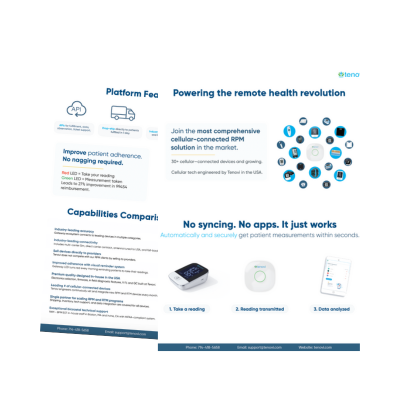
Tenovi works exclusively with companies that would like to offer remote patient monitoring solutions to healthcare providers, including RPM service and software companies, chronic care management companies, and telehealth companies. Their no sync, no app RPM hardware and software services can help partners set up remote blood glucose monitoring for their patients. Book your free demo today.