Blood pressure measurement devices have shaped cardiovascular medicine for more than a century. Every tool from the mercury column to the cellular-connected home monitor traces back to a single problem: how to read the pressure inside an artery without opening it. This guide covers the history of blood pressure measurement devices, the main types clinicians rely on today, and the best practices that separate an accurate reading from a misleading one.
High blood pressure is the most common and most modifiable risk factor for heart disease, affecting close to half of U.S. adults. That scale is why the device on the arm, and the technique behind it, still matters so much.
A Short History of Blood Pressure Measurement
The story starts with a horse. In the 1730s, English clergyman Stephen Hales measured arterial pressure directly by inserting a tube into an animal’s artery and watching the blood rise in a glass column. It worked, but it was invasive and impossible to use on patients. For nearly 150 years, measuring blood pressure meant entering the vessel itself.
The first practical non-invasive device arrived in 1881, when Austrian physician Samuel von Basch built an early sphygmomanometer that used a water-filled bulb and a mercury column. It was a start, but it was awkward to use and hard to standardize.
The design that still defines the field came in 1896. Italian physician Scipione Riva-Rocci introduced an inflatable arm cuff connected to a mercury manometer. His cuff wrapped around the upper arm and applied even pressure, and it let a clinician find systolic pressure by feeling for the return of the radial pulse. The arm-cuff format we recognize today comes directly from his work.
The final piece came in 1905. Russian surgeon Nikolai Korotkoff placed a stethoscope over the artery below the cuff and listened. He identified distinct sounds that appear and disappear as cuff pressure falls. The onset marks systolic pressure, and the disappearance marks diastolic pressure. These Korotkoff sounds made it possible to record both numbers with a single device, and the auscultatory method remains a clinical reference standard.
Since Riva-Rocci’s cuff, the basic idea has changed little. What has changed is how the pressure gets detected and recorded, which is where modern device types come in.
How Blood Pressure Measurement Devices Actually Work
Nearly every non-invasive device works by inflating a cuff to briefly stop blood flow, then reading what happens as the cuff deflates. The difference between device types comes down to how they detect the pressure points. Two methods dominate.
The auscultatory method listens for Korotkoff sounds, either through a clinician’s stethoscope or a sensor inside the device. It is the method behind the classic manual reading and is still used to validate other devices.
The oscillometric method measures the small pressure oscillations that pulse through the cuff as blood pushes past it during deflation. An algorithm then estimates systolic and diastolic values from the pattern of those oscillations. Most automated and home devices use this method because it does not require a trained ear or a stethoscope.
Understanding the method matters because it explains why cuff fit, arm position, and device validation all affect the final number.
The Main Types of Blood Pressure Measurement Devices
There are more device categories than most people realize. Below are the main types in clinical and home use today, with what each one is best suited for.
1. Manual Sphygmomanometers (Mercury and Aneroid)
These are the traditional cuff-and-gauge devices. A clinician inflates the cuff by hand and uses a stethoscope to listen for Korotkoff sounds. Mercury units were long considered the gold standard for accuracy, but environmental rules have phased mercury out of most settings. Aneroid units use a mechanical dial instead of mercury and are lighter and safer, though they need periodic recalibration to stay accurate.
2. Automated Digital Monitors (Oscillometric)
These are the upper-arm devices most people picture. The user or clinician wraps the cuff, presses a button, and the device inflates, deflates, and displays a reading. They rely on the oscillometric method, so no stethoscope is needed. Accuracy depends heavily on using a validated device and the correct cuff size. Upper-arm models are preferred over wrist models for routine measurement.
3. Wrist and Finger Monitors
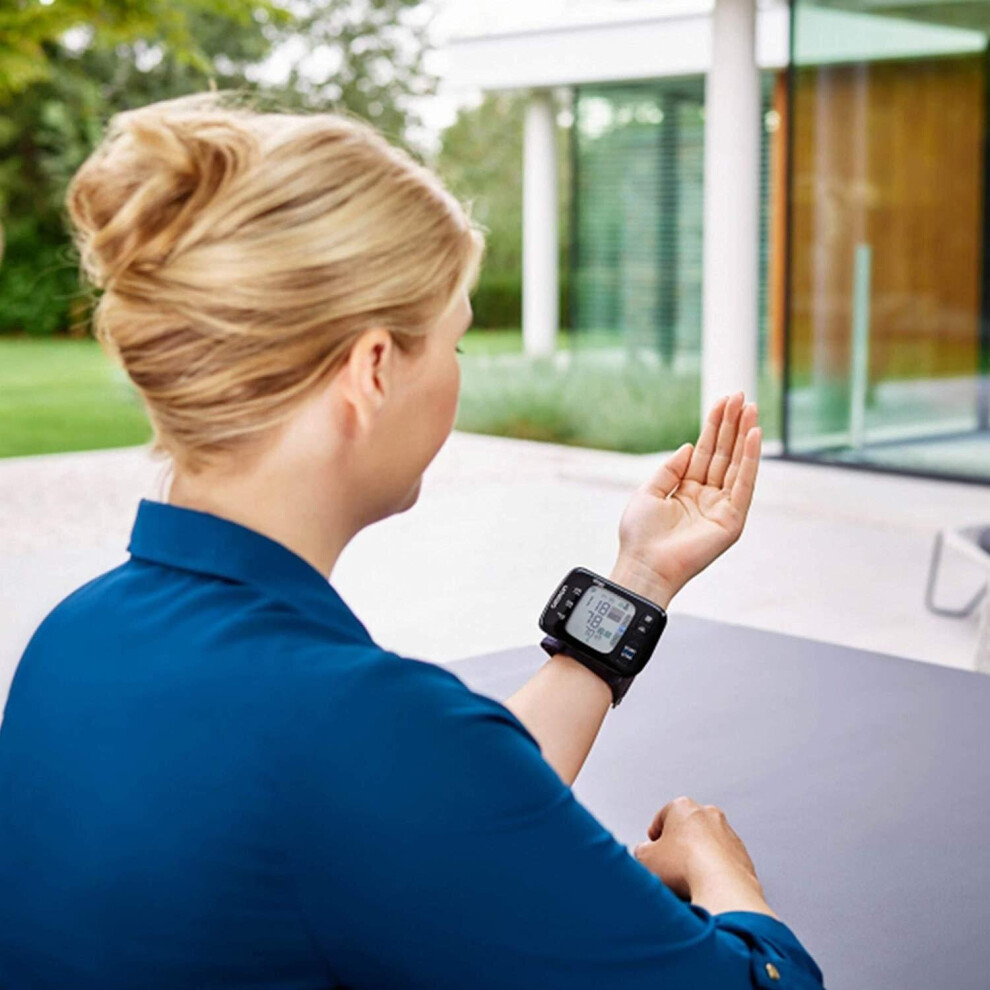
Wrist monitors are compact and popular for home use, but the wrist arteries are smaller and more sensitive to position, so readings can drift if the wrist is not held at heart level. Finger devices are even less reliable for clinical decisions. These can support general awareness but are not first-line tools for diagnosing or managing hypertension.
4. Ambulatory Blood Pressure Monitoring (ABPM) Devices
An ABPM device is a fully automated monitor worn for 24 hours. It takes readings at set intervals through the day and night, capturing how pressure changes during sleep, activity, and stress. Because it samples so widely, ABPM is a strong tool for confirming a diagnosis and for spotting patterns a single office reading would miss.
5. Home and Self-Measured Blood Pressure (SMBP) Monitors
These are validated automated cuffs designed for patients to use at home on a regular schedule. Home monitoring gives clinicians a fuller picture than occasional office visits and helps identify white coat and masked hypertension. The 2025 hypertension guideline elevates out-of-office measurement to a central role in diagnosis, which places home monitors at the heart of modern care.
6. Cellular-Connected Remote Patient Monitoring Devices
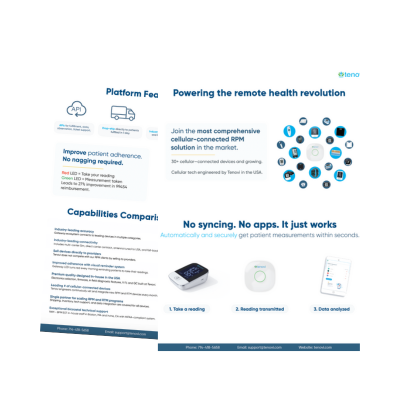
The newest category takes the validated home cuff and adds automatic data transmission. A cellular-connected blood pressure monitor sends each reading to the care team without the patient needing Wi-Fi, an app, or a smartphone. This connects home measurement directly to clinical workflows and supports remote patient monitoring (RPM) programs. Tenovi builds its platform on this model, so a reading taken at the kitchen table reaches the provider automatically.
7. Cuffless and Wearable Devices
Smartwatches and wristbands that estimate blood pressure without a cuff are an active area of development. They are convenient, but the 2025 hypertension guideline advises avoiding reliance on cuffless devices for accurate measurement until they prove greater precision and reliability. For now, they are best treated as wellness tools rather than diagnostic instruments.
Why Device Choice and Technique Change the Number
A blood pressure reading is only as good as the device and the method behind it. The 2025 AHA/ACC hypertension guideline reaffirms a threshold of 130/80 mm Hg for diagnosis and treatment, and it names out-of-office measurement through home or ambulatory monitoring as the diagnostic gold standard. When a small measurement error can move a patient across a treatment threshold, accuracy is not a technical detail. It is the difference between correct and incorrect care.
This is also why device validation matters. A validated device has been tested against a reference standard and shown to produce reliable results. Using a validated monitor, the right cuff size, and proper technique keeps the reading meaningful.
Best Practices for Accurate Blood Pressure Measurement
The device matters, but so does how it is used. These practices reflect current clinical guidance and apply whether a reading is taken in the office or at home.
Prepare the patient. Have them sit quietly for five minutes before measuring, with back supported, feet flat on the floor, and legs uncrossed. Avoid caffeine, exercise, and smoking for 30 minutes beforehand, and make sure the bladder is empty.
Position the arm correctly. Rest the arm on a surface so the cuff sits at heart level. An arm that hangs or a cuff below heart level can push the reading up.
Use the right cuff size. A cuff that is too small reads high, and one that is too large reads low. Cuff fit is one of the most common sources of error.
Place the cuff on a bare arm. Measuring over clothing distorts the reading.
Take more than one reading. Guidelines recommend averaging multiple readings rather than acting on a single measurement, since blood pressure varies from moment to moment.
Confirm out of office. A high office reading should be confirmed with home or ambulatory measurement before a diagnosis, which is exactly where connected home devices earn their place.
The Role of Connected Devices in Modern Blood Pressure Care
The shift toward out-of-office measurement is reshaping which devices carry the most clinical weight. When diagnosis and management depend on readings taken outside the clinic, the value of a device is tied to how reliably it captures those readings and gets them to the care team.
Cellular-connected monitors close that gap. Instead of asking patients to log numbers by hand or sync an app, the device transmits each reading automatically. That supports remote patient monitoring for heart conditions and gives clinicians a steady stream of home data between visits. It also keeps the patient at the center: the goal is earlier detection and steadier control, which reduces the strokes, heart attacks, and hospital stays that uncontrolled hypertension drives.
Frequently Asked Questions
1) What is the most accurate type of blood pressure measurement device?
A validated upper-arm cuff used with correct technique is the most reliable option for most people. In clinical settings, the auscultatory method with a manual sphygmomanometer serves as a reference standard, and ambulatory monitoring is considered a gold standard for confirming a diagnosis.
2) Are wrist blood pressure monitors accurate?
Wrist monitors can work, but they are more sensitive to arm and wrist position than upper-arm devices. If the wrist is not held at heart level, the reading can be off. Upper-arm cuffs are preferred for diagnosing and managing high blood pressure.
3) Can a smartwatch measure blood pressure reliably?
Not yet for clinical use. The 2025 hypertension guideline advises against relying on cuffless devices, including smartwatches, for accurate measurement until they demonstrate greater precision. They are better viewed as wellness tools.
4) Why does cuff size affect a blood pressure reading?
A cuff that is too small squeezes the arm harder than it should and reads high, while a cuff that is too large reads low. Matching cuff size to arm circumference is one of the simplest ways to improve accuracy.
5) What is the difference between oscillometric and auscultatory devices?
Auscultatory devices detect Korotkoff sounds to find systolic and diastolic pressure, usually with a stethoscope. Oscillometric devices measure pressure oscillations in the cuff and use an algorithm to estimate the values. Most automated and home monitors are oscillometric.
6) How do connected blood pressure devices help with remote care?
Cellular-connected devices transmit each reading to the care team automatically, without Wi-Fi or a smartphone. This gives clinicians regular home data between visits, supports remote patient monitoring programs, and helps confirm diagnoses through out-of-office measurement.
Understanding Blood Pressure Measurement Devices
Blood pressure measurement devices have moved from an invasive tube in an artery to a validated cuff that transmits readings from a patient’s home to their provider. The history runs from Hales and von Basch through Riva-Rocci’s cuff and Korotkoff’s sounds to today’s oscillometric, ambulatory, and cellular-connected monitors. Across all of them, the same rules hold: choose a validated device, use the right cuff and technique, and confirm important readings outside the office. The 2025 guideline’s move toward out-of-office measurement makes reliable home and connected devices more central to care than ever.
Tenovi provides cellular-connected blood pressure monitors and other remote patient monitoring devices that transmit readings automatically to care teams, with no Wi-Fi or smartphone required. If your organization is building or scaling a remote monitoring program, contact us for a free demo and consultation to see how connected measurement fits your workflow.