Managing your blood pressure measurements requires a bit of precision. Whether monitoring a chronic condition or keeping a proactive eye on vitals, getting the technique right can provide helpful data. This comprehensive blood pressure measurement guide provides steps from perfect arm positioning to best practices to ensure home readings are as reliable as they are easy to obtain. We hope this article takes the mystery out of proper technique and puts the power of your heart health back in your own hands.
Blood Pressure Measurement
Blood pressure is a dynamic physiological variable that the cardiovascular system constantly adjusts to ensure adequate perfusion and delivery of oxygenated blood to meet the body’s metabolic demands. It fluctuates from beat to beat and throughout the day based on multiple factors. A fluctuation of up to 20 mmHg is expected and considered completely normal. These changes are influenced by various factors, including the time of day, consumption of food and drink (especially caffeine), stress levels, body position, and whether someone is talking.
Thus, a single blood pressure measurement is just a snapshot indicating the pressure at that specific moment. To accurately assess cardiovascular risk, it is much more valuable to look at the trend of blood pressure over months, which is achieved by consistently taking daily measurements.
Assessing Device Accuracy
Automated blood pressure monitors are regulated as FDA Class II medical devices, requiring strict oversight to ensure clinical reliability. To receive FDA clearance, a device must be rigorously tested and meet the AAMI/ISO 81060-2:2018 universal standard for clinical validation. This standard mandates that the device demonstrate a mean error of less than 5 mmHg and a standard deviation in error of less than 8 mmHg compared to a manual reference. Adhering to these stringent benchmarks ensures that the blood pressure data used for remote monitoring and clinical diagnosis is both accurate and reproducible.
Blood Pressure Measurement Best Practices
- Plan ahead. Don’t smoke, eat, or drink caffeinated beverages or exercise within 30 minutes before taking your blood pressure.
- Empty your bladder before your reading.
- Take your blood pressure at the same time every day.
- Take at least two readings, 1 or 2 minutes apart.
- Sit in a comfortable chair with your back supported for at least 5 minutes before your reading.
- Put both feet flat on the ground and keep your legs uncrossed.
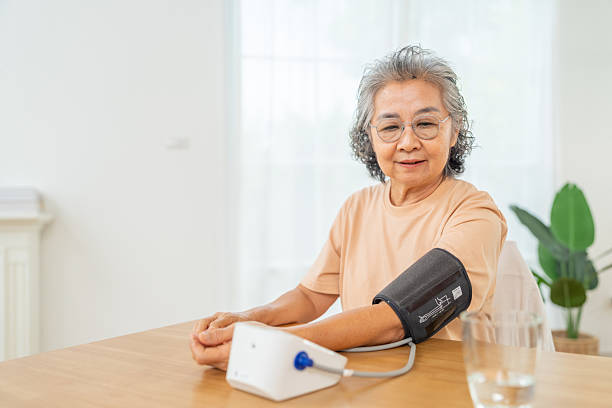
- Rest your left arm on a table at chest height.
- Place the cuff onto your left arm against your bare skin, not over clothing.
- Position the cuff so the bottom edge is about an inch above your elbow
- Tighten the cuff so it’s snug, but ensure you can still fit one finger between the cuff and your arm. If it’s too loose or too tight, your results will be inaccurate.
- Do not talk while your blood pressure is being measured.
The Importance of Cuff Size
The most common source of error in blood pressure measurement is the use of an inappropriate cuff size. To prevent significant clinical inaccuracies, specifically overestimation from a cuff that is too small, follow these steps:
Using a flexible measuring tape (or a string and ruler), measure the circumference of the patient’s upper arm. The measurement should be taken over the lower bicep, at the midpoint between the shoulder and the elbow.
Once the arm circumference is obtained, select a blood pressure cuff where the patient’s arm circumference falls within the middle range of the cuff’s indicated circumference. Avoid selecting a cuff where the measurement is at either the very minimum or maximum edge of the cuff’s specified range, as this can compromise measurement accuracy.
Technical Reference: Impact of Physiological and Procedural Factors
For a detailed breakdown of how specific variables influence readings, refer to the data below adapted from “Blood pressure and its variability: classic and novel measurement techniques” (Schutte et al., Nature Reviews Cardiology, 2022). This research emphasizes that even minor procedural deviations can lead to significant clinical misinterpretation.
| Measurement methodology | Factors | Change in BP level (mmHg) |
| Physiological variables | Recent meal ingestion | –6 |
| Recent alcohol intake | –24 to +24 | |
| Recent caffeine intake | +3 to +14 | |
| Bladder extension | +4 to +33 | |
| Cold exposure | +5 to +32 | |
| Posture | Standing | –3 to +5 |
| Lying | –11 to +10 | |
| Setting | Effect of clinical office setting | –13 to +27 |
| Presence of observer | +12 to +22 | |
| Procedural variables | Insufficient rest period | +4 to +12 |
| Reliance on single measure | +3 to +10 | |
| Talking during procedure | +4 to +19 | |
| Arm lower than heart level | +4 to +23 | |
| Unsupported arm | +5 | |
| Legs crossed at knees | +3 to +15 |
References
- Schutte AE, Stergiou GS, McManus RJ, et al. Blood pressure and its variability: classic and novel measurement techniques. Nat Rev Cardiol. 2022;19(6):377-391. doi:10.1038/s41569-022-00675-y
- Kallioinen N, Hill A, Horswill MS, Ward HE, Watson MO. Sources of inaccuracy in the measurement of adult patients’ resting blood pressure in clinical settings: a systematic review. J Hypertens. 2017;35(3):421-441. doi:10.1097/HJH.0000000000001197
- Musini VM, Wright JM. Factors affecting blood pressure variability: lessons learned from two systematic reviews of randomized controlled trials. Cochrane Database Syst Rev. 2009;(2):ED000003. doi:10.1002/14651858.ED000003
- Pickering TG, Hall JE, Appel LJ, et al. Recommendations for blood pressure measurement in humans and experimental animals: Part 1: blood pressure measurement in humans: a statement for professionals from the Subcommittee of Professional and Public Education of the American Heart Association Council on High Blood Pressure Research. Circulation. 2005;111(5):697-716. doi:10.1161/01.CIR.0000154900.76284.F6
- American Heart Association. Monitoring your blood pressure at home. Accessed [Current Date]. https://www.heart.org/en/health-topics/high-blood-pressure/understanding-blood-pressure-readings/monitoring-your-blood-pressure-at-home