Remote patient monitoring for diabetes gives care teams a daily view of blood glucose instead of a single reading taken every few months. Patients test at home with a connected glucometer, and remote blood glucose monitoring sends each result to the care team automatically. Clinicians see the trend, spot patterns, and adjust treatment between appointments.
The question worth asking is whether the approach changes outcomes. The research says it does, particularly for glycemic control and hospital readmissions. This guide covers what the evidence shows, how remote blood glucose monitoring works in practice, which devices programs use, and how diabetes RPM is reimbursed under the 2026 code set.
What Is Remote Patient Monitoring for Diabetes?
Remote patient monitoring for diabetes is a clinical program built around a connected blood glucose meter in the patient’s home. The meter captures a reading, transmits it without patient effort, and the care team reviews the data on a schedule.
Three elements make it work:
- A connected device. An FDA-cleared glucometer that transmits automatically, rather than a standalone meter the patient logs by hand.
- Threshold alerts. Clinicians set high and low values that trigger a flag, so a dangerous reading surfaces the same day.
- Clinical response. Someone reviews the data and acts on it, whether that is a medication change, a nutrition referral, or a phone call.
Remote patient monitoring does not replace office visits. Most people with diabetes see their care team every three to six months, according to Cleveland Clinic. RPM fills the long stretch in between with data.
The State of Diabetes in the United States
The scale of the problem explains why payers and providers keep investing in diabetes management.
An estimated 40.1 million people in the United States have diagnosed or undiagnosed diabetes, or 12.0% of the population, according to the CDC National Diabetes Statistics Report. Of those, 29.1 million have been diagnosed. Roughly 11.0 million adults have diabetes and do not know it.
Prevalence climbs sharply with age. Among adults 65 and older, 28.8% have diabetes and 52.1% have prediabetes.
The cost picture is equally steep. The American Diabetes Association put the total cost of diagnosed diabetes at $412.9 billion in 2022, including $306.6 billion in direct medical costs and $106.3 billion in indirect costs. Care for people with diagnosed diabetes accounts for one in four health care dollars spent in the country.
Per person, the average annual medical expenditure is $19,736, of which about $12,022 is attributable to diabetes itself. Hospital inpatient care and prescription medications for complications are the two largest drivers.
Those numbers matter clinically, not just financially. Poorly controlled diabetes leads to kidney failure, heart attack, stroke, and vision loss. Every one of those outcomes is both expensive and preventable with earlier intervention, which is the case for closer monitoring.
What the Research Shows About Diabetes RPM
The evidence base for remote patient monitoring in diabetes has grown steadily.
A study published in the World Journal of Diabetes found that telemedicine improved HbA1c and glycemic control in patients with type 2 diabetes. The interventions also improved quality-of-life scores.
A review in the Journal of Diabetes Science and Technology found that telehealth interventions incorporating more elements of structured self-monitoring of blood glucose had the largest effect on A1C levels. Structure matters more than volume of data. A program with clear testing schedules and defined clinical response outperforms one that simply collects readings.
Remote monitoring also reduces readmissions. A prospective cohort study in JMIR Formative Research found significantly fewer hospital readmissions among high-risk patients after discharge when remote monitoring was in place.
Engagement is part of the mechanism. Research on patient activation shows that people who track their own measurements understand how food, activity, medication, and stress move their numbers. That understanding tends to sustain behavior change better than instruction alone.
How Remote Blood Glucose Monitoring Works
The workflow is short by design. Complexity is where adherence breaks down.
- The patient receives a connected glucometer kit, pre-configured.
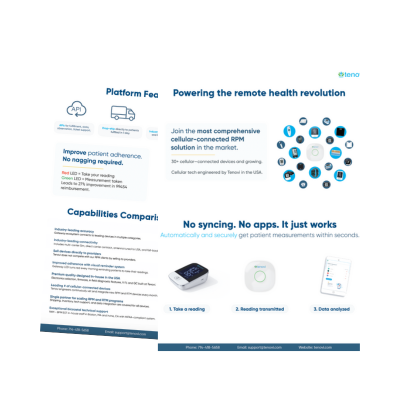
- They plug the Tenovi Cellular Gateway into a power outlet.
- They test at the times their care team specified.
- Each reading transmits automatically over a cellular network.
- The reading lands in the care team’s dashboard within moments.
- Values outside the set thresholds trigger an alert.
There is no app to download, no Bluetooth pairing, and no Wi-Fi password to enter. That matters for an older population and for patients in areas with unreliable home internet.
How to Use Tenovi’s Cellular-Connected Blood Glucose Meter
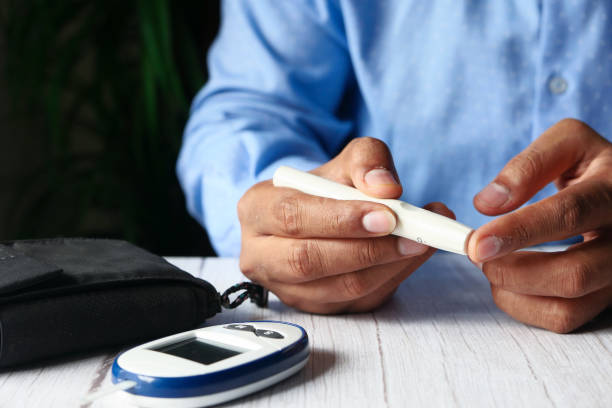
The Tenovi Blood Glucose Monitor kit includes a cellular-enabled meter, a lancing device, lancets, and test strips. Patients should wash and dry their hands first, then follow these steps.
- Insert a test strip into the meter.
- Wipe the side of a fingertip with an alcohol pad and let it dry.
- Prick the side of the finger with the lancet.
- Apply a drop of blood to the test strip.
- Wait for the reading to appear and transmit.
Testing the side of the fingertip rather than the pad reduces discomfort, which improves the odds a patient keeps testing.
Blood Glucose Targets and What Care Teams Watch For
The American Diabetes Association recommends that most nonpregnant adults with diabetes aim for a preprandial glucose of 80 to 130 mg/dL and a peak postprandial glucose below 180 mg/dL, measured one to two hours after the start of a meal. An A1C below 7% is the general target, adjusted for age, comorbidities, and hypoglycemia risk.
Individual targets vary. An older adult with cardiovascular disease and a history of hypoglycemia may be given a less strict goal on purpose.
Beyond individual readings, care teams watch for patterns:
- Consistent morning highs, which may point to the dawn phenomenon or an evening medication timing issue
- Post-meal spikes, which often respond to nutrition counseling
- Downward drift toward hypoglycemia, which can signal a medication dose that needs reducing
- Wide day-to-day variability, which can indicate inconsistent dosing or missed meals
- Missing readings, which are themselves clinical information
That last item is often the earliest warning. A patient who stops testing frequently stops taking medication too.
Keeping Patients Supplied and Adherent
A diabetes RPM program fails quietly when a patient runs out of test strips. Unlike a blood pressure cuff, a glucometer consumes supplies with every reading.
Tenovi tracks patient usage of lancets and test strips and runs a replenishment program that ships refills before a patient runs out. Removing that gap is one of the more direct ways to improve patient adherence, because it eliminates a failure that has nothing to do with patient motivation.
Other adherence levers worth building in:
- Set a testing schedule the patient can actually keep, then adjust it rather than abandoning it.
- Tell patients someone is reviewing their numbers. Awareness of review improves consistency.
- Follow up on a missed stretch within a few days, not at the end of the month.
- Pair glucose data with remote weight monitoring where weight management is part of the plan.
Billing Diabetes RPM Under Medicare
Remote patient monitoring for diabetes is preventive work. Steady glucose control avoids the amputations, dialysis, and cardiac events that account for most of the cost of the disease. Reimbursement exists so that ongoing monitoring is sustainable for the practice providing it.
Medicare pays for RPM through a defined set of CPT codes, and the CY 2026 Physician Fee Schedule added two.
| CPT code | Covers | Threshold |
|---|---|---|
| 99453 | Device setup and patient education | One time |
| 99454 | Device supply and transmission | 16 or more days in 30 |
| 99445 | Device supply and transmission | 2 to 15 days in 30 |
| 99457 | Treatment management, first 20 minutes | 20 minutes plus one interactive contact |
| 99458 | Each additional 20 minutes | Per 20 minutes |
| 99470 | Treatment management, first 10 minutes | 10 to 20 minutes plus one interactive contact |
Confirm current payment amounts against the Medicare Physician Fee Schedule, since rates change annually and vary by locality.
RPM Glucometers and Continuous Glucose Monitors
The two technologies answer different questions and often work together.
A connected glucometer captures a point-in-time reading when the patient tests. It is inexpensive, familiar to most patients, and well suited to type 2 diabetes managed with oral medication or basal insulin.
A continuous glucose monitor uses a subcutaneous sensor to record glucose every few minutes, producing hundreds of readings a day and metrics such as time in range. It carries a higher cost and is typically reserved for insulin-intensive management.
For a large type 2 population, connected glucometers cover most patients well, with CGM reserved for those whose regimen calls for it.
Frequently Asked Questions
1) What is remote patient monitoring for diabetes?
Remote patient monitoring for diabetes is a program where a patient tests blood glucose at home with a connected meter that transmits each reading to the care team automatically. Clinicians review the data, watch for values outside set thresholds, and adjust treatment between visits.
2) How often do patients need to test for a diabetes RPM program?
Testing frequency is a clinical decision. For billing, CPT 99454 requires 16 or more days of readings in a 30-day period, and CPT 99445 covers 2 to 15 days as of January 1, 2026.
3) Does remote blood glucose monitoring lower A1C?
Published research links telehealth-supported glucose monitoring to improved HbA1c and glycemic control in type 2 diabetes. Programs with structured testing schedules and a defined clinical response show the largest effects.
4) Do patients need Wi-Fi or a smartphone for remote glucose monitoring?
Not with a cellular system. Tenovi glucometers transmit through the Tenovi Cellular Gateway, which the patient plugs into a power outlet. There is no app, no account setup, and no Wi-Fi required.
5) Who pays for remote patient monitoring for diabetes?
Medicare Part B covers RPM through CPT codes 99453, 99454, 99457, and 99458, plus 99445 and 99470 as of 2026. Many state Medicaid programs and commercial payers cover it as well, with terms that vary.
6) What blood glucose range should patients aim for?
The American Diabetes Association recommends 80 to 130 mg/dL before meals and below 180 mg/dL one to two hours after the start of a meal for most nonpregnant adults. Individual targets are set by the treating clinician.
7) How is an RPM glucometer different from a CGM?
A connected glucometer records a reading when the patient tests. A continuous glucose monitor uses a sensor to record glucose automatically every few minutes. Glucometers suit most type 2 patients; CGM is typically used for insulin-intensive regimens.
8) How do patients get replacement test strips and lancets?
Tenovi tracks consumable usage and ships replacements automatically before a patient runs out, so testing is not interrupted by a supply gap.
Understanding Remote Patient Monitoring for Diabetes
Remote patient monitoring for diabetes closes the gap between appointments. With 40.1 million Americans living with the disease and one in four health care dollars going to their care, the interval between quarterly visits is where control is most often lost. Daily readings transmitted automatically give clinicians something to act on well before the next A1C.
The research supports the approach for glycemic control and for reducing readmissions, with the strongest results coming from programs that pair structured testing schedules with a defined clinical response. The operational requirements are consistent: an FDA-cleared connected meter, transmission that does not depend on the patient’s technical skill, reliable resupply of test strips and lancets, and a workflow that surfaces exceptions rather than raw data. The 2026 code set makes shorter monitoring periods billable, which helps programs support patients during the weeks when a testing habit is still forming.
Tenovi provides FDA-cleared connected glucometers, automatic cellular transmission through the Tenovi Gateway, supply replenishment, patient technical support, and a single API into your software platform. More than 100 RPM companies work with Tenovi, with over 100,000 devices deployed. Book a free demo and consultation to see how a diabetes monitoring program would run on Tenovi.