The remote patient monitoring market continues on a rapid growth path, driven by rising demand for care beyond traditional clinical settings. An aging population, a growing burden of chronic disease, and the push toward value-based care are all fueling adoption. This article summarizes where the RPM market stands in 2026, including size and growth forecasts, key drivers, regional trends, and the challenges that could shape the years ahead.
Remote Patient Monitoring Market Size in 2026
Market analysts agree the remote patient monitoring market is large and growing quickly, though their exact figures differ based on scope and methodology. A few current estimates:
- MarketsandMarkets valued the market at $31.81 billion in 2025 and projects $36.29 billion in 2026, reaching $66.23 billion by 2031 at a 12.8% CAGR.
- Grand View Research estimated the RPM system market at $26.0 billion in 2025, growing to $110.7 billion by 2033 at a 20.0% CAGR.
- The Business Research Company reported $55.24 billion in 2025, rising to $111.93 billion by 2030.
The spread reflects different definitions of what counts as RPM, from devices only to full software and services. The consistent signal across all of them is double-digit annual growth through the decade. For the rpm market, the direction matters more than any single number.
Growth Drivers in the RPM Market
Several forces are expanding the remote patient monitoring market. The global elderly population, projected to reach 2.1 billion by 2050, increasingly relies on RPM to manage conditions like diabetes and cardiovascular disease. Continuous monitoring helps these patients stay stable and avoid complications.
Adoption among providers has also become mainstream. A large majority of U.S. hospitals now use telehealth and remote monitoring, which helps connect patients in underserved and rural areas to specialist care. Better device accuracy and easier integration make RPM solutions more dependable and simpler to deploy, which drives broader uptake. Supportive reimbursement, including the 2026 Medicare updates that added new codes for shorter monitoring periods, further lowers the barrier to entry.
Challenges in Scaling RPM
The market shows real promise, but two obstacles stand out. First, the cost of building advanced RPM systems can be a barrier for smaller providers, which limits access. Second, concerns such as fraudulent billing and falsified patient data call for strong oversight to keep RPM ethical and trustworthy. In fact, federal watchdogs have signaled closer scrutiny of RPM billing as the category grows. Addressing these issues is essential to sustain the market’s momentum.
Opportunities and Innovations in the RPM Market
Emerging opportunities could reshape the industry:
- AI-enhanced data management: Centralized platforms that aggregate patient data and apply AI for predictive analytics and alerts are changing care delivery. Structured RPM programs for high-risk patients have shown meaningful reductions in hospitalizations and readmissions.
- Expanding applications: Continuous glucose monitors and cardiac devices remain dominant, while analytics platforms and patient engagement tools round out the ecosystem. Diabetes and cardiovascular disease continue to drive demand, alongside growth in weight management and home care.
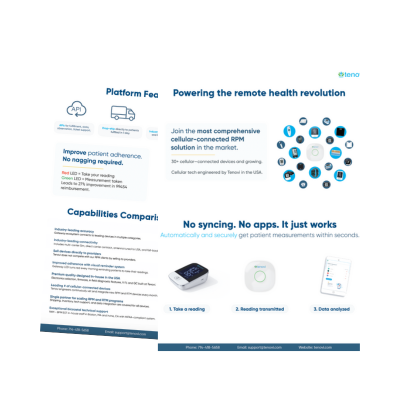
- Passive, low-friction devices: Cellular-connected tools that transmit data automatically, without an app or Wi-Fi, reduce patient burden and support adherence.
Regional Trends and Key Players
Regional dynamics shape the remote patient monitoring market:
- North America leads, supported by advanced infrastructure and early technology adoption.
- Europe grows on the strength of supportive regulation and a focus on chronic disease management.
- Asia-Pacific is emerging fast, driven by rising investment in digital health and expanding access to care.
Major players such as Medtronic, Philips, and Abbott continue to push RPM forward with AI-driven devices, virtual care platforms, and advanced wearables.
Frequently Asked Questions
1) How big is the remote patient monitoring market?
Estimates vary by scope, but most 2025–2026 analyses place the global RPM market between roughly $26 billion and $55 billion, with forecasts of double-digit annual growth through the decade.
2) What is driving RPM market growth?
Key drivers include an aging population, rising chronic disease, mainstream provider adoption, supportive Medicare reimbursement, and advances in AI and cellular-connected devices.
3) What are the biggest challenges in the RPM market?
The main challenges are the cost of building advanced systems, which can limit smaller providers, and the need for strong oversight to prevent billing fraud and protect data integrity.
Understanding the Remote Patient Monitoring Market
The remote patient monitoring market is poised for sustained growth. By addressing challenges like development cost and billing integrity, while leveraging AI, wearables, and supportive reimbursement, the industry is set to keep expanding. For providers, innovators, and investors, understanding these trends is essential. The RPM market is more than technological progress; it is a step toward more accessible, efficient, and outcome-driven healthcare.
Tenovi works exclusively with companies that offer remote patient monitoring to healthcare providers, including RPM software companies, chronic care management companies, and telehealth platforms. Our cellular-connected, no sync, no app devices help partners enter and scale in the RPM market with reliable hardware and data infrastructure. Book a free demo and consultation with Tenovi today.