
Roughly 19% of the US population, including a similar percentage of individuals with cancer, resides in rural areas. Additionally, people with cancer who live in rural areas have poorer outcomes when compared with urban residents. Telemedicine in cancer care is a solution that enhances patient access to care, offers flexibility, reduces costs, risk of exposure for those with weakened immune systems and accelerates clinical research.
This article explores how telemedicine and remote patient monitoring (RPM) are improving accessibility and reducing financial burdens. It specifically examines how they address the disparities faced by rural populations, decrease high-cost hospitalizations through early intervention, and show significant billing savings for both patients and providers.
Telemedicine in Cancer Care: Remote Patient Monitoring
Scientific research supports the use and benefits of using telemedicine in cancer care. Remote patient monitoring is a form of telemedicine that uses technology and wearable sensors to improve outcomes in cancer patients during and after treatment. RPM allows a cancer patient to take measurements with remote patient monitoring devices, which might include a thermometer, scale, or blood pressure monitor.
The measurements are automatically transmitted to the patients care team. The data collected with remote monitoring can generate timely alerts for healthcare providers to facilitate early interventions and better management of treatment-related side effects. Acute care utilization can be prevented through more outpatient approaches that manage cancer, such a remote patient monitoring.
The cost of cancer-related hospitalizations vary due to several factors. For example, the severity of a patient’s condition and whether they have insurance. A brief published in 2021 reported the most expensive hospital stays ranged from $32,900 and for patients before insurance $64,700 for patients before insurance.
The following section discusses costs savings related to remote patient monitoring in cancer care.
Cost Savings of Remote Patient Monitoring
Remote patient monitoring is indeed a powerful tool for reducing acute care utilization in oncology. Multiple illnesses can have an effect of the immune system. Integrating biometric monitoring, such as tracking vital signs for secondary conditions such as COVID-19 or febrile neutropenia can be beneficial for high-risk, immunocompromised patients.
A review of multiple studies found that RPM interventions significantly decreased hospitalizations and length of stay in 67% of cases, while also reducing emergency department visits and readmissions. Shortening the length of stay and lowering hospital visits results in lower overall coats of care.
One RPM program demonstrated a potential cost reduction of $6,994 per patient over a 90-day period compared to usual care. While initial costs on the day of diagnosis were nearly identical between both groups, the RPM model’s ability to reduce 30-day hospitalization rates led to a clear downward trend in all-cause spending. This suggests that using in-home technology for early symptom intervention effectively offsets the high costs of acute inpatient care for high-risk cancer patients.
Telemedicine in Cancer Care and Telehealth Appointments
One area of telemedicine in cancer care is telehealth, which is referred to as tele-oncology. For people living with cancer, telehealth is a way to get medical care without physically going to the provider’s office. This makes it convenient to receive care needed wherever a patient or member may be.
A study of over 412,000 appointments from 2020 to 2022 showed that telehealth cut patient cancellations by 23.1% and late arrivals by 35.6%. The greatest appointment adherence gains were seen in women, racial minorities, Medicaid patients, and younger adults.
Research published in Telemedicine and e-Health examined telehealth care for 158 patient experiences and communication behaviors during tele-oncology consultations compared to in-person appointments during the COVID-19 pandemic. The patient-centered communication behaviors were largely viewed as equally prevalent in tele-oncology and in-person visits. Patients reported tele-oncology gave them the ability to more easily gain information from clinicians.
The majority of survey respondents (76%) felt that communication during tele-oncology visits was equal to in-person appointments. Additionally, 13.5% rated telemedicine in cancer care as better than in-person.
The following section discusses costs savings related to telehealth in cancer care.
Cost Savings of Telehealth
Telemedicine in cancer programs in the U.S. saw a rise in telehealth use during the COVID-19 pandemic. There are many direct and indirect examples of costs savings associated with telehealth. A study published in JAMA Network Open analyzed nearly 25,500 telehealth visits by more than 11,600 non-elderly adults with cancer during the pandemic. According to the study, the cost savings with telehealth was associated with an average savings of between $147 and $186 per visit for patients.
Additionally, research from the Perelman School of Medicine at the University of Pennsylvania reveals that telemedicine visits for common conditions are five times less expensive than in-person appointments. Published in JAMA Network Open, the study found that virtual visits saved an average of $400 in billing per appointment and led to a lower frequency of follow-up care.
Understanding Telemedicine in Cancer Care
The integration of telemedicine and remote patient monitoring marks a pivotal shift toward more equitable and sustainable cancer care. By removing geographical barriers and reducing the need for expensive inpatient stays, digital health provides support for high-risk, immunocompromised, and rural populations. The data consistently demonstrates that whether through the prevention of acute complications, saving nearly $7,000 per patient, or the reduction of routine billing costs by $400 per visit, telemedicine in cancer care is as fiscally responsible as it is clinically effective.
The significant improvements in appointment adherence among women, racial minorities, and Medicaid recipients suggest that telemedicine is a powerful tool for closing the gap in health disparities. Moving forward, the continued adoption of these innovative models will be essential in ensuring that high-quality, patient-centered cancer care remains accessible and affordable for all.
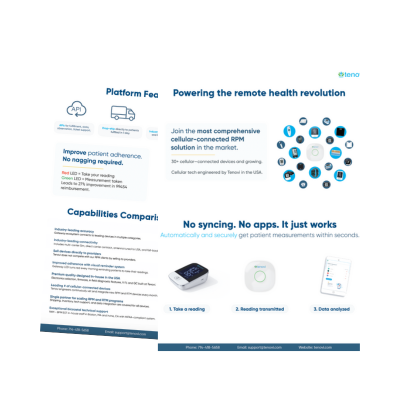
Would you like to learn more about the Tenovi RPM ecosystem? Request a free demo and discover how simple connected care can be. You’ll discover why Tenovi offers a better RPM experience for patients, physicians, and healthcare teams. No Wi-Fi. No apps with automatic and secure transmission of patient measurements within seconds.