By Andrew Wheeler — In this article, Andrew Wheeler, VP of Go-to-Market at Tenovi, examines aging in place for seniors, and how remote monitoring is reshaping care for the growing number of Americans who want to stay in their own homes.
More Americans are reaching their later years than at any point in the country’s history, and the vast majority want to stay in the homes they already live in. Remote patient monitoring (RPM) has long helped care teams see what happens between office visits, but the next phase of aging-in-place care asks more of the technology. It calls for monitoring that runs quietly in the background, reaches clinicians consistently, and fits the way care actually gets delivered. Contactless sensing offers a way to do that without asking patients to wear, charge, or remember another device. This article looks at the demographic shift driving demand, what providers now expect from remote monitoring, and why outcomes depend on what happens after the data arrives.
Aging in Place for Seniors: A Demographic Shift
The aging-in-place market is being shaped by a demographic shift that is already here: the United States population age 65 and older reached 61.2 million in 2024, representing 18 percent of the country and growing far faster than the working-age population. At the same time, three in four adults over 50 say they want to remain in their current homes as they age. As this population grows and caregiving capacity becomes increasingly stretched, periodic office visits and patient-initiated readings will not provide enough visibility to manage more complex health needs at home. The market is moving toward continuous, lower-burden monitoring that makes the home a more connected part of the care system.
That shift is also changing what providers expect from remote monitoring. The next phase will be less about distributing a single connected device and more about building an integrated model in which passive sensors, cellular connectivity, and clinical software work together. Technologies such as Xandar Kardian‘s contactless radar unit demonstrate how resting heart and respiratory rates, movement, and sleep patterns can be collected without requiring a patient to wear, charge, pair, or remember another device. The larger opportunity is turning those signals into useful information that reaches care teams consistently and fits within the way care is actually delivered.
Outcomes ultimately depend on what happens after the data arrives. Research suggests that remote monitoring can help reduce hospital use for some chronic-disease populations and may support mobility, function, and independence, although results vary when alert ownership and clinical response are not clearly defined. Our focus at Tenovi is making this model practical at scale by reducing the burden placed on patients, providing reliable connectivity, and integrating device data into existing clinical workflows. If we do that well, passive monitoring can support earlier intervention, protect more time at home, and make meaningful changes less likely to go unseen between visits.
Editor’s note: the sections below add supporting data and device detail to Andrew’s analysis above.
Americans Are Living Longer at Home
The rising share of Americans 65 and up is what makes home-based monitoring a structural need rather than a convenience. In 2004, this group made up 12.4 percent of the country. By 2024 it had reached 18 percent, and it continues to climb.
- 61.2 million Americans were 65 or older in 2024, 18 percent of the country.
- 13% vs. 1.4% — growth in the 65-and-up population compared with working-age adults, 2020 to 2024.
- 3 in 4 adults over 50 want to stay in their current homes.
Sources: US Census Bureau, Vintage 2024 Population Estimates; AARP 2024 Home & Community Preferences Survey
That middle statistic is timportant for care delivery. The population needing support is growing roughly nine times faster than the working-age population that traditionally provides it. More families are helping a loved one stay home with fewer hands available, and that is the gap continuous home monitoring is meant to close.
A Closer Look at the XK 300 Essence
The Xandar Kardian sensor Andrew references is worth a closer look, because it shows what zero-burden monitoring looks like in practice for seniors aging in place.
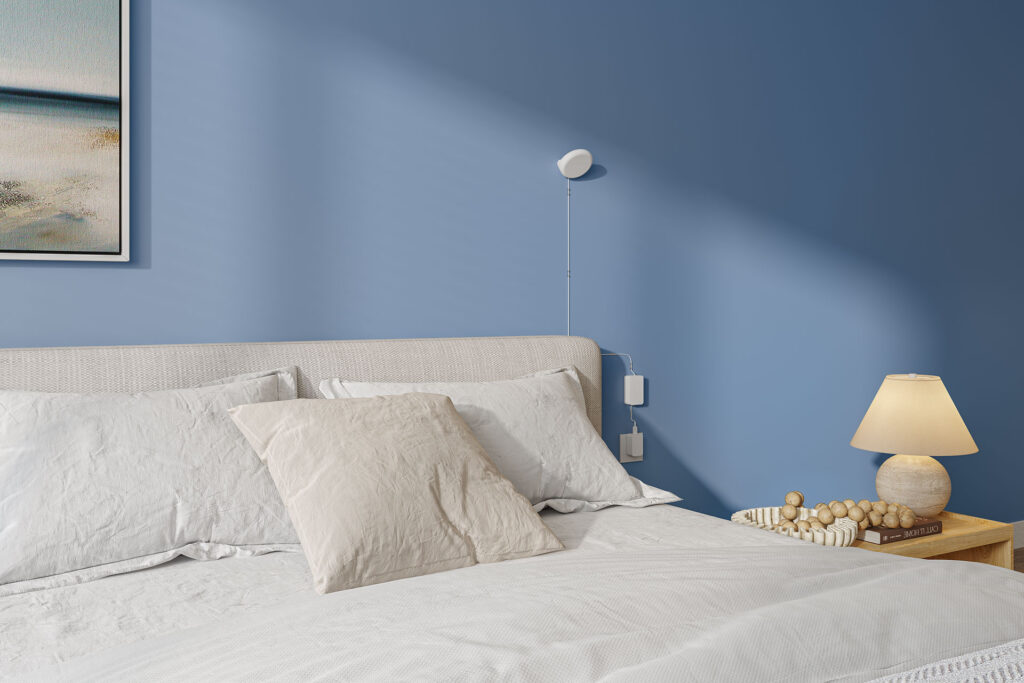
The XK 300 Essence is a wall- or ceiling-mounted radar sensor that measures micro-vibrations from the body to track resting heart rate, respiratory rate, motion, presence, and sleep and in-bed duration trends. It does this with no wearable, no buttons, and no patient action of any kind. It was the first commercially available medical device cleared by the FDA to monitor vital signs this way, cleared as a 510(k) Class II device.
The underlying method is impulse ultra-wideband radar operating in the 6.5 to 8 GHz range. The sensor sends roughly 15 million impulse signals per second and converts them into about 600 data conclusions per minute, detecting movements as small as 0.1 mm and reading through blankets and clothing. It measures resting heart rate at up to about 9 feet and respiratory rate at up to about 24 feet, and it only records vital signs when the body is stable, which keeps the readings clinically meaningful.
For aging-in-place programs, three properties matter most. First, it requires nothing of the patient, which suits memory care and residents who cannot operate a device. Second, its Probability of Baseline Change (POBC) score flags subtle shifts in a person’s trend, so a team can act days before a crisis rather than after one. Third, it fits standard reimbursement: the sensor qualifies for CPT code 99454 under Medicare.
In a Tenovi deployment, the XK 300 Essence connects through the Tenovi cellular gateway, which transmits data to the partner’s clinical platform without Wi-Fi or syncing. That is the integrated model Andrew describes, working in practice: a contactless sensor, reliable cellular connectivity, and clinical software working together so signals reach the care team consistently.
Want to see how contactless monitoring fits your program? Book a Tenovi demo.