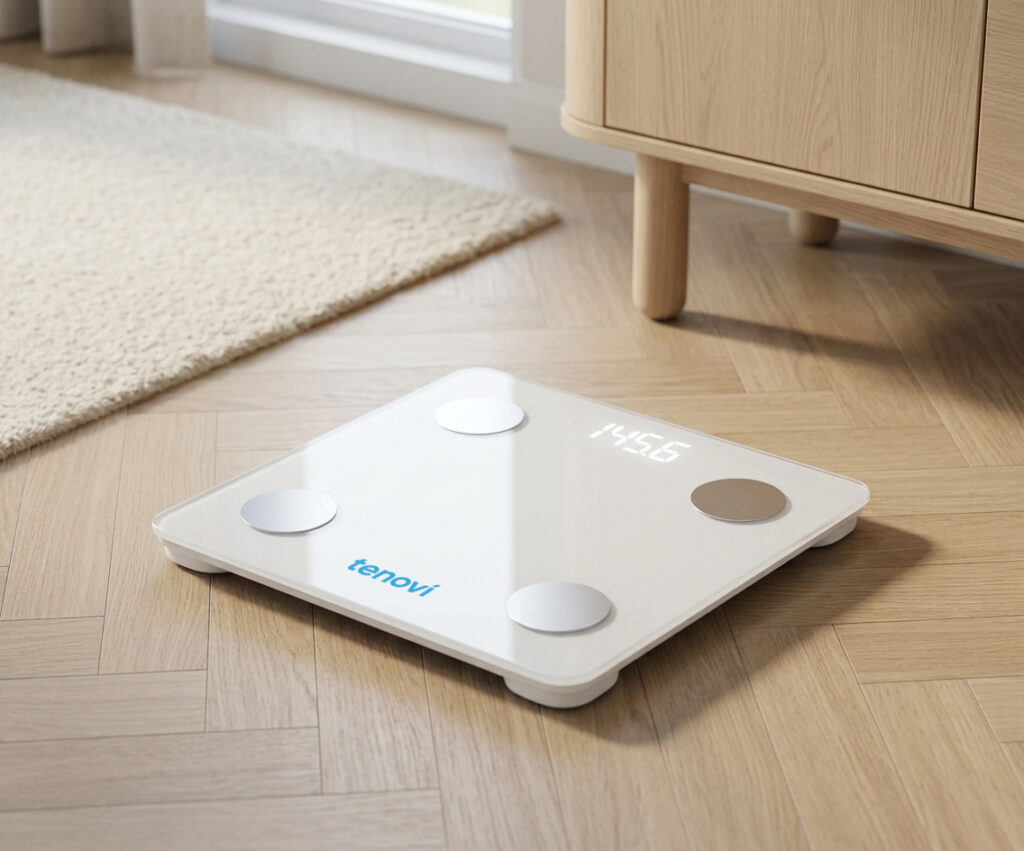
A Bluetooth weight scale looks like an ordinary bathroom scale. The difference is what happens after the number appears. Instead of a patient jotting a figure on a notepad, the reading moves off the scale on its own and transmits to their care team. That quiet handoff is where the clinical value starts.
Weight is one of the most useful signals in chronic care because it changes before a patient feels sick. A person with heart failure can gain several pounds of fluid days before shortness of breath sends them to an emergency room. A Bluetooth weight scale used inside a remote patient monitoring (RPM) program turns that early gain into an alert a nurse can act on. The scale itself is simple. The outcome it protects is not.
This post looks at what remote weight monitoring with daily weigh-ins can catch, which conditions benefit most, and why the connection method behind the scale matters more than most buyers expect.
What Daily Weighing Actually Catches
Most people weigh themselves now and then, notice a trend, and move on. Clinical weight monitoring works differently. It looks for small day-to-day shifts, because those shifts often carry more information than a single reading ever could.
Fluid Retention Before Symptoms Appear
Sudden weight gain is one of the clearest warning signs of fluid buildup. In heart failure, a jump of two to three pounds in a day or five pounds in a week is a recognized signal that fluid is accumulating. The American Heart Association lists rapid weight gain among the warning signs patients should report right away. A daily reading catches that gain while a clinician can still adjust a diuretic at home. Miss it, and the next stop is often the hospital.
Slow Trends That a Single Reading Hides
Not every problem announces itself in a day. Gradual weight loss can point to worsening illness, poor appetite, or medication side effects. Gradual gain can signal fluid, reduced activity, or a treatment that needs a second look. A string of daily readings draws a line a care team can read. One number on one morning cannot do that.
Missed Readings as Their Own Signal
There is a quieter benefit to daily weighing. When a patient who weighs in every morning suddenly stops, that gap is information too. It can mean a device problem, a hospitalization, or a person who has become too unwell to keep up their routine. A connected program sees the silence and can reach out. Paper logs hide it.
Conditions Where an RPM Scale Earns Its Place
Weight monitoring is not useful for every patient. It is very useful for several specific groups, and matching the tool to the condition is what makes a program work.
Heart Failure
Heart failure is the classic case. Fluid overload drives a large share of heart failure hospital readmissions, and weight is the most practical way to watch for it at home. Research summarized by the National Institutes of Health shows that structured home monitoring, including daily weights, can support earlier intervention for these patients. A Bluetooth weight scale gives the care team a daily look without asking the patient to do anything beyond stepping on. For a closer look at this use case, see Tenovi’s guide to congestive heart failure weight monitoring.
Chronic Kidney Disease
Kidney disease and fluid balance are tightly linked. Patients on dialysis or managing advanced kidney disease often track weight to stay within a safe fluid range between treatments. Daily readings help a care team spot retention early and coach the patient before the next visit.
Post-Surgical and Complex Care
After certain surgeries, weight shifts can flag fluid retention, poor nutrition, or complications that need attention. Patients managing several conditions at once benefit from the same steady stream of data, since a single trend can touch more than one part of their care plan.
Weight Management and Metabolic Care
For patients working on weight-related goals, whether tied to diabetes, hypertension, or a structured weight program, a connected scale keeps the effort honest and visible. The care team sees real progress instead of a self-reported guess, and the patient gets feedback that keeps them engaged.
Why the Connection Method Matters More Than the Scale
Here is the part buyers tend to overlook. A “Bluetooth weight scale” describes how the scale sends its reading over a short distance. It does not describe how that reading reaches the care team. Those are two different problems, and the gap between them is where a lot of RPM programs quietly lose data.
The Hidden Problem With App-Dependent Scales
Many consumer Bluetooth scales pair to a smartphone app. That works fine for a tech-comfortable user. It works poorly for a large share of the patients who need remote monitoring most. Older adults, people without a recent smartphone, and patients in areas with weak home Wi-Fi all struggle with the setup. When the app disconnects, the data stops, and no one on the care team knows until a follow-up call. The reading happened. It just never arrived.
How Tenovi’s Bluetooth Weight Scale Is Different
Tenovi built its Bluetooth weight scale to solve exactly this. The scale connects over Bluetooth to the Tenovi Gateway, a small cellular hub that sits in the patient’s home. The Gateway carries its own cellular connection, so the reading travels to the care team without a phone, an app, or home internet.
For the patient, the experience is almost nothing. Plug in the Gateway once. Step on the scale each morning. That is the whole job. No pairing screens, no passwords, no Wi-Fi network to join. For the care team, the payoff is reliable data that shows up on schedule, from the exact patients who are hardest to reach any other way.
That reliability is the point. A scale that captures a reading but fails to deliver it is not monitoring anyone. Pairing a simple Bluetooth weight scale with a cellular Gateway removes the most common reason home readings go missing, which is a broken link between the device and the people watching the data. You can see how this fits a broader program in Tenovi’s overview of remote weight monitoring.
Turning a Daily Reading Into Timely Action
A scale that delivers data is only half of a good program. The other half is what a care team does with it. Reliable daily readings make that work possible, because a clinician can only respond to a pattern they can see.
Thresholds and Alerts
Most programs set weight thresholds for each patient, often a defined gain over one day or several. When a reading crosses the line, the system flags it so a nurse can call, adjust a medication under a provider’s direction, or bring the patient in early. The threshold is only as good as the data feeding it. Skipped or missing readings blunt the whole approach, which is another reason reliable delivery matters so much.
Coaching and Engagement
Steady data also changes the patient relationship. When a care team can point to a real trend, coaching lands better than general advice. A patient who sees their care team responding to daily numbers tends to stay engaged, and engagement is one of the strongest predictors of whether a remote monitoring program actually improves outcomes. The Centers for Disease Control and Prevention notes that day-to-day self-management is central to living well with heart failure, and a connected scale makes that self-management visible to the people who can help.
The Outcome Behind the Number
It is easy to treat a weight scale as a commodity. Step on, read the number, done. In remote care the number is only the start. What matters is whether that number reaches a clinician in time to act, and whether it arrives every day without the patient fighting technology to make it happen.
A well-run weight monitoring program does a few concrete things. It catches fluid gain before a hospital visit. It shows slow trends a single reading would miss. It flags the patients who go quiet. Each of those depends on data that actually shows up, which is why the connection behind the scale deserves as much attention as the scale itself.
Understanding the Bluetooth Weight Scale in Remote Care
A Bluetooth weight scale is a simple tool with an outsized role. Daily readings turn weight into an early warning system for heart failure, kidney disease, post-surgical recovery, and metabolic care, catching fluid shifts and slow trends long before symptoms force a patient into the hospital. The value is not in the device alone. It is in whether the reading reliably reaches the care team, every day, for the patients who need watching most. That is why the connection method matters, and why pairing a Bluetooth scale with a cellular Gateway closes the gap that app-dependent scales leave open.
Tenovi provides cellular-connected RPM and remote therapeutic monitoring (RTM) infrastructure for the software companies, care organizations, and health systems that run monitoring programs. Our Bluetooth weight scale connects to the Tenovi Gateway for a cellular link that works without a patient’s phone or Wi-Fi, so daily readings arrive reliably. To see how it fits your program, request a free demo and consultation.