COPD remote patient monitoring gives care teams a daily view of lung health between office visits. Chronic obstructive pulmonary disease (COPD) is now the third leading cause of death worldwide. The World Health Organization reports it caused 3.4 million deaths in 2023. In the U.S., the CDC estimates that nearly 16 million adults have COPD, and many more are undiagnosed.
There is no cure. Lung damage cannot be fully reversed. Still, early detection, consistent treatment, and healthy habits can slow progression and help patients breathe easier. With COPD remote patient monitoring, clinicians can catch small changes before they turn into emergency visits.
This article covers how remote patient monitoring (RPM) works for COPD, what the research shows, which devices matter most, and how care teams can build a program around patient needs.
What Is COPD?
COPD is a group of progressive lung diseases, mainly emphysema and chronic bronchitis. It limits airflow and makes breathing harder over time. COPD is not contagious, and it is often preventable. Tobacco smoke is the main cause in the United States. Secondhand smoke, air pollution, workplace dust, and chemical fumes also raise risk.
Common symptoms may include:
- Frequent coughing or wheezing
- Shortness of breath during routine activities
- Trouble taking a deep breath
- Excess mucus or phlegm
Early COPD is easy to miss. Many people assume a cough or breathlessness is part of aging or a past cold. They often seek care only after symptoms interfere with daily life. By then, lung function may have declined considerably. This gap is where COPD remote patient monitoring can help care teams act sooner.
How COPD Remote Patient Monitoring Works
COPD remote patient monitoring uses FDA-cleared medical devices to collect health data at home. Readings such as blood oxygen saturation, peak expiratory flow, and FEV1 are sent to a clinician’s software platform. The care team reviews trends and responds when readings move outside a patient’s normal range.
A typical program follows a simple cycle:
- Enrollment. A provider identifies an eligible patient and orders the right devices.
- Setup. The patient receives devices that are ready to use, often with no pairing or Wi-Fi required.
- Daily readings. The patient takes measurements on a schedule set by the care team.
- Review and alerts. Clinicians set thresholds for each patient. Out-of-range readings trigger alerts for follow-up.
- Care adjustments. The team contacts the patient, adjusts medications, or schedules a visit as needed.
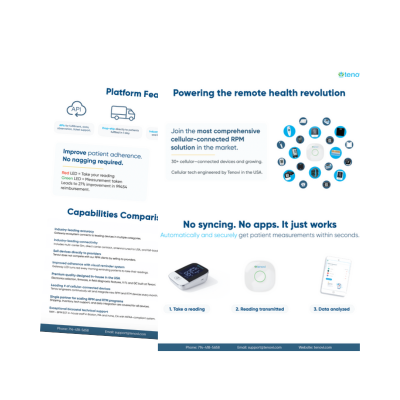
Connectivity matters here. Many COPD patients are in their later years or live in rural areas. Cellular-connected devices and the Tenovi Gateway send data automatically, so patients do not need a smartphone. Fewer setup steps usually mean better adherence.
What Does Research Say About COPD Remote Patient Monitoring?
The evidence for COPD remote patient monitoring continues to grow. A 2023 study in the International Journal of Chronic Obstructive Pulmonary Disease followed 126 patients with COPD for 12 months. Patients used remote cardiorespiratory monitoring, and results were compared with the year before enrollment.
Key findings included:
- 65% fewer all-cause hospitalizations, from 1.09 to 0.38 per patient per year
- 63.6% fewer cardiopulmonary hospitalizations
- 44.3% fewer all-cause emergency department visits
- 88.6% adherence, measured as days patients met the daily wear requirement
One detail stands out. Outpatient pulmonary visits rose 13.2%, and 52 of those visits came directly from monitoring alerts. Patients were seen in about 2.8 days on average. In other words, care shifted from the hospital to the clinic. That is the goal of proactive care.
High adherence also answers a common question. Will patients with COPD keep using devices for a full year? In this study, most did.
Key Devices for COPD Remote Patient Monitoring
The right device mix depends on the patient’s disease stage, symptoms, and care plan. These three are the most common in COPD remote patient monitoring programs.
Pulse Oximeters
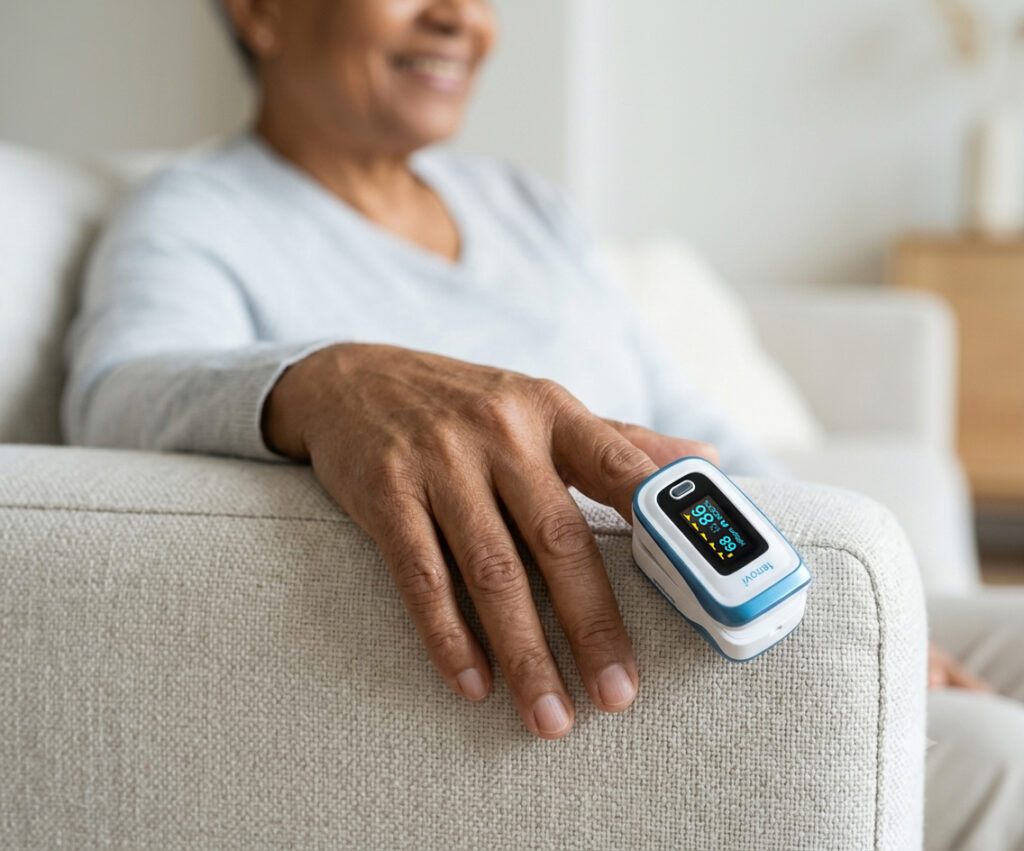
A pulse oximeter uses light to estimate oxygen saturation (SpO2) in the blood. It is usually worn on the fingertip and gives a reading in seconds. It also reports pulse rate.
Oxygen levels can drop without obvious symptoms, especially in mild or moderate COPD. Daily readings help clinicians spot these drops early. Target ranges differ for patients with COPD, and some are prescribed a lower goal than the general population. For that reason, clinicians should set alert thresholds for each patient rather than relying on one standard number.
The Tenovi Pulse Oximeter sends SpO2 and pulse readings automatically through the Tenovi Gateway.
Peak Flow Meters and FEV1 Monitoring
Peak flow meters measure how fast a patient can push air out of the lungs. Digital models can also measure FEV1, the volume of air exhaled in the first second of a forced breath. FEV1 is one of the most important measures of lung function in COPD.
A falling trend can signal an exacerbation days before a patient feels it. It can also show how well a patient is responding to a new inhaler or treatment.
The Tenovi Peak Flow Meter (PFM) is a Bluetooth-enabled device that measures peak expiratory flow (PEF) and FEV1. Readings transfer automatically to the clinician portal through the cellular-connected Tenovi Gateway.
Home Spirometry
Spirometry measures how much air a patient can inhale and exhale, and how quickly. Clinic spirometry remains the standard for diagnosing COPD. Home spirometry and digital lung function devices are different. They are best used to track trends over time after diagnosis.
The process is simple. The patient takes a deep breath and blows into the mouthpiece as hard and fast as possible. Repeated readings help clinicians see whether lung function is stable, improving, or declining.
Supporting Devices
Other devices can round out a COPD care plan. Blood pressure monitors help when COPD occurs alongside heart disease, which is common. Weight scales can flag fluid retention in patients with heart failure. Activity trackers and wearable technology can encourage daily movement and pulmonary rehab goals. Consumer wearables may not meet the device requirements for RPM billing, so care teams should confirm before relying on them.
Benefits of COPD Remote Patient Monitoring
Proactive care is the foundation of good COPD management. COPD remote patient monitoring supports that approach in several ways.
- Earlier intervention. Care teams see changes in oxygen or lung function before a crisis.
- Fewer hospital stays. Research links monitoring to lower hospitalization and emergency visit rates.
- Better treatment decisions. Daily data gives clinicians a fuller picture than a single office reading.
- Stronger patient engagement. Patients who see their own readings often take a more active role in care.
- Greater access. Patients in rural areas or with mobility limits get consistent oversight from home.
- Efficient use of clinical time. Alerts help care teams focus attention on patients who need it most.
- Lower overall costs. Preventing avoidable admissions benefits patients, providers, and payers.
Building a COPD Remote Patient Monitoring Program
A strong program starts with the patient. These steps help care teams plan with that in mind, whether the focus is COPD alone or broader remote respiratory monitoring.
- Identify the right patients. Prioritize those with recent exacerbations, hospital discharges, or oxygen therapy.
- Match devices to needs. Pair a pulse oximeter with a peak flow meter for most patients. Add devices for coexisting conditions.
- Set individual thresholds. Base alert ranges on each patient’s baseline and prescribed targets.
- Plan the response. Define who reviews alerts, how fast, and what actions follow.
- Keep setup simple. Cellular-connected devices remove Wi-Fi and smartphone barriers.
- Educate and follow up. Teach proper technique, especially for peak flow and FEV1 readings. Check in early and often.
Medicare Policy and COPD Remote Patient Monitoring
Medicare continues to refine how RPM is covered. For 2026, CMS recognized shorter monitoring periods and shorter management time, which may help patients who need monitoring for fewer days. The CY 2027 Physician Fee Schedule proposed rule, released in July 2026, proposes further changes. These include a separately reportable initiating visit, updated staffing requirements, and possible new bundled codes.
Care teams should watch the final rule, expected later this year. The core purpose stays the same. RPM exists to deliver timely, preventive care that keeps patients healthier at home.
COPD Remote Patient Monitoring FAQs
These common questions about COPD remote patient monitoring cover eligibility, devices, readings, and patient experience. Care teams can use them to explain programs to patients and staff.
1) What is COPD remote patient monitoring?
It is the use of connected medical devices to track lung health at home. Readings such as SpO2, peak flow, and FEV1 go to the care team automatically. Clinicians review trends and respond to changes between visits.
2) Which devices are used for COPD remote patient monitoring?
The most common are pulse oximeters and digital peak flow meters that also measure FEV1. Some programs add home spirometers, blood pressure monitors, or weight scales. The choice depends on the patient’s condition and care plan.
3) Can remote monitoring detect a COPD flare-up early?
It can help. Drops in oxygen saturation or lung function often appear before symptoms worsen. Alerts let clinicians contact patients and adjust treatment sooner.
4) What SpO2 level should trigger an alert for a COPD patient?
There is no single number for every patient. Many people with COPD have a lower prescribed target range than the general population. Clinicians should set thresholds based on each patient’s baseline and treatment goals.
5) Do patients need a smartphone or Wi-Fi?
Not with cellular-connected devices. Tenovi devices send readings through built-in cellular connections or the Tenovi Gateway. This makes monitoring easier for patients who are less comfortable with technology.
6) Is COPD remote patient monitoring covered by Medicare?
Medicare covers RPM when program requirements are met. These include an established patient relationship, FDA-defined medical devices, and minimum data collection and management time. Requirements can change each year, so providers should review current CMS guidance.
Understanding COPD Remote Patient Monitoring
COPD is common, progressive, and often caught late. COPD remote patient monitoring gives care teams daily insight into oxygen levels and lung function. That insight supports earlier action, fewer hospital stays, and better quality of life. Research shows patients will use these devices consistently when setup is simple. With the right devices, clear alert plans, and patient education, care teams can shift COPD care from reactive to proactive.
Tenovi provides cellular-connected remote patient monitoring devices and infrastructure to RPM companies, providers, health systems, and care programs. Our FDA-cleared devices, including the Tenovi Pulse Oximeter and Peak Flow Meter, arrive ready to use, so patients can start taking readings right away. Contact us for a free demo and consultation.