
The healthcare landscape is rapidly evolving, driving an unprecedented demand for scalable, high-quality care outside the traditional hospital setting. For remote patient monitoring (RPM) software and service companies, chronic care management (CCM) organizations, and telehealth providers, demonstrating clinical efficacy is essential for growth. Delivering reliable remote patient monitoring for patients is no longer just about convenience; it is a critical strategy for managing high-acuity conditions and preventing hospital readmissions.
By utilizing cellular-connected health devices, clinical teams can bridge the gap between office visits and track vital signs in real-time. Two recent clinical studies highlight how this technology actively improves clinical outcomes, reduces healthcare disparities, and paves the way for advanced virtual hospital wards. This article explores the clinical evidence and practical benefits of deploying robust RPM solutions.
What is Remote Patient Monitoring for Patients?
Remote patient monitoring for patients involves using digital health devices to securely capture physiological data—such as blood pressure, weight, heart rate, and oxygen saturation—from a patient’s home and transmitting it to their healthcare provider. This continuous stream of health data empowers clinical teams to observe trends and intervene before a condition escalates into a costly emergency. For value-based care organizations, this technology is vital for keeping members healthy and managing population health effectively.
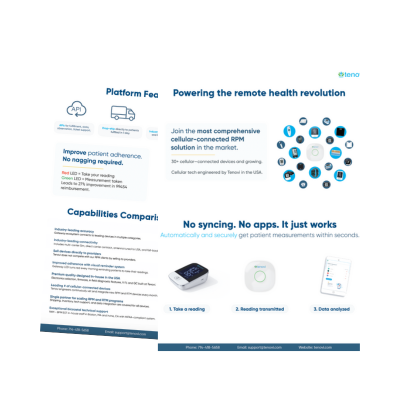
Unlike traditional episodic care, RPM offers a continuous, proactive approach to health management. The technology relies on cellular or Bluetooth-enabled medical devices that sync data automatically. For fee-for-service (FFS) RPM companies and telehealth providers, offering cellular devices is highly recommended. Cellular technology removes technical barriers and ensures higher adherence rates by eliminating the need for Wi-Fi configurations or complex smartphone pairing.
How it Helps: Closing Care Disparities in Infant Cardiac Care
One of the most compelling examples of how remote patient monitoring for patients can transform care comes from pediatric cardiology. A study published in the Journal of the American Heart Association examined the Cardiac High Acuity Monitoring Program (CHAMP), an initiative designed to monitor infants with single-ventricle heart disease. This severe congenital defect requires multiple surgeries, and the “interstage” period between operations carries a high mortality rate that often disproportionately affects vulnerable populations.
The CHAMP program provided remote monitoring technology to caregivers, utilizing a mobile app to instantly transfer vital infant health data to clinicians. Researchers analyzed 610 infants across 11 centers from 2014 to 2021 to determine if the RPM program could reduce outcome differences based on socioeconomic status (SES).
Remarkably, the results revealed no significant differences in outcomes between SES groups. When accounting for confounding factors, the likelihood of death or transplant listing showed no significant variation among diverse backgrounds. This study suggests that novel remote monitoring technology acts as a powerful equalizer, mitigating systemic disparities and providing vulnerable families with the same clinical safety net as well-resourced ones.
The Benefits of Scaling Advanced Care at Home
Advanced care at home (ACAH), or “hospital at home,” relies heavily on remote patient monitoring for patients to deliver acute care outside traditional facility walls. A study published in the American Journal of Managed Care assessed the feasibility of scaling an ACAH program within Kaiser Permanente. The integrated health system intentionally increased its daily census, eventually handling up to 9% of their total inpatient medicine volume using remote monitoring and virtual care teams.
A subgroup analysis revealed a massive clinical benefit to resting at home: patients admitted to the Kaiser Permanente at Home program were 64% less likely to experience delirium than those admitted to traditional inpatient hospital care. Hospitals are notoriously disruptive environments that trigger cognitive decline in vulnerable patients, making the home environment highly conducive to neurological recovery.
To clearly understand the advantages of RPM programs for different healthcare stakeholders, consider the following benefits:
| Stakeholder Focus | Benefits of Remote Patient Monitoring |
| FFS & Telehealth Companies | Enables scalable service offerings, generates new revenue streams via RPM CPT codes, and improves client retention through seamless patient engagement. |
| Value-Based Care Players | Reduces costly emergency room visits, lowers 30-day readmission rates, and improves overall member health outcomes for chronic conditions. |
| Providers & Physicians | Expands practice capacity without adding physical space, provides actionable clinical insights, and improves chronic disease management workflows. |
Frequently Asked Questions (FAQs)
How does remote patient monitoring improve health equity?
Implementing remote patient monitoring for patients helps overcome geographical and transportation barriers that often prevent vulnerable populations from accessing specialized care. By providing cellular-connected devices directly to the home, health systems ensure that patients receive continuous clinical oversight regardless of their socioeconomic status or physical location.
What are the most common devices used in RPM programs?
The most effective RPM programs utilize FDA-cleared devices tailored to a patient’s specific chronic condition. Common devices include blood pressure monitors, pulse oximeters, blood glucose meters, and digital weight scales. Cellular devices are widely preferred because they transmit data seamlessly without requiring patient technical setup.
How do value-based care organizations use RPM?
Health plans, payers, and health systems utilize RPM to proactively monitor their members’ health. By catching physiological abnormalities early, care teams can intervene promptly, keeping members out of the hospital, improving quality metrics, and reducing the overall cost of care.
Understanding Remote Patient Monitoring for Patients
In summary, the transition toward advanced care at home is accelerating, and the clinical evidence strongly supports its adoption. As the recent clinical studies demonstrate, remote patient monitoring for patients is not merely a tool for symptom tracking; it is a proven strategy for mitigating healthcare disparities and preventing complications like hospital-acquired delirium.
For RPM software companies, CCM providers, and telehealth organizations, leveraging reliable data aggregation is the foundation of a successful program. Health systems and providers rely on these critical partnerships to scale their capacity safely and effectively.
If you are an RPM service or software company looking to enhance your offerings, reliable hardware is critical. Book a consultation and free demo to learn more about leveraging Tenovi’s FDA-cleared cellular remote patient monitoring devices and seamless data aggregation solutions.