Remote patient monitoring hypertension programs send blood pressure readings from a patient’s home directly to the care team. Home blood pressure monitoring is now the method national guidelines lean on to confirm a diagnosis and adjust treatment. For the nearly half of U.S. adults living with high blood pressure, that shift matters. It moves decisions off a single clinic reading and onto weeks of data collected during ordinary life. This article covers what changed in the 2025 guideline, what the evidence shows, how programs run day to day, and what the 2026 Medicare code set means for shorter monitoring periods.
What Remote Patient Monitoring Hypertension Programs Do
A remote patient monitoring hypertension program pairs a connected blood pressure device with a care team that reviews the data. The patient measures at home. The reading transmits automatically. A clinician watches for trends and steps in when readings drift.
The clinical value comes from daily readings and context. One office reading captures a single moment in an unfamiliar setting. Home blood pressure monitoring captures dozens of readings across ordinary days, including mornings before medication and evenings after work.
That record supports three decisions clinicians make constantly:
- If a patient has hypertension, or white-coat or masked hypertension
- Whether a medication change is working
- Is a patient is measuring often enough to stay safe between visits?
Why Blood Pressure Control Is Still Hard to Reach
Hypertension is the most common modifiable risk factor for cardiovascular disease. In the U.S., nearly 48% of adults have high blood pressure, and only about one in four have it controlled. Globally, the World Health Organization estimates 1.28 billion adults aged 30 to 79 live with hypertension. Nearly half do not know it.
The downstream burden is heavy. Chronic conditions drive 90% of the nation’s annual health expenditures. Uncontrolled blood pressure raises the risk of stroke, heart attack, heart failure, kidney disease, and vision loss.
In September 2025, WHO warned that uncontrolled high blood pressure puts more than a billion people at risk. The agency named home measurement and telehealth follow-up among the tools health systems should scale.
What the 2025 AHA/ACC Guideline Changed for Remote Patient Monitoring Hypertension Programs
Remote patient monitoring hypertension programs gained direct guideline backing when the 2025 AHA/ACC multisociety high blood pressure guideline replaced the 2017 version and rewrote how care teams are expected to measure blood pressure. Four of its updates apply straight to how a remote patient monitoring hypertension program is designed, staffed, and documented, and each one moves home blood pressure monitoring from an optional add-on toward routine practice.
Out-of-Office Measurement Is Now the Diagnostic Standard
The guideline recommends confirming a hypertension diagnosis with out-of-office readings, which places home blood pressure monitoring at the center of the diagnostic pathway rather than at its edge. Both home blood pressure monitoring and ambulatory monitoring are accepted for confirming a diagnosis, and the guideline also recommends home readings for ongoing management and for medication titration. For a remote patient monitoring hypertension program, the data the care team already collects every day is the same data the guideline now asks clinicians to act on.
The Treatment Target Held at 130/80 mm Hg
The overall treatment goal remains below 130/80 mm Hg for most adults, with adjustments for pregnancy, limited life expectancy, and patients who require institutional care. The American Heart Association considers any home reading at or above 130/80 mm Hg hypertensive, which gives remote patient monitoring hypertension programs a consistent threshold to build alert rules and escalation protocols around.
Team-Based Care Is Named as the Mechanism That Works
One of the guideline’s take-home messages ties home blood pressure monitoring to frequent contact with a multidisciplinary team using standardized measurement and treatment protocols. That pairing shapes program design, because connected devices on their own do not move control rates and the published gains come from monitoring combined with active clinical follow-up. The strongest remote patient monitoring hypertension programs are staffed to match, with nurses or pharmacists reviewing readings and adjusting medication on a defined schedule.
Cuffless Devices Are Not Ready for Clinical Use
The guideline advises against relying on cuffless devices, including smartwatches, for accurate blood pressure measurement until those devices demonstrate greater precision and reliability. For anyone specifying hardware for a remote patient monitoring hypertension program, that points to validated, FDA-cleared upper-arm cuffs rather than consumer wearables. It is worth setting that expectation with patients at enrollment, so nobody substitutes a watch for the prescribed device.
What the Research Shows on Blood Pressure Outcomes
The evidence behind remote patient monitoring hypertension programs now spans more than a decade.
A Mass General Brigham analysis of 10,803 patients found that a remote blood pressure and cholesterol management program improved both blood pressure and lipid levels.
A prospective primary care cohort published in the Journal of Human Hypertension followed Medicare patients for a year. Systolic blood pressure fell 10.4 mm Hg in the monitored group, compared with 4.7 mm Hg in matched controls. Control rates reached 71.5% versus 58.1%. Patients at clinics with care coordination had three times the odds of reaching control.
A large retrospective analysis found that patients enrolled for at least 90 days improved systolic blood pressure by 7.3 mm Hg on average, and 16.7 mm Hg among patients with stage 2 hypertension.
More recent work points the same direction. A 2026 multicenter pre-post evaluation of 6,874 adults with hypertension reported lower monthly blood pressure averages after a monitoring program was introduced. The design cannot rule out measurement differences between settings, so read it as supporting evidence rather than proof.
Two patterns repeat across these studies. Patients with the highest baseline readings improve the most. Programs with active clinician follow-up outperform programs that only collect data.
How Home Blood Pressure Monitoring Works in Practice
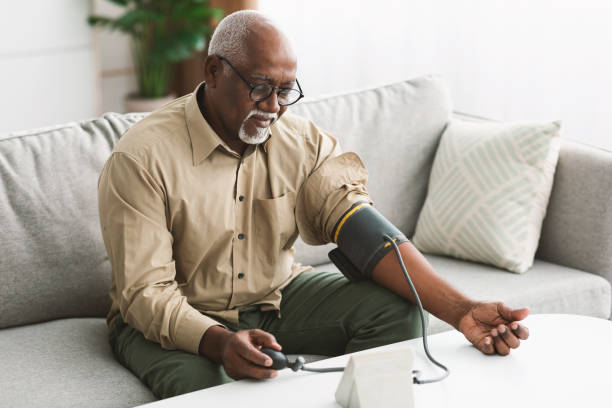
Blood pressure can be measured invasively or noninvasively. Invasive monitoring places a sensor in an artery and is limited to hospital settings. Remote programs use noninvasive devices, almost always an automatic upper-arm cuff.
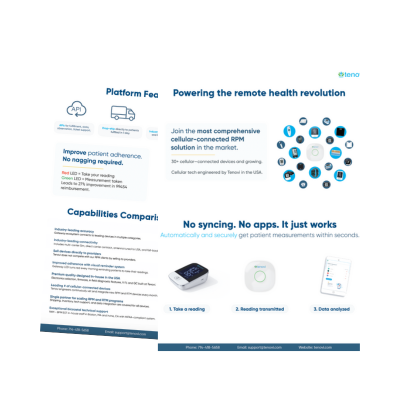
Connectivity is the design decision that shapes adherence. Bluetooth cuffs pair with a smartphone or tablet. Cellular devices transmit through a built-in connection or a hub, with no pairing and no app. For patients without reliable broadband or comfort with smartphones, cellular transmission removes the most common failure point.
Once a reading transmits, the care team can see it within minutes. Clinicians set thresholds, receive alerts on high or low readings, and review trends before adjusting medication. That turns a monthly cycle into a continuous one.
Patients are generally asked to measure daily. Consistency matters more than any single number, and morning readings taken before medication give the clearest picture of overnight control. Remote blood pressure monitoring works best when the measurement routine is simple enough to survive a busy week.
What Changed in the 2026 Medicare Code Set
Until 2026, device-supply billing required 16 days of readings in a 30-day period. Patients who may have measured blood pressure for 12 days fell outside the threshold, even when the clinical work happened.
The CY 2026 Medicare Physician Fee Schedule final rule added two codes. CPT 99445 covers device supply and data transmission for 2 to 15 days within 30 days. CPT 99470 covers the first 10 to 19 minutes of treatment management in a calendar month. CPT 99453, 99454, 99457, and 99458 remain in place.
For hypertension programs, the practical effect is coverage for shorter and lighter monitoring periods. A patient recovering from a medication change may need three weeks of close observation rather than an indefinite program. A newly diagnosed patient may need two weeks of confirmatory readings. Those situations now fit the code set instead of falling outside it.
This material is provided for general informational and educational purposes only and does not constitute legal, compliance, billing, coding, or reimbursement advice. CPT® codes, descriptions, and Medicare payment rates referenced here are drawn from publicly available sources, are subject to change, and may vary by payer, locality, and patient circumstances. Tenovi makes no representation or guarantee regarding coverage, payment, or the appropriateness of any code for a particular patient or service, and any presented are illustrative only. Providers are solely responsible for independently determining medical necessity and applicable coding, coverage, documentation, and billing requirements and for submitting accurate claims. Consult applicable payer guidance and qualified billing, coding, compliance, or legal professionals before making billing decisions. CPT® is a registered trademark of the American Medical Association.
Supporting Adherence and Reaching Underserved Patients
Hypertension is lifelong, so a program only helps if patients keep measuring. Adherence drops when setup is confusing, when nobody responds to the readings, or when the patient does not understand what the numbers mean.
A few program design choices consistently help:
- Ship a device that works out of the box, with no pairing or app setup
- Call patients in the first week, before habits form
- Tell patients what their target range is and what a concerning reading looks like
- Close the loop quickly when a reading triggers an alert
- Keep the measurement schedule steady rather than variable
Access is the other half. Hypertension rates in underserved populations run about 10% higher than in most urban areas, and these are the patients who gain the most from monitoring between visits. Cellular devices matter here, since they do not depend on home internet or a personal smartphone.
The Tenovi Blood Pressure Monitor
The best device for a hypertension program is the one a patient will actually use. Tenovi’s BPM works out of the box, with no pairing, syncing, or app setup. The patient wraps the cuff on the bare skin of the upper arm and presses the middle button. The cuff inflates, takes the reading, and sends it through the Tenovi Cellular Gateway to the RPM platform.
Care teams can set thresholds for real-time alerts, watch trends over time, and see how patients respond to medication changes. Tenovi also partners with A&D Medical and OMRON so that programs can offer more than one cuff option, including wrist devices where an upper-arm cuff does not fit well.
Frequently Asked Questions
1) What is remote patient monitoring for hypertension?
It is a program in which a patient measures blood pressure at home with a connected device, and the readings transmit automatically to the care team for review and follow-up.
2) How often should patients measure blood pressure at home?
Most programs ask for daily readings, often in the morning before medication. Consistency matters more than the count, and care teams may ask for twice-daily readings during a medication change.
3) Does home blood pressure monitoring actually lower blood pressure?
Research consistently shows improvement when monitoring is paired with clinician follow-up. One primary care cohort found a 10.4 mm Hg systolic drop over 12 months, compared with 4.7 mm Hg in matched controls.
4) Can a smartwatch replace a blood pressure cuff?
Not yet. The 2025 AHA/ACC guideline advises against relying on cuffless devices, including smartwatches, until they demonstrate greater accuracy and reliability.
5) What blood pressure reading is considered high at home?
The American Heart Association considers a home reading at or above 130/80 mm Hg hypertensive. Patients should follow the target their clinician sets, which may differ based on other conditions.
Understanding Remote Patient Monitoring Hypertension
Remote patient monitoring hypertension programs work because they replace a snapshot with a record. The 2025 AHA/ACC guideline made home blood pressure monitoring central to diagnosis and to medication titration. The research shows meaningful systolic reductions, with the largest gains among patients whose pressure is highest and whose care teams follow up actively.
Tenovi provides cellular-connected remote patient monitoring hardware and software to RPM and RTM service companies, chronic care management companies, telehealth platforms, health systems, and payers. Our no sync, no app devices are designed so patients can start measuring the day the box arrives. To see how the Tenovi BPM and Cellular Gateway would fit your hypertension program, request a free demo and consultation.