Remote therapeutic monitoring codes allow clinicians to bill for connected devices that track non-physiologic data. That includes respiratory status, musculoskeletal function, therapy adherence, and therapy response. The RTM CPT codes 2026 set is larger than it was in 2025, because CMS added four new codes effective January 1, 2026.
The change that matters most for patients is the removal of the 16-day cliff. A patient who transmitted data for 12 days in a month previously generated no device supply payment at all. Practices had to decide whether to enroll patients whose engagement was likely to be intermittent. Short post-surgical episodes and shorter monitoring windows now have codes that match them.
This guide covers the full 2026 remote therapeutic monitoring code set, current national payment amounts, the day and time thresholds attached to each code, and the rules that govern how the codes work together. Every figure and rule below is sourced to the CMS document that governs it.
What Remote Therapeutic Monitoring Covers in 2026
Remote therapeutic monitoring captures non-physiologic data. CMS describes it in the Telehealth and Remote Monitoring booklet, MLN901705, as data that can be self-reported and related to a therapeutic treatment. Musculoskeletal system status, respiratory system status, treatment adherence, and treatment response all qualify.
Remote patient monitoring covers measured physiologic data instead: blood pressure, weight, blood glucose, and oxygen saturation. Tenovi’s 2026 RPM CPT codes guide covers that code set in detail.
Self-reported data does not mean the program runs without hardware. The same CMS booklet states that a connected medical device transmits the patient’s information, and the device must meet the FDA definition of a medical device. An app that collects pain scores with no device layer is not a billable RTM program.
One distinction favors RTM. CMS states that remote physiologic monitoring requires an established patient relationship, and RTM does not. A practice taking post-surgical referrals can begin monitoring a patient it has not previously treated.
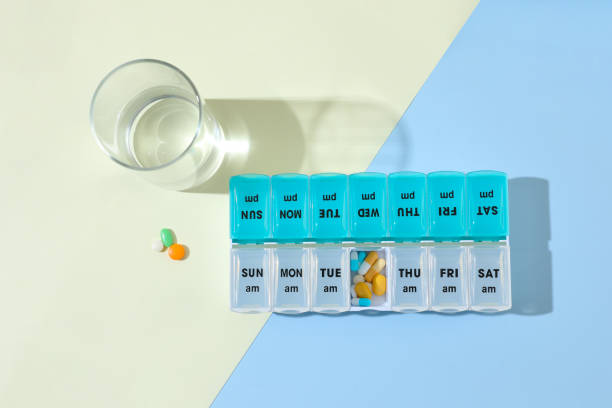
Common RTM devices include peak flow meters, spirometers, inhaler sensors, movement and range-of-motion trackers, and medication adherence sensors.
What Changed for RTM Codes in 2026
CMS finalized the CY 2026 Physician Fee Schedule final rule on October 31, 2025, effective January 1, 2026. Three changes affect RTM directly.
Four new codes. The CPT Editorial Panel added three device supply codes covering 2 to 15 days of data in a 30-day period, one for each clinical family. It also added one treatment management code covering the first 10 minutes of service in a calendar month.
A new valuation method. CMS moved RPM and RTM code valuation to Outpatient Prospective Payment System geometric mean cost data rather than practice-submitted invoices. Payment is derived by dividing that cost by the annual conversion factor.
Two conversion factors. The CY 2026 final rule fact sheet sets a qualifying APM conversion factor of $33.57 and a non-qualifying APM conversion factor of $33.40. Most outpatient therapy practices fall into the non-qualifying group. The rates in this guide use the non-qualifying factor.
CMS also placed most of the RTM family on its New Technology list. The codes will be reviewed once three years of utilization data under the new structure are available, which the rule projects for April 2030.
The 2026 RTM CPT Code Set and Payment Rates
There are ten remote therapeutic monitoring codes in three families: setup, device supply, and treatment management. Rates below are 2026 national averages in the non-facility setting and vary by locality.
| CPT code | What it covers | Threshold | 2026 national average |
|---|---|---|---|
| 98975 | Initial setup and patient education on use of equipment | Once per episode of care | $21.71 |
| 98976 | Device supply, respiratory system | 16 to 30 days of data in 30 days | $52.11 |
| 98984 (new) | Device supply, respiratory system | 2 to 15 days of data in 30 days | $52.11 |
| 98977 | Device supply, musculoskeletal system | 16 to 30 days of data in 30 days | $51.44 |
| 98985 (new) | Device supply, musculoskeletal system | 2 to 15 days of data in 30 days | $51.44 |
| 98978 | Device supply, cognitive behavioral therapy | 16 to 30 days of data in 30 days | Contractor priced |
| 98986 (new) | Device supply, cognitive behavioral therapy | 2 to 15 days of data in 30 days | Contractor priced |
| 98979 (new) | Treatment management, first 10 minutes | 10 to 19 minutes per calendar month | $26.39 |
| 98980 | Treatment management, first 20 minutes | 20 or more minutes per calendar month | $54.11 |
| 98981 | Treatment management, each additional 20 minutes | Billed after 98980 | $41.42 |
Two points about this table are worth attention.
Both cognitive behavioral therapy device codes are contractor priced. CMS declined to set national values for 98978 and 98986, citing evolving technology and pricing variability. Practices billing those codes need an amount from their Medicare Administrative Contractor rather than a national average.
The musculoskeletal rates were revised upward after the final rule. The final rule projected a decrease for 98977 from its 2025 rate of $43.02. CMS then updated the practice expense portion of 98977 and 98985 in the published relative value file, and both codes now pay $51.44. Rate tables published in late 2025 and early 2026 often list roughly $40 for these codes. Verify any figure against the Physician Fee Schedule relative value files or the Physician Fee Schedule lookup tool before using it.
This material is provided for general informational and educational purposes only and does not constitute legal, compliance, billing, coding, or reimbursement advice. CPT® codes, descriptions, and Medicare payment rates referenced here are drawn from publicly available sources, are subject to change, and may vary by payer, locality, and patient circumstances. Tenovi makes no representation or guarantee regarding coverage, payment, or the appropriateness of any code for a particular patient or service, and any presented are illustrative only. Providers are solely responsible for independently determining medical necessity and applicable coding, coverage, documentation, and billing requirements and for submitting accurate claims. Consult applicable payer guidance and qualified billing, coding, compliance, or legal professionals before making billing decisions. CPT® is a registered trademark of the American Medical Association.
Choosing Between the 2 to 15 Day and 16 to 30 Day Codes
The device supply codes are not additive and do not form a base and add-on structure. CMS states that a billing practitioner reports only one of these codes for the appropriate number of days of data transmission per 30 days.
Two separate decisions determine which code applies. The clinical family decides the group: respiratory, musculoskeletal, or cognitive behavioral therapy. The number of days of data transmitted decides the window inside that group. A musculoskeletal patient who transmits nine days of data is 98985. The same patient at 20 days is 98977. There is no month in which both are billable.
The 2 to 15 day codes pay the same amount as their 16 to 30 day counterparts. CMS finalized equal valuation because the device is supplied to the patient for the full 30-day period regardless of how many days data is transmitted.
How the Treatment Management Codes Work
Treatment management follows the same structure. CMS states that the codes describing the first 10 minutes and the first 20 minutes of service are not additive, and the practitioner selects the code that matches the time spent in that calendar month. Once 98980 is billed and more than 20 minutes of treatment management is needed, 98981 covers each additional 20-minute increment.
Every treatment management code requires a live, interactive communication with the patient or caregiver. CMS adopted the CPT language directly for 98979, 98980, and 98981. The interactive communication counts toward the total time and does not have to account for all of it.
Commenters asked CMS whether audio-only calls, secure messaging, asynchronous chat, and automated messaging count toward that requirement. CMS declined to add further exclusions, provided the communication meets CPT specifications.
Who Can Bill RTM and Which Modifiers Apply
RTM services can be furnished under general supervision of the billing practitioner. Physical therapists, occupational therapists, and speech-language pathologists can bill the codes under a therapy plan of care.
The mechanism is the “sometimes therapy” designation. CMS confirmed that the new codes 98979, 98984, and 98985 carry the designation because they are based on RTM codes designated as sometimes therapy in the CY 2022 final rule. These services can be billed outside a therapy plan of care by a physician or certain non-physician practitioners. When a therapist furnishes them, a plan-of-care modifier is required rather than optional.
The CY 2026 rule names GP for physical therapy and GO for occupational therapy. Speech-language pathology services follow the general outpatient therapy modifier rules.
A second modifier layer applies when a physical therapist assistant or occupational therapy assistant performs part of the work, once the de minimis 10 percent threshold is met. CMS states that CQ and CO apply to 98979, and that they do not apply to device codes 98984 and 98985, because those codes are based on 98976 and 98977. The rule does not extend that statement to the cognitive behavioral therapy device codes.
One note on conflicting guidance. MLN901705 contains a sentence stating that only physicians and non-physician practitioners eligible to provide evaluation and management services may bill remote monitoring. The Physician Fee Schedule rule addresses RTM specifically, is more recent, and describes in detail how a therapist bills these codes. The rule governs, and the relevant discussion sits at 90 FR 49397.
Billing RTM Alongside Other Programs
RTM and RPM cannot be billed together for the same patient. CMS states this plainly in MLN901705. Commenters on the CY 2026 rule asked the agency to permit concurrent billing, and CMS finalized without that change. For a given patient in a given month, it is one program or the other.
Either program may run alongside care management services. CMS permits RTM concurrently with chronic care management, transitional care management, behavioral health integration, principal care management, and chronic pain management, provided time and effort are not counted twice. In practice, monitoring time and care management time need separate timestamped entries in the record.
Only one practitioner may bill remote monitoring per patient per 30 days. When a surgeon, a physical therapist, and a primary care physician all treat the same patient, the program has to establish in advance who reports the monitoring claim.
RTM is billable during a global surgical period when the monitored condition is not linked to the procedure covered by the global payment. Given how much RTM sits in post-surgical rehabilitation, this rule affects a large share of programs.
Documentation Requirements for RTM Claims
Documentation carries most RTM denials. Four items belong in the record every month.
- The name and description of the device supplied for the monitoring service.
- The number of days data was transmitted in the 30-day period, which determines the device supply code.
- Timestamped start and end times for treatment management, the activity performed, and who performed it. A note stating that roughly 20 minutes was spent does not meet the standard.
- The date and nature of the live interactive communication with the patient or caregiver.
Medicare fee-for-service rules are the floor. Medicare Advantage plans and commercial payers set their own coverage and documentation requirements for remote monitoring, and several publish RTM policies that differ on which codes they recognize. The APTA practice advisory on RTM codes is a useful reference for therapy practices.
Frequently Asked Questions
1) What are the 2026 remote therapeutic monitoring codes?
There are ten: 98975 for setup, 98976, 98977, and 98978 for device supply across 16 to 30 days, 98984, 98985, and 98986 for device supply across 2 to 15 days, and 98979, 98980, and 98981 for treatment management. The codes 98984, 98985, 98986, and 98979 are new for 2026.
2) How many days of data does RTM require in 2026?
Two days, if the practice bills one of the new device supply codes. The older device supply codes still require 16 or more days of data in a 30-day period. Setup and treatment management do not depend on transmission days.
3) Do the new 2 to 15 day codes pay less than the 16 to 30 day codes?
No. Code 98984 and code 98976 both pay $52.11, and code 98985 and code 98977 both pay $51.44 as 2026 national non-facility averages. CMS valued them equally because the device is supplied for the full 30-day period either way.
4) Can RTM and RPM be billed for the same patient in the same month?
No. CMS states that remote physiologic monitoring and remote therapeutic monitoring cannot be billed together. Practices select the program that matches the data being collected.
5) Can a physical therapist bill RTM codes?
Yes. The RTM codes carry the “sometimes therapy” designation, which allows a physical therapist, occupational therapist, or speech-language pathologist to furnish and bill them under a therapy plan of care. A plan-of-care modifier is required on the claim.
6) Why do published 2026 rates for CPT 98977 differ?
CMS updated the practice expense portion of 98977 and 98985 after the final rule was published. Tables produced before that update generally list about $40 for both codes, and the current published amount is $51.44.
Understanding Remote Therapeutic Monitoring Codes in 2026
Remote therapeutic monitoring codes cover connected devices that track therapy adherence, respiratory status, and musculoskeletal function rather than vital signs. The 2026 code set added three device supply codes for 2 to 15 days of data and one treatment management code for 10 to 19 minutes of service. Device supply codes are mutually exclusive within a 30-day period, treatment management codes require a live interactive contact, and RTM and RPM cannot be billed for the same patient in the same month. Therapists can bill the codes under a plan of care with the correct modifier. The shorter windows reach patients whose engagement is intermittent, which is often the population that benefits most from being monitored at home.
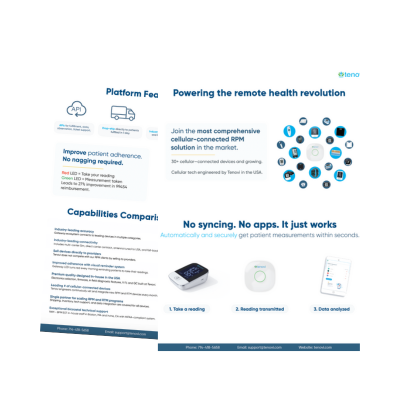
Tenovi builds the connected device and data infrastructure behind RPM and RTM programs. Our cellular devices transmit readings without apps, Bluetooth pairing, or home Wi-Fi, so patients can participate regardless of their technical comfort or connectivity. Contact us for a free demo and consultation.