
Telehealth for stroke patients has moved from a pandemic workaround to a standard part of post-discharge care. For Federally Qualified Health Centers (FQHCs) and the Medicaid programs that fund them, the question is no longer whether virtual follow-up works. The question is which parts of it produce results worth building a program around.
The answer has sharpened over the past two years. Remote patient monitoring for stroke patients and nurse-led virtual follow-up show their clearest benefit in one area: blood pressure control. That single outcome happens to be the strongest modifiable driver of recurrent stroke. This article walks through what the evidence supports, what it does not yet support, and how safety-net care teams can build a program that reflects both.
The Stroke Burden Facing Medicaid and FQHC Populations
Stroke remains one of the most common and most disabling conditions in American primary care. The CDC reports that more than 795,000 people in the United States have a stroke each year. About 87% of those are ischemic strokes, caused by blocked blood flow to the brain.
Roughly 185,000 of those strokes each year happen in someone who has already had one. That is close to one in four. Recurrence is a predictable risk, and follow-up care is designed to reduce it. Long-term cohort data confirms that secondary prevention changes that trajectory.
The burden also falls unevenly. CDC data shows the risk of a first stroke is nearly twice as high for non-Hispanic Black adults as for White adults. Stroke reduces mobility in more than half of survivors age 65 and older. And CDC surveillance published in 2024 found that self-reported stroke prevalence rose 14.6% among adults aged 18 to 44 between 2011 and 2022, with the largest increase among adults with less than a high school education.
Those are the populations FQHCs serve. They are also the populations most likely to face transportation barriers, fragmented post-acute referrals, and gaps between hospital discharge and the first primary care visit.
What the Current Evidence Says About Telehealth for Stroke Patients
The most recent systematic review on this question was published in the Journal of Medical Internet Research in November 2025. Researchers pooled nine randomized controlled trials covering 2,524 community-dwelling stroke survivors. Ischemic stroke or transient ischemic attack accounted for roughly 93% of the sample.
Most of the interventions were modest in design. Six of the nine used the telephone as the primary channel. Three combined remote monitoring with structured nurse follow-up. Contact frequency was usually monthly. None required specialized equipment beyond a home blood pressure cuff.
Blood Pressure Control Is the Strongest Signal
Patients receiving nurse-led telecare were more than twice as likely to reach their target blood pressure. The pooled odds ratio was 2.33 (95% CI 1.83 to 2.98), and the authors graded the certainty of this finding as moderate. That was the strongest and most consistent result in the review.
The average change in millimeters of mercury told a softer story. Systolic pressure fell by 4.83 mmHg and diastolic by 6.41 mmHg, but neither reached statistical significance, and heterogeneity across studies was high. The proportion of patients hitting target is the more reliable measure here.
Fewer Emergency Visits and Better Coping
Three of the nine trials tracked health care use. Structured virtual follow-up did not increase primary care visits, which addresses a common concern about demand. One trial found significant reductions in emergency department visits and hospital admissions.
Patients also reported better ability to cope with their condition. One trial documented fewer falls and fewer urinary tract problems among participants receiving telephone follow-up. The review’s authors described telecare as functioning like an early warning system, catching deterioration before it becomes an admission.
Where the Evidence Is Still Thin
Honest program design requires naming the gaps. Only one of the nine trials treated stroke recurrence as a formal endpoint, and it found no significant difference over 12 months. Medication adherence was assessed in a single trial, which also showed no significant effect.
Quality of life and psychological outcomes were mixed. Most follow-up periods ran 12 months or less. The authors were explicit that pooled effects on continuous outcomes did not reach significance and that findings should be read with caution.
The practical reading is straightforward. Virtual follow-up is well supported as a risk factor management tool. It is not yet proven as a standalone recurrence prevention intervention, and it does not replace acute stroke services.
Why Blood Pressure Is the Right First Target
If a program can only do one thing well, blood pressure is the thing to choose. A meta-regression analysis in Hypertension established that reducing blood pressure after stroke lowers the risk of recurrent events. The causal chain from home readings to prevented strokes is better documented here than for any other remote measure.
Blood pressure also happens to be the easiest vital sign to capture at home. Cuffs are inexpensive, patients understand the numbers, and readings arrive frequently enough to show a trend within weeks.
The link runs through medication behavior. An American Heart Association scientific statement documents how closely adherence and blood pressure control track together. When a care team sees readings drift, that is often the first visible sign of a medication problem, and a phone call can resolve it before the next appointment.
One design detail matters more than the technology. In the trials reviewed, blood pressure improvements were larger where nurses could adjust antihypertensive therapy directly. Where medication changes required a physician referral, the resulting delay reduced the benefit. Scope of practice and standing orders shape outcomes as much as any device.
How FQHCs Can Put Telehealth for Stroke Patients Into Practice
Remote patient monitoring for stroke patients does not require a new department. Most of the components already exist inside an FQHC. The work is sequencing them.
- Identify patients at discharge, not at the first missed visit. Build a referral trigger from the hospital discharge summary or the transitional care management encounter. The first 90 days carry the highest recurrence risk.
- Start with home blood pressure and one clinical owner. Assign a nurse or clinical pharmacist to the panel. A single owner who knows the patients outperforms a rotating queue.
- Set standing orders for medication titration. Define in advance what the assigned clinician can adjust without a referral. This single decision does more for outcomes than any other choice in the program.
- Choose cellular devices over app-dependent ones. Patients recovering from stroke may have hemiparesis, aphasia, or limited digital literacy. A cuff that transmits without a smartphone, a login, or home Wi-Fi removes several failure points at once.
- Schedule contact on a cadence, not on exceptions. Monthly structured calls were the norm in the trials that showed benefit. Reactive outreach triggered only by alerts produced weaker results.
- Include the caregiver from the start. Several trials delivered education to family caregivers alongside patients. Caregiver involvement reduced complications and eased the burden of home management.
Where Devices and Connectivity Fit
The trials that combined remote monitoring with nurse follow-up produced faster clinical adjustments than telephone-only models. The reason is data quality. Self-reported readings arrive late, incomplete, or transcribed incorrectly. Device-transmitted readings arrive on schedule and land in the record without a step in between.
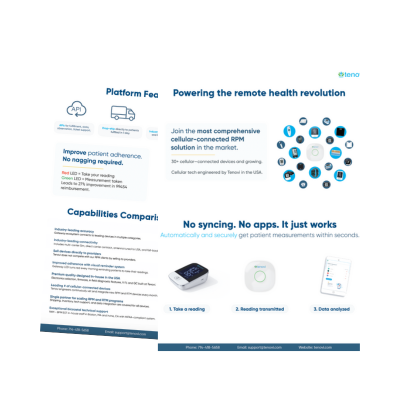
For a stroke population, connectivity is the deciding factor. The Tenovi Gateway pairs with cellular-connected devices and transmits readings automatically, with no app, no pairing, and no home internet required. A patient with limited hand function takes one reading and the data moves on its own. For care teams serving rural or low-broadband communities, that difference determines whether a program runs or stalls.
[Internal link: add one relevant Tenovi post here, for example a hypertension or chronic care management RPM article]
Frequently Asked Questions
1) Does telehealth for stroke patients reduce the risk of a second stroke?
The evidence supports an indirect effect rather than a proven direct one. Virtual follow-up reliably improves blood pressure control, and blood pressure control is established as a driver of recurrence risk. Trials measuring recurrence directly have been too small and too short to demonstrate that link on their own.
2) What conditions should an FQHC monitor after a stroke?
Blood pressure first, because the evidence and the clinical rationale are strongest. Many stroke survivors also carry diabetes, atrial fibrillation, or heart failure. Weight, glucose, and pulse can be added once the blood pressure workflow is stable.
3) How soon after discharge should remote monitoring begin?
As close to discharge as the referral process allows. Recurrence risk concentrates in the first 90 days, so a device that arrives in week six misses much of the window that matters most.
4) Do stroke patients need a smartphone to participate?
Not with cellular-connected devices. Readings transmit over a built-in cellular connection, which matters for patients with motor or speech deficits and for households without reliable broadband.
5) Can telehealth replace in-person stroke rehabilitation?
No. The reviewed evidence positions virtual follow-up as a complement to rehabilitation and acute care, not a substitute. It works best for secondary prevention, risk factor management, and early detection between visits.
6) What staffing does a post-stroke monitoring program require?
Most trials were nurse-led, with monthly contact and a defined patient panel. Programs performed better where the assigned nurse or pharmacist had authority to adjust medications under standing orders.
Understanding Telehealth for Stroke Patients
Telehealth for stroke patients delivers its clearest value in the months after discharge, when recurrence risk is highest and contact with the care team is thinnest. Current evidence shows that nurse-led virtual follow-up more than doubles the odds of reaching target blood pressure, reduces emergency visits in some settings, and improves how patients cope at home. It has not been shown to prevent recurrence on its own, and it does not replace rehabilitation or acute care. For FQHCs, the practical path is a focused program: enroll at discharge, monitor blood pressure with cellular devices, give one clinician ownership and titration authority, and contact patients on a set schedule. That design fits existing staffing, serves patients facing real access barriers, and produces the documentation Medicaid quality programs ask for.
Tenovi provides the cellular-connected remote patient monitoring infrastructure behind RPM and chronic care management programs across the country. Our devices and Tenovi Gateway transmit patient readings automatically, with no app, no pairing, and no patient Wi-Fi. If your team is building post-stroke or hypertension monitoring, we can help you get it running. Request a free demo and consultation to talk through what your program needs.