
Barriers to medication adherence are the factors that keep patients from taking medications as prescribed. These barriers affect outcomes, costs, and quality of care across nearly every chronic condition. Some sit with the patient, such as forgetfulness or limited health literacy. Others come from the regimen itself, the cost of treatment, or gaps in communication with the care team.
This article covers six common barriers to medication adherence. It also outlines practical ways care teams can address each one. The final sections show how remote therapeutic monitoring (RTM) gives providers objective adherence data between visits.
Why Medication Adherence Matters in Chronic Care
Medication adherence is the extent to which patients take medications as their provider prescribed. In most studies, a patient is considered adherent when they take 80% or more of prescribed doses. Yet adherence to chronic medications for diabetes and hypertension usually falls between 50% and 60%. A review in The Permanente Journal found this holds true even for patients with good insurance and drug benefits.
The World Health Organization reached a similar conclusion in its landmark report on adherence to long-term therapies. It found that adherence among patients with chronic diseases averages about 50% in developed countries. The report also noted that improving adherence may do more for population health than improving any single medical treatment.
The scale of the problem is large. According to the Centers for Disease Control and Prevention (CDC), about one in five new prescriptions is never filled. Among those that are filled, roughly half are taken incorrectly. Common errors involve timing, dosage, frequency, and duration. Nonadherence is also linked to higher hospital admission rates and an estimated $100 billion to $300 billion in direct U.S. health care costs each year.
The benefits of adherence are just as clear. Patients who take blood pressure medications as prescribed are 30% to 45% more likely to reach blood pressure control, according to the CDC. For care teams, identifying the barriers to medication adherence is the first step toward better outcomes.
6 Common Barriers to Medication Adherence
Researchers have identified many factors that influence whether patients take medications as prescribed. The six barriers to medication adherence below are among the most common. They are also among the most actionable for providers, pharmacists, and care teams.
1) Forgetfulness and Disrupted Routines
Forgetfulness is one of the most familiar barriers to medication adherence. Busy schedules, travel, and changes in daily routine make it easy to miss a dose. The risk grows for patients who take several medications at different times of day.
Patients may also forget to refill prescriptions before they run out. A missed refill can lead to days or weeks without therapy. For conditions such as heart failure or hypertension, those gaps can quickly affect symptoms and outcomes.
Reminders help most when they are built into an existing routine. Tools that prompt patients at the moment of the dose, and alert care teams when doses are missed, address this barrier directly.
2) Limited Health Literacy and Understanding
A patient’s ability to read and understand medication instructions is essential. Patients with limited health literacy may struggle with dosing directions, warning labels, or refill instructions. A meta-analysis of 48 studies found that patients with lower health literacy had a 14% higher risk of nonadherence. The same analysis found that health literacy interventions improved adherence outcomes.
Understanding also goes beyond reading the label. Patients may not know why a medication matters or how it affects their condition. Some worry about side effects or expect results sooner than the medication can deliver. Each of these gaps can lead a patient to skip doses or stop therapy early.
3) Lack of Symptoms
When patients feel no difference after starting a medication, they may assume it is unnecessary. Others stop once they feel better, believing the problem has resolved. The Permanente Journal review lists treatment of a symptom-free condition as a known factor in nonadherence.
This barrier is especially important for hypertension, high cholesterol, and other silent conditions. A patient can feel well while the condition remains poorly controlled. Helping patients see their own health data, such as home blood pressure readings, can make the value of treatment easier to understand.
4) Complex Regimens and Multiple Medications
Patients managing several chronic conditions often take multiple medications, some more than once a day. Each added pill, dose time, or special instruction adds another chance to miss a step. In a 2024 study of 429 senior outpatients that measured regimen complexity, 51% were nonadherent.
Complexity also includes practical details. Some medications must be taken with food and others on an empty stomach. Some are split, taken on alternating days, or adjusted based on lab results. Pharmacist-led medication reviews and simplified dosing schedules can reduce this burden where clinically appropriate.
5) Medication Cost
Cost is a common and often hidden barrier to medication adherence. In a 2022 national survey of Americans 65 and up, 20.2% reported cost-related nonadherence. The most common behaviors were delaying a prescription fill and not filling a prescription at all. Others reported skipping doses or taking less medication to make it last.
Cost barriers often overlap with other challenges. Respondents who reported cost-related nonadherence were more than twice as likely to need help with written health information. Nearly 90% of all respondents wanted their physician to use tools that show medication prices during visits. Open conversations about cost help care teams find lower-cost options before a prescription goes unfilled.
6) Communication and Counseling Gaps
Clear communication between patients, providers, and pharmacists is critical to adherence. A strained or rushed patient-provider relationship is another factor noted in the Permanente Journal review. Patients who do not feel heard may not share side effects, missed doses, or concerns about their medications.
Care teams can open the conversation with simple, nonjudgmental questions such as:
- Do you keep a current list of all your medicines, including over-the-counter products, vitamins, and supplements?
- Do you know why you take each medication?
- Do you understand how each medicine affects your condition?
- When a medication changes, do you review your list with your pharmacist?
- Do you report side effects to your pharmacist or provider?
- Do you let your care team know when you miss doses?
These questions help identify barriers early and build trust over time.
How Care Teams Can Overcome Barriers to Medication Adherence
Most patients face more than one barrier at a time, so combined approaches tend to work best. Care teams can consider the following strategies:
- Simplify the regimen. Review medication lists regularly and consolidate doses where clinically appropriate.
- Use teach-back. Ask patients to explain in their own words how and why they take each medication.
- Discuss cost early. Ask about affordability at the point of prescribing and consider generic or lower-cost options.
- Involve pharmacists. The CDC outlines pharmacy-based interventions that support adherence in cardiovascular care.
- Measure adherence objectively. Self-reported adherence depends on patient recall. Connected devices capture when doses are taken and share that data with the care team.
- Follow up between visits. Remote monitoring helps care teams spot missed doses early and contact patients before a small gap becomes a larger problem.
The Tenovi Smart Pillbox: Addressing Barriers to Medication Adherence
Self-reporting remains the most common way to measure medication adherence, and it depends on patient memory. Smart pill box technology gives providers objective data and helps address several barriers to medication adherence at once.
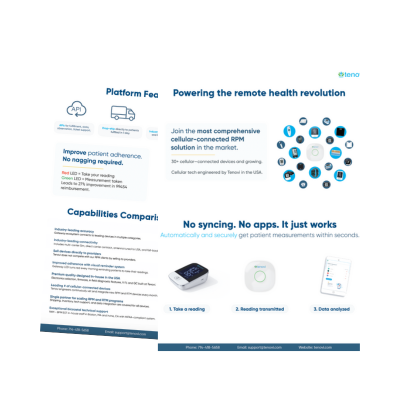
The Tenovi Smart Pillbox looks and works like a standard 7-day morning and evening pillbox. Built-in sensors detect when compartments are opened or refilled. Event data transmits automatically through the Tenovi Cellular Gateway whenever the patient is within 30 feet. Care teams can then review adherence remotely and intervene before complications arise.
Visual cues support the daily routine. The compartment lights up red when it is time to take a dose. The Gateway also lights up red as a reminder and turns green once the compartment is opened and the event is transmitted.
The Tenovi Smart Pillbox requires no apps, syncing, or Wi-Fi. This simple design supports patients at every level of comfort with technology. It also addresses several of the barriers covered above:
- Forgetfulness: Light reminders prompt each dose at the right time of day.
- Complex regimens: Morning and evening compartments organize multiple medications by day and time.
- Communication gaps: Care teams see missed doses and can start a conversation before a pattern forms.
The pillbox data supports remote therapeutic monitoring programs focused on medication adherence. For patients on one or two high-risk medications, the PatchRx Smart Pill Bottle Cap offers a complementary adherence-tracking option through the same Gateway.
Frequently Asked Questions About Barriers to Medication Adherence
1) What are the most common barriers to medication adherence?
The most common barriers to medication adherence include forgetfulness, limited health literacy, lack of symptoms, complex regimens, medication cost, and communication gaps. Many patients face more than one of these barriers at the same time.
2) What is considered good medication adherence?
Most studies define adherence as taking 80% or more of prescribed doses. Adherence to chronic medications often falls between 50% and 60%, well below that threshold.
3) Why do patients stop taking medications when they feel better?
Patients may believe their condition has resolved once symptoms improve. For chronic conditions such as hypertension, the condition can remain active even when the patient feels well. Education and access to personal health data help patients understand the need for ongoing treatment.
4) How does medication cost affect adherence?
Cost can lead patients to delay fills, skip doses, or leave prescriptions unfilled. In 2022, about one in five Americans 65 and up reported cost-related nonadherence. Asking about affordability during visits helps providers find lower-cost options.
5) How can providers measure medication adherence?
Providers often rely on patient self-reports, pill counts, and pharmacy refill records. Connected devices such as smart pillboxes add objective, time-stamped data on when doses are taken. This data helps care teams spot patterns and follow up between visits.
6) How does remote therapeutic monitoring support medication adherence?
Remote therapeutic monitoring uses connected devices to track treatment-related data outside the clinic, including medication adherence. Care teams receive this data remotely and can act on missed doses early. This proactive approach supports better outcomes for patients managing chronic conditions at home.
Understanding Barriers to Medication Adherence
Forgetfulness, limited health literacy, lack of symptoms, complex regimens, cost, and communication gaps can all stand between patients and their prescribed treatment. Missed doses lead to poorer outcomes, higher costs, and avoidable hospitalizations. Care teams can address these barriers with simpler regimens, clear communication, cost conversations, and objective adherence data. The Tenovi Smart Pillbox tracks adherence in the background, giving providers and patients the information they need to stay on track.
Tenovi works exclusively with companies that offer remote patient monitoring (RPM) and remote therapeutic monitoring solutions to healthcare providers. Our cellular-connected devices and the Tenovi Cellular Gateway deliver reliable data from the patient’s home to the care team. Contact us today for a free demo and consultation.