
Remote patient monitoring is used for managing chronic and acute conditions from outside traditional clinical settings. Care teams use it to track vital signs, symptoms, and medication adherence between visits. This guide answers what remote patient monitoring is used for, explains what remote patient monitoring is, and details 9 conditions it commonly helps manage along with the devices used for each.
Understanding what remote patient monitoring is used for starts with understanding the technology itself. What is remote patient monitoring? It is the use of connected medical devices to collect patient health data at home and transmit that data to a care team for review.
What Is Remote Patient Monitoring?
Remote patient monitoring (RPM) uses FDA-cleared medical devices, such as blood pressure monitors, weight scales, and pulse oximeters, to collect patient health data at home. That data transmits to the care team for review between office visits. As a result, providers can watch a patient’s status over time and step in early when readings drift out of range.
The clinical value comes from consistency. A single in-office reading is a snapshot. Daily readings show a trend, and trends surface problems sooner. That is why understanding what conditions remote patient monitoring is used for matters for any practice building an RPM program.
RPM also supports specific billing pathways. Medicare reimburses RPM under CPT codes such as 99453 (setup), 99454 (device supply and data), and 99457 and 99458 (management time), as detailed in the CMS Telehealth and Remote Monitoring booklet. Effective January 1, 2026, CMS added two codes for shorter durations: 99445 for 2 to 15 days of data and 99470 for the first 10 minutes of management time. The framing here should stay patient-first. RPM is proactive, preventive care that helps improve outcomes and lower total cost of care.
What Is Remote Patient Monitoring Used For?
Remote patient monitoring is used for improving patient engagement, reducing hospital readmissions, and lowering healthcare costs through more efficient care. The conditions below show the range of what remote patient monitoring is used for, the devices involved, and the research behind each use.
1) Chronic Conditions
Chronic disease management is the most common answer to what remote patient monitoring is used for. Patients with diabetes, hypertension, heart failure, chronic obstructive pulmonary disease (COPD), and kidney disease benefit from ongoing tracking of vital signs and symptoms.
Common devices include blood pressure monitors, blood glucose meters, weight scales, and pulse oximeters. Consistent readings help providers personalize treatment, detect problems early, and reduce avoidable readmissions.
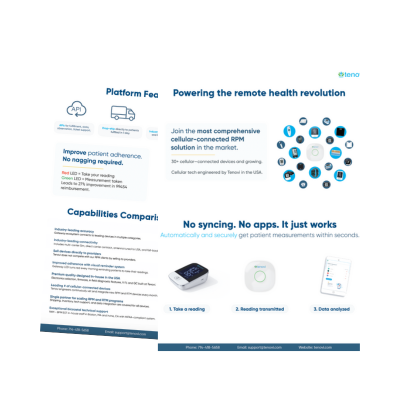
The Tenovi Gateway connects these devices without requiring the patient to own a smartphone or set up an app, which lowers the barrier for chronic-care populations.
2) Heart Failure
Heart failure is one of the strongest use cases for remote patient monitoring. Small daily weight gains often signal fluid retention before symptoms become severe, so a connected scale gives the care team an early warning.
Blood pressure monitors and pulse oximeters add further context. Research has linked structured RPM programs to fewer heart failure readmissions and better adherence to treatment plans. For heart failure patients, catching decompensation early can prevent an emergency admission. Tenovi covers this use case in depth in its guide to remote patient monitoring for heart failure.
3) Hypertension
Hypertension affects nearly half of U.S. adults, according to the Centers for Disease Control and Prevention (CDC). Remote patient monitoring is used for confirming diagnoses, guiding medication changes, and tracking whether blood pressure stays in range.
Home blood pressure readings also reduce white coat effects, since patients measure in a familiar setting. A validated home blood pressure monitor is the core device, and readings automatically transmit to the care team for review.
4) Post-Surgical Care
Remote patient monitoring is used for tracking recovery after surgery. Care teams watch vital signs, screen for signs of infection, monitor pain, and confirm proper wound healing without requiring the patient to travel back to the hospital.
Blood pressure monitors, pulse oximeters, and thermometers keep vitals visible during recovery. Digital pillboxes support medication adherence. Consistent monitoring can improve outcomes, reduce readmissions, and lower cost.
5) Pregnancy and Postpartum Care
Maternal health is a growing use case. According to the National Center for Health Statistics, 649 women died of maternal causes in the United States in 2024, a decline from prior pandemic-era peaks but still a serious public health concern. Cardiovascular conditions remain a leading contributor.
Remote patient monitoring is used for watching pregnant and postpartum patients for hypertension, gestational diabetes, and preterm labor risk. Common devices include:
- Weight scale to help detect early fluid retention.
- Blood pressure monitor to keep blood pressure in a healthy range.
- Blood glucose meter to evaluate gestational diabetes management.
The American College of Obstetricians and Gynecologists (ACOG) supports expanded use of remote monitoring before, during, and after pregnancy, including for postpartum hypertension follow-up. Tenovi covers this topic further in its overview of remote pregnancy monitoring.
6) Behavioral and Mental Health Conditions
Remote patient monitoring is used for supporting behavioral health when paired with physiologic tracking. Wearables and connected devices can capture data such as heart rate and sleep patterns that inform care for depression, anxiety, and substance use disorders.
RPM does not replace clinical care here. Instead, it supports remote check-ins, medication and treatment adherence monitoring, and symptom tracking so providers can adjust plans between appointments.
7) COPD and Respiratory Conditions
Patients with COPD and asthma benefit from tracking oxygen levels and breathing patterns. A pulse oximeter monitors blood-oxygen saturation, and a peak flow meter measures airflow out of the lungs.
Clinical literature identifies forced expiratory volume (FEV1) as a reliable measure of lung function. Regular home readings help detect flare-ups early so patients can seek timely treatment before a condition escalates to an emergency. For more, see Tenovi’s guide to COPD remote patient monitoring.
To support Medicare RPM billing, a patient generally needs at least 16 days of readings in a 30-day period for CPT 99454, so device adherence matters for respiratory programs.
8) Post-Acute and Infectious Disease Care
Remote patient monitoring proved its value during the COVID-19 pandemic, and the same model now supports other post-acute and infectious disease care. A study in JAMA Network Open linked a hospital RPM program to a 32% lower hospitalization rate and shorter stays for COVID-19 patients managed at home.
Devices track temperature, blood pressure, and oxygen saturation, transmitting readings so providers can spot a drop in oxygen and intervene early. This approach reduces strain on facilities while keeping lower-acuity patients safely at home.
9) Medication Adherence and Asthma
Medication adherence tools help patients take medications as prescribed. Smart pillboxes, dispensers, and connected bottle caps record dose events with a date and time stamp, giving care teams real-time insight into adherence.
For asthma specifically, remote therapeutic monitoring (RTM) and peak flow meters track symptoms and airflow, while smart inhalers record medication use and, in some cases, inhalation technique. Alerts remind patients when a dose is due. Better adherence supports fewer attacks and steadier control.
Common Remote Patient Monitoring Devices by Condition
| Condition | Common RPM Devices |
|---|---|
| Chronic conditions | Blood pressure monitor, glucose meter, weight scale, pulse oximeter |
| Heart failure | Weight scale, blood pressure monitor, pulse oximeter |
| Hypertension | Blood pressure monitor |
| Post-surgical care | Blood pressure monitor, pulse oximeter, thermometer, digital pillbox |
| Pregnancy | Weight scale, blood pressure monitor, glucose meter |
| Behavioral health | Wearables, connected physiologic devices |
| COPD and asthma | Pulse oximeter, peak flow meter, smart inhaler |
| Post-acute and infectious disease | Thermometer, blood pressure monitor, pulse oximeter |
| Medication adherence | Smart pillbox, connected dispenser, smart inhaler |
Frequently Asked Questions
1) What is remote patient monitoring used for?
Remote patient monitoring is used for managing chronic and acute conditions from home. Care teams track vital signs, symptoms, and medication adherence between visits so they can intervene early.
2) What conditions is remote patient monitoring used for?
RPM commonly supports chronic conditions, heart failure, hypertension, post-surgical recovery, pregnancy, behavioral health, COPD and asthma, post-acute and infectious disease care, and medication adherence.
3) What devices are used in remote patient monitoring?
Common devices include blood pressure monitors, blood glucose meters, weight scales, pulse oximeters, thermometers, peak flow meters, smart inhalers, and connected pillboxes.
4) Does Medicare cover remote patient monitoring?
Medicare reimburses RPM under CPT codes 99453, 99454, 99457, and 99458 when programs meet the required data collection and time thresholds. Most programs need at least 16 days of readings in a 30-day period for CPT 99454.
5) Does remote patient monitoring reduce hospital readmissions?
Research across conditions such as heart failure and COPD has linked structured RPM programs to fewer readmissions and lower costs, though results depend on program design and patient adherence.
Understanding What Remote Patient Monitoring Is Used For
This guide covered 9 conditions that show what remote patient monitoring is used for, from chronic disease and heart failure to pregnancy, respiratory conditions, and medication adherence. Across all of them, the pattern is the same. Consistent home readings give care teams a trend instead of a snapshot, which supports earlier intervention, fewer readmissions, and lower total cost of care. RPM can be tailored to the needs of individual patients and the providers managing them.
Tenovi provides remote patient monitoring built for enterprise software integration, with cellular-connected devices and a comprehensive API for data transfer, device activation, fulfillment, and billing. To see how Tenovi can support your program, contact us for a free demo and consultation.