Roughly 6.7 million U.S. adults over age 20 are living with heart failure, and that number is projected to climb to 8.7 million by 2030 and 11.4 million by 2050. The lifetime risk of developing heart failure has risen to about 1 in 4. At the same time, the cost of care is steep: one recent analysis put the average annual direct healthcare cost at about $31,464 per patient, rising to roughly $45,893 in the first year after diagnosis. As the population ages and these costs climb, the need for scalable, proactive care strategies has never been clearer. Remote patient monitoring for heart failure is one telehealth approach that helps care teams meet that need.
This article looks at how remote patient monitoring for heart failure works, what the clinical evidence shows, and why daily weight monitoring sits at the center of effective congestive heart failure (CHF) management. Along the way, we draw on a peer-reviewed French case report that illustrates the difference proactive monitoring can make.
What Is Remote Patient Monitoring for Heart Failure?
Heart failure presents a distinct set of challenges for care teams: limited access in rural areas, the difficulty of reaching target medication doses, the need to track dose changes closely, and the constant goal of reducing hospitalizations. Traditional, visit-based care has struggled to keep up with these demands, which is part of why telehealth tools have gained ground.
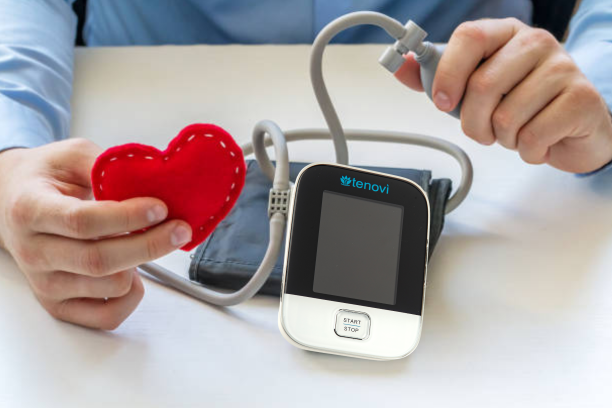
Remote patient monitoring for heart failure lets clinicians track a patient’s vital signs — daily weight, blood pressure, heart rate, and symptoms — from the patient’s home using connected devices. The readings flow to the care team, where they can be reviewed for early warning signs of decompensation. Beyond the data itself, remote monitoring creates a channel for patient engagement, education, and personalized support between in-person visits.
Since 2019, RPM has been internationally supported as part of CHF management, yet high-quality evidence on how to apply it well has remained relatively scarce. That makes real-world case studies especially valuable.
Case Study: Remote Patient Monitoring for Heart Failure in France
A case report published in Patient Preference and Adherence (Creton et al., 2024) followed a 74-year-old man diagnosed with CHF at AP-HP Cochin Hospital in Paris. Beginning in late 2020, he experienced seven hospitalizations totaling 76 days over roughly 15 months, driven by acute heart failure and acute kidney injury whose causes were initially unclear.
His care team implemented three interventions: diuretic treatment, therapeutic education, and remote patient monitoring through a patient-reported-outcomes web application. Diuretic treatment and education alone produced no tangible benefit — the acute episodes kept coming, and his RPM data did not trigger any clinical alerts.
The turning point came during his final hospitalization. A clinical nurse trained in telehealth reviewed his setup and discovered that his baseline weight had been entered incorrectly. Because daily weight readings were being compared against a faulty baseline, the system never flagged the fluid changes that should have raised an alarm. Once the baseline was corrected, the picture changed entirely: the patient had no new episodes, avoided a high-risk surgical workup, and went roughly nine months without hospitalization. His quality of life and satisfaction improved markedly.
Why Weight Monitoring Matters in Congestive Heart Failure
The case is, at its core, a story about weight monitoring for congestive heart failure. Sudden weight gain is one of the earliest signs of fluid retention in CHF, often appearing days before symptoms worsen. That early window is exactly when a medication adjustment can keep a patient out of the hospital — which is why many RPM scales send a real-time alert when a patient’s weight fluctuates by more than three pounds in a day.
But the case also carries a cautionary lesson: weight data is only as useful as the baseline it’s measured against. CHF weight monitoring depends on an accurate starting point, correct device setup, and a trained eye reviewing the trends. When those pieces are in place, weight tracking becomes one of the most powerful early-warning tools in heart failure care.
Benefits of Remote Patient Monitoring for Heart Failure
The French case illustrates several benefits that show up consistently across well-run RPM programs:
- Continuous symptom tracking. Ongoing monitoring surfaces clinical issues that might otherwise go unnoticed between visits — in this case, an inaccurate baseline weight that was suppressing alerts.
- Timely interventions. Accurate, continuously reviewed data lets clinicians adjust care before a patient’s condition deteriorates to the point of hospitalization.
- Reduced hospitalizations. After the data correction, the patient went about nine months without a hospital admission, in contrast to the frequent stays he had faced before.
- Patient-centered outcomes. The patient himself credited the improvement in his quality of life and symptom management to remote monitoring, and he avoided a high-risk surgical pathway.
- Cost savings and efficiency. Fewer hospitalizations and interventions translate into meaningful savings for both patients and health systems — a significant consideration given the rising national cost of heart failure care.
Frequently Asked Questions
This question will answer common questions about remote patient monitoring for heart failure.
1.) What is remote patient monitoring for heart failure?
Remote patient monitoring for heart failure is a telehealth approach that lets care teams track a patient’s vital signs—such as daily weight, blood pressure, and heart rate—from home using connected devices. The data is transmitted to clinicians, who can spot early warning signs of decompensation and intervene before a hospitalization becomes necessary.
2.) Why is weight monitoring important in congestive heart failure?
Sudden weight gain is one of the earliest signs of fluid retention in CHF. Daily weight tracking through RPM helps clinicians catch fluid buildup early—often days before symptoms worsen—so medication can be adjusted and an avoidable hospital admission prevented.
3.) How does remote patient monitoring reduce heart failure hospitalizations?
By continuously tracking symptoms and vitals, RPM enables timely interventions. In the case discussed above, correcting an inaccurate baseline weight and maintaining consistent follow-up helped a patient go nine months without a hospitalization after frequent prior admissions.
4.) What devices are used for heart failure remote monitoring?
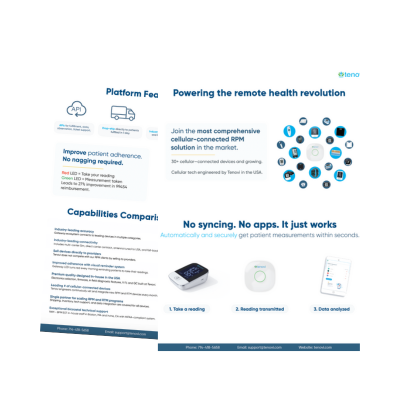
Common devices include connected weight scales, blood pressure cuffs, and pulse oximeters. Tenovi’s cellular-connected devices require no app, no Bluetooth pairing, and no Wi-Fi setup, which improves adherence among older CHF patients.
5.) Is remote patient monitoring for heart failure cost-effective?
Yes. With per-patient CHF costs nearing $30,000 annually, reducing hospitalizations through RPM produces meaningful savings for both patients and health systems while improving quality of life.
Bringing Proactive Heart Failure Care Home
The French case report shows what remote patient monitoring for heart failure can do when it’s set up correctly and reviewed by a trained clinician: earlier detection, timely intervention, fewer hospitalizations, and a better quality of life for the patient. It also underscores how much the fundamentals matter, an accurate baseline weight turned a program that wasn’t working into one that kept a patient stable for months.
Interested in learning more about remote patient monitoring? Tenovi works exclusively with chronic care, telehealth, and RPM software and services companies that want to implement remote patient monitoring programs for healthcare providers. Book a free demo to learn more about our no-sync, no-app RPM hardware and software services.