Using a remote blood pressure device between office visits can help manage blood pressure fluctuations and improve patient care. This article is a complete guide to the FDA-cleared OMRON wrist cuff blood pressure monitor for remote monitoring of hypertension, heart failure, and stroke prevention. We also cover the key features of the OMRON wrist cuff and how to use it correctly.
The sections below explore the role of remote blood pressure monitoring in managing hypertension, supporting stroke prevention, and reducing heart failure readmissions.
Managing Hypertension With the OMRON Wrist Cuff
Hypertension is common and often poorly controlled. According to the CDC, 48.1% of U.S. adults, roughly 120 million people, have hypertension, yet only about 20.7% have it under control. Remote patient monitoring (RPM) lets patients measure blood pressure at home for regular tracking with the OMRON wrist cuff.
RPM supports early detection of problems, which allows timely treatment adjustments. It also reduces the risk of hospitalization, engages patients in their care, and gives providers long-term data trends. For a condition that often shows no symptoms until it causes damage, that steady stream of readings is valuable.
Stroke Prevention and the OMRON Wrist Cuff
People with high blood pressure are more likely to have a stroke. One study published in the Journal of the American Medical Association found that combining RPM with pharmacist-led management produced substantial and lasting blood pressure reductions over 24 months, outperforming standard care.
The American Heart Association supports expanding evidence-based RPM technologies to reduce the burden of stroke and other cardiovascular events. By catching elevated readings early, the OMRON wrist cuff helps care teams act before a small problem becomes an emergency.
Heart Failure and Remote Blood Pressure Monitoring
Heart failure affects about 6.7 million U.S. adults, a figure projected to rise to 8.7 million by 2030. The readmission burden is heavy: nearly 1 in 4 heart failure patients are readmitted within 30 days of discharge, and about half within six months. This points to an urgent need for better management between visits.
RPM shifts the focus toward proactive heart failure care by supporting personalized plans and connecting the different parts of a patient’s care. Regular blood pressure readings from the OMRON wrist cuff give clinicians the trend data they need to intervene early and help keep patients out of the hospital.
OMRON Wrist Cuff Features
Remote blood pressure monitoring helps physicians spot early complications and adjust treatment between visits. OMRON and Tenovi are committed to keeping patient blood pressure monitors accurate, portable, and easy to use. The OMRON wrist cuff measures and displays systolic pressure, diastolic pressure, and heart rate.
According to the American Heart Association, a systolic reading above 130 mmHg or a diastolic reading above 80 mmHg is considered hypertensive. The top number, systolic pressure, reflects the force in the arteries when the heart beats. The bottom number, diastolic pressure, reflects the pressure between beats.
The AHA generally recommends upper-arm cuffs for the most reliable results. Wrist monitors like the OMRON wrist cuff can be a good fit for patients with larger arms or those who have had lymph node removal, as long as they are positioned correctly. Because wrist readings are sensitive to position, it helps to have a provider compare arm and wrist readings once to confirm device accuracy.
For patients who prefer wrist-based measurement, the OMRON wrist cuff reports the following specifications:
- FDA-cleared
- Pressure range: 0–299 mmHg
- Pulse range: 40–180 beats/min
- Pressure accuracy: ±3 mmHg or 2%
- Pulse accuracy: ±5%
The OMRON wrist cuff works right out of the box, which removes the hassle of device setup.
How Does the OMRON Wrist Cuff Work?
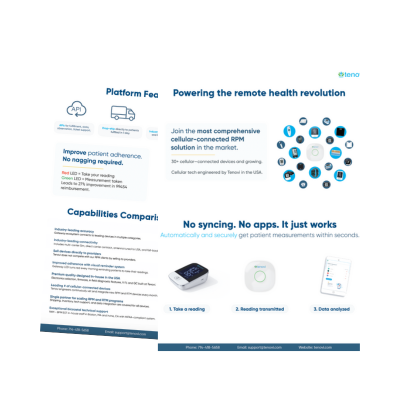
The Tenovi Cellular Gateway powers the OMRON wrist cuff. Patients connect the Gateway once, then take daily blood pressure measurements. The device is ready to use out of the box and is designed to be simple.
An LED ring on the Gateway turns red each morning to remind patients to take a measurement. The OMRON wrist cuff automatically transmits data wirelessly to the Tenovi cloud, and the light turns green to confirm the reading was sent. Through Tenovi’s system integrations, physicians can view measurements in the Tenovi dashboard or their own platform.
How to Use the OMRON Wrist Cuff
To use the OMRON wrist cuff correctly:
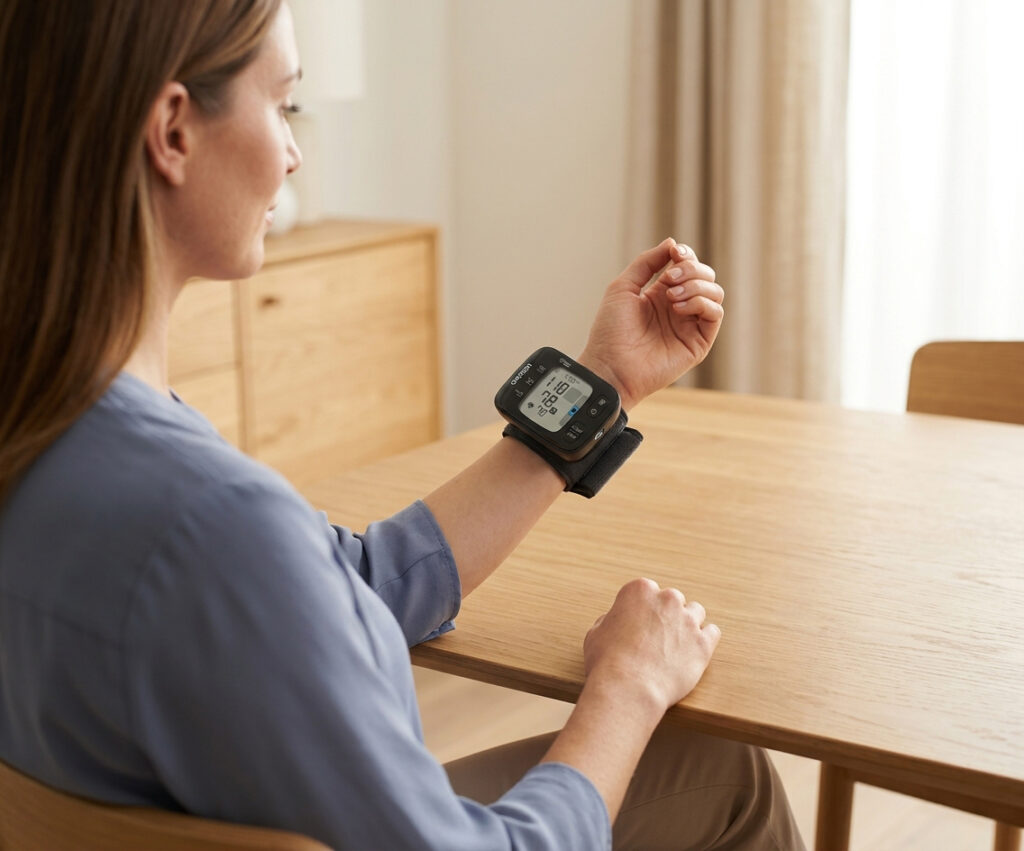
- Wrap the cuff snugly around a bare wrist, not over clothing, about a half inch below the palm.
- Rest your elbow on a table and raise the wrist so it sits level with your heart. Position matters more with wrist monitors than with arm cuffs.
- Stay still and quiet, then press the button to start the measurement.
- The cuff inflates, measures your blood pressure, and automatically sends the data to the RPM platform.
Keeping the wrist at heart level is the single most important step for an accurate wrist reading.
Please see the OMRON Wrist Blood Pressure Monitor Support Page for further assistance. Or other helpful articles from Tenovi on how to take a proper blood pressure measurement.
For the best results, patients are encouraged to:
- Avoid eating, exercise, caffeine, and alcohol for at least half an hour before.
- Relax for about 5 minutes before measuring.
- Empty the bladder.
- Remain still and avoid bending the wrist.
- Sit comfortably and avoid crossing your legs.
- Place the device directly over the radial artery.
- Measure around the same time every day.
Tenovi Remote Patient Monitoring Technical Support
Remote patient monitoring devices can improve the quality of care for patients with chronic conditions but also require proper guidance and support. That’s why Tenovi offers a HIPAA-compliant technical support team that helps patients and providers get started with the RPM technology and troubleshoot any issues.
Tenovi’s technical support associates are trained to provide clear and friendly instructions on using RPM devices and accessing the Tenovi RPM platform. By providing this level of support, Tenovi reduces the workload and stress for healthcare providers and enhances the patient experience.
If you want to learn more about how Tenovi can help you deliver better care with remote patient monitoring, please schedule a free demo and consultation with us today.
Frequently Asked Questions
1) Is the OMRON wrist cuff accurate?
The OMRON wrist cuff is FDA-cleared, with pressure accuracy of ±3 mmHg or 2%. Wrist monitors are sensitive to position, so keeping the wrist at heart level is essential. Having a provider compare an arm and wrist reading once helps confirm accuracy.
2) Who should use a wrist blood pressure monitor?
Wrist monitors can suit patients with larger arms or those who have had lymph node removal. The AHA generally prefers upper-arm cuffs, so patients should follow their provider’s guidance on which device fits their needs.
3) How does the OMRON wrist cuff transmit data?
The OMRON wrist cuff pairs with the Tenovi Cellular Gateway, which sends readings automatically to the Tenovi cloud over a cellular connection. No smartphone, app, or home Wi-Fi is required.
Understanding the OMRON Wrist Cuff for Remote Monitoring
The OMRON wrist cuff offers an accurate, easy-to-use option for remote blood pressure monitoring. When positioned correctly, it helps clinicians track hypertension, support stroke prevention, and reduce heart failure readmissions, all while engaging patients in their own care. For the right patients, it brings reliable connected monitoring into the home with minimal setup.
Tenovi works exclusively with companies that offer remote patient monitoring to healthcare providers, including RPM software companies, chronic care management companies, and telehealth platforms. Our devices automatically transmit data through the Tenovi Cellular Gateway to help optimize care for patients with hypertension, heart disease, COPD, diabetes, and kidney disease. Request a free demo to see how simple connected care can be.