
Blood pressure monitor suppliers range from pharmacies to device manufacturers to remote monitoring infrastructure providers. Each serves a different buyer. A patient who needs one monitor can walk into a store. A care services company enrolling hundreds of patients needs a supplier that can deliver, connect, support, and replace devices.
This guide explains the main supplier types and what to check before you choose one. It also covers cellular connectivity, where to buy a blood pressure machine, and the operational questions that separate suppliers once the first order ships.
Types of Blood Pressure Monitor Suppliers
Blood pressure monitor suppliers fall into four groups. Each fits a different buyer and a different scale.
Retail Stores and Online Marketplaces
Pharmacies, large retailers, and online marketplaces sell monitors one at a time. They suit individuals. The AMA suggests that people who need a validated device check a local retailer or pharmacy, or ask their health department or insurer about options.
For a program, single-unit retail has limits. Readings often stay on the device or in a consumer app, so the care team does not see them automatically.
Medical Equipment Distributors
Durable medical equipment (DME) distributors carry several brands and can supply larger quantities. They help when a practice wants monitors for in-office use or loaners. Data transmission, patient onboarding, and shipping to homes can depend on the device and on a separate service.
Device Manufacturers
Manufacturers such as OMRON, A&D Medical, and Welch Allyn build the monitors themselves. They know the hardware best. Programs that buy direct often add connectivity, fulfillment, and data delivery from other sources.
Remote Monitoring Infrastructure Providers
These suppliers combine devices with the pieces a program needs around them: cellular connectivity, data delivery, fulfillment, and support. Tenovi is one. It offers 60+ devices, including blood pressure monitors from several manufacturers, through one API. Our RPM devices guide covers how they support care.
What to Check in the Device
Start with the monitor itself. Four points separate a dependable device from a risky one.
Clearance and Validation
Confirm FDA clearance first. Then ask whether the exact model appears on the AMA’s validated listing. The AMA states that clearance alone does not show a home device is validated for clinical accuracy, so ask for both.
Cuff Range and Sizes
The AHA states that a cuff of the wrong size gives an inaccurate reading. Look for suppliers that offer several sizes, so each patient gets a proper fit. The Tenovi Blood Pressure Monitor Gen 3 offers cuffs for arms from 15 to 52 cm. Our device guide lists published specifications for every monitor Tenovi supports.
Connectivity
Connection type shapes the patient experience. A Bluetooth monitor that pairs with a phone app needs a smartphone and a setup step. A cellular monitor sends each reading over a cellular network, so the patient only takes the measurement. Patients without a smartphone or reliable home internet benefit most.
Catalog Breadth
Programs grow. A patient with hypertension may later need a scale or a glucose meter. A supplier with a wider catalog lets a program add devices without building a new integration.
Cellular Blood Pressure Monitors: Two Connection Models
A cellular blood pressure monitor reaches the care team in one of two ways.
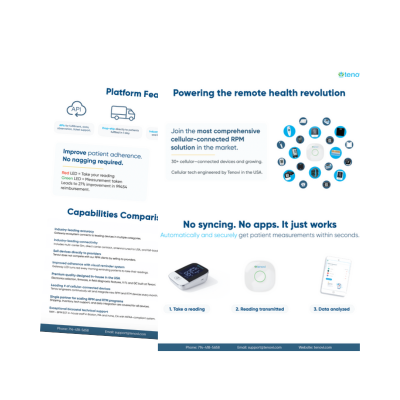
Cellular-connected monitors pair over Bluetooth with the Tenovi Gateway. The Gateway plugs into a wall outlet and sends each reading over a cellular network. One Gateway can support several devices in the same home. Its LED ring turns green to confirm a reading was sent and red each morning to remind the patient to measure.
Cellular-enabled monitors have a SIM built in. The Tenovi Cellular BPM sends readings over 4G and needs no Gateway, Wi-Fi, or Bluetooth. Its batteries last about 9 to 12 months, and it alerts patients when power runs low.
Both models work without apps, syncing, or Wi-Fi at the patient’s home. Readings travel to the Tenovi dashboard or to the program’s own RPM platform.
Where to Buy a Blood Pressure Machine
The answer depends on the buyer.
Individuals can buy a monitor at a pharmacy, a retailer, or an online store. Check the model against the validated listing first, and ask a clinician about cuff size. The AMA notes that some health departments and insurers also offer options.
Programs need more than a store can offer. They buy through a supplier that ships to patients’ homes and delivers data to the care team. That points to a remote monitoring infrastructure provider, or to a distributor paired with a connectivity service.
Operational Questions to Ask Every Supplier
Two suppliers can sell the same monitor and run very different programs. These questions bring the differences out before a contract is signed.
- How are readings delivered? Look for an API with clear documentation, plus a dashboard for teams that do not have their own platform.
- How does fulfillment work? Ask about kit assembly, shipping straight to patients, tracking, and returned devices.
- What happens when a device fails? Ask how fast a replacement ships and who takes the patient’s call.
- Who supports patients and providers? Ask about hours, channels, and training for care teams.
- What security documentation is available? Ask for HIPAA compliance details and a SOC 2 Type 2 report. Tenovi is HIPAA compliant and SOC 2 Type 2.
- How is pricing structured? Ask for devices, connectivity, fulfillment, and support to be itemized, along with any order minimums.
Tenovi handles fulfillment, provisioning, and support, with API-driven ordering. Programs choose the devices, cuff sizes, and kit contents for each patient group. Our guide to the Gen 3 monitor shows what a patient receives and how setup works.
FAQs About Blood Pressure Monitor Suppliers
These answers cover the questions care teams ask when they compare suppliers.
1) Where can I buy a blood pressure machine for a remote monitoring program?
Programs usually buy through a remote monitoring infrastructure provider or a distributor paired with a connectivity service. The supplier should ship to patients, deliver readings to the care team, and support both groups. Individual patients can buy validated monitors at a pharmacy or retailer.
2) What should I look for in blood pressure monitor suppliers?
Check FDA clearance, validation, cuff sizes, and connectivity first. Then check how the supplier delivers data, ships kits, replaces devices, and supports patients. Ask for security documentation, including HIPAA and SOC 2 details.
3) What is the difference between a cellular-connected and a cellular-enabled blood pressure monitor?
A cellular-connected monitor pairs over Bluetooth with a Gateway, which sends the data. One Gateway can serve several devices. A cellular-enabled monitor has its own SIM and sends readings directly, which suits patients who need only one device.
4) Do blood pressure monitor suppliers ship devices to patients?
Some do and some do not. Retail and distributor channels often deliver to the buyer, not the patient. Remote monitoring providers such as Tenovi ship kits to patients’ homes as part of fulfillment.
5) How many cuff sizes should a supplier offer?
Enough to fit the patients in the program. The Tenovi Blood Pressure Monitor Gen 3 offers three cuffs that cover arms from 15 to 52 cm. Measure the upper arm at its midpoint and match it to the listed range.
6) How should a supplier handle patient data and privacy?
A supplier that handles patient data should be able to explain its HIPAA safeguards and share security documentation. Ask for specifics, such as a SOC 2 Type 2 report, before you enroll patients.
Understanding Blood Pressure Monitor Suppliers
Blood pressure monitor suppliers serve different buyers. Retailers fit individuals, distributors fit practices that stock devices, manufacturers build the hardware, and remote monitoring infrastructure providers connect the whole program. Care teams should check clearance, validation, cuff sizes, and connectivity, then ask how each supplier delivers data, ships kits, replaces devices, and protects patient information. Cellular connectivity removes the need for Wi-Fi, apps, and syncing at the patient’s home. A supplier that covers these points lets a program focus on patients.
Tenovi provides the infrastructure behind remote monitoring programs. One API and one partner give healthcare organizations 60+ devices, cellular connectivity, patient data, fulfillment and support for RPM and RTM. Programs add new devices and patient populations on the same integration they started with. Want to see how remote patient monitoring works with Tenovi? Contact us for a free demo and consultation.