This article is part of the Tenovi RPM Outcomes Case Study Series that spotlights data, results, and insights from remote patient monitoring programs running on Tenovi connected devices. Each installment features one anonymized client success story, showing what happens when reliable at-home data reaches a care team in time to act, and the outcomes that follow for patients.
In this case study and patient story, a remote patient monitoring for blood pressure control program cuts high-critical blood pressure readings by 75% in a single quarter. Explore the other stories in the series:
- How RPM Caught a Heart Failure Warning Sign Overnight
- How One RPM Company Turned 2.5 Million Data Points Into Better Patient Outcomes
- Remote Patient Monitoring Program Improved Blood Pressure Control in One Quarter (Current Article)
Download the full Case Study <<Case Study Link>>
Remote Patient Monitoring for Blood Pressure Control: Why Consistency Changes Outcomes
Remote patient monitoring for blood pressure control works because a single reading in a clinic tells you very little. Blood pressure moves throughout the day and from day to day. Real control shows up as a trend, and you can only see that trend if you are watching consistently. A hypertension RPM program gives care teams that steady stream of at-home readings, along with a way to act on them.
This is the story of a physician practice that enrolled its hypertension patients through a national remote patient monitoring and chronic care management partner, and the measurable blood pressure control that followed in a single quarter.
The Setup: Reliable Devices Plus a Monitoring Team
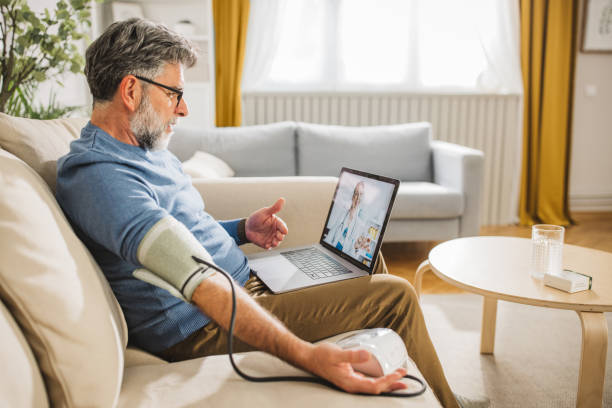
The practice paired reliable Tenovi blood pressure devices with a dedicated clinical monitoring team. Patients took readings at home, and those readings transmitted automatically through the Tenovi Gateway to the care team.
The goal was simple. Give the practice a consistent, trustworthy view of each patient’s blood pressure, and give the monitoring team the information to intervene when readings drifted out of range. Within three months of patients starting on the remote patient monitoring for blood pressure control program, results were clear across the entire enrolled population.
The Results: A 75% Drop in High-Critical Readings
Over three months, the practice saw measurable improvement in blood pressure control:
- High-critical systolic readings fell from 4% of patients to 1%
- High-critical diastolic readings dropped from 1% to 0%
- Systolic readings in goal range climbed from 28% to 42%
- Diastolic readings in goal range rose from 65% to 80%
Taken together, that is a 75% reduction in high-critical blood pressure readings across the enrolled population, achieved in one quarter.
These numbers point in one direction: safer, more stable blood pressure control driven by consistent at-home monitoring. High-critical readings are the ones most associated with acute risk, so moving patients out of that band is exactly the kind of proactive, preventive result that a well-run program aims for.
The Importance for Hypertension Care
Nearly half of American adults have hypertension, according to the Centers for Disease Control and Prevention, and many do not have it under control. Uncontrolled high blood pressure raises the risk of heart attack, stroke, and kidney disease.
The challenge is not usually diagnosis. It is the long stretch between visits, when a patient’s blood pressure can drift without anyone knowing. A hypertension RPM program closes that gap. The American Medical Association has long supported self-measured blood pressure monitoring paired with clinical support as an effective way to improve control.
The practice in this story shows what that looks like when the data is reliable and the team acts on it.
Inside the Program
The national partner runs its program on Tenovi remote patient monitoring infrastructure at significant scale:
- 15,000+ connected Tenovi devices in the field
- 7+ device types, including blood pressure monitors, scales, glucometers, and pulse oximeters
- Partnership launched in 2025
Device reliability is not a small detail here. If a blood pressure reading is questionable, the whole trend becomes questionable. Trustworthy devices are what let the monitoring team treat the data as clinically actionable rather than something to double-check.
Download the full Case Study <<Case Study Link>>
Frequently Asked Questions
1) How does remote patient monitoring improve blood pressure control?
Remote patient monitoring gives care teams a steady stream of at-home blood pressure readings instead of occasional in-office measurements. That lets the team spot trends, catch patients drifting out of range, and intervene sooner. In this program, consistent monitoring helped cut high-critical readings by 75% in three months.
2) What is a high-critical blood pressure reading?
A high-critical reading is a blood pressure measurement in the most severe range, associated with acute health risk. Moving patients out of the high-critical band is a key goal of any hypertension program, because those readings carry the greatest short-term danger.
3) How long does it take to see results from a hypertension RPM program?
Results vary by patient and program, but meaningful improvement can appear within a few months. The practice in this story saw measurable blood pressure control across its enrolled population within three months of patients starting on RPM.
4) Why does device reliability matter in blood pressure monitoring?
If a device produces inconsistent readings, care teams cannot trust the trend. Reliable devices let the monitoring team act on the data with confidence, which is what makes early intervention possible.
Understanding Remote Patient Monitoring for Blood Pressure
Remote patient monitoring for blood pressure turns scattered clinic readings into a continuous, trustworthy trend that care teams can act on. In this program, pairing reliable Tenovi blood pressure devices with a dedicated monitoring team helped a physician practice cut high-critical readings by 75% and move systolic readings in goal range from 28% to 42%, all in a single quarter. The program runs on 15,000+ connected devices across 7+ device types.
Tenovi provides the connected device infrastructure behind remote patient monitoring programs like this one, delivering reliable readings to care teams in real time. To see how Tenovi can support your hypertension RPM program, contact us for a free demo and consultation.