
Star ratings for hospitals are public indicators of clinical quality, patient satisfaction, and safety. As value-based care expands, hospitals are looking for practical ways to improve outcomes and protect revenue. Star ratings for hospitals give patients a quick read on performance, and they give administrators a scorecard tied to reputation and reimbursement.
This article explains how star ratings for hospitals are calculated, why they affect patient care and revenue, and how technologies like remote patient monitoring help hospitals earn stronger outcomes and financial results.
What Are Star Ratings for Hospitals?
Star ratings for hospitals are the method the Centers for Medicare & Medicaid Services (CMS) uses to evaluate and publicly display hospital quality. Ratings run on a 1 to 5-star scale across five categories:
- Mortality
- Safety of care
- Readmission
- Patient experience
- Timely and effective care
A hospital’s overall star rating reflects how well it performs across these categories compared with others nationwide. More stars signal stronger performance. Smaller or newer hospitals may not qualify if they lack enough reported data across the measures.
CMS publishes the ratings on its Care Compare website. In its most recent update, released May 13, 2026, CMS analyzed 52 hospital quality measures, up from 46 in prior years, based on data collected from July 2021 through March 2025. That expanded measure set is one reason year-over-year comparisons should be read carefully.
How Are Star Ratings Calculated?
CMS distills dozens of quality measures into one composite score. Each category carries a set weight. Mortality, safety of care, readmission, and patient experience each contribute 22%. Timely and effective care is weighted at 12%.
If a hospital lacks data in one group, that weight is redistributed proportionally across the remaining categories. CMS then applies risk adjustment so hospitals are compared fairly, accounting for patient complexity and conditions outside a hospital’s control.
To standardize scores, CMS uses a statistical method called Z-scoring. According to Medisolv’s breakdown of the calculation, each measure score is standardized by subtracting the national mean and dividing by the standard deviation across hospitals. This keeps inverse measures, where a lower score is better, from distorting the total.
Hospitals are grouped with peers based on how many measures they report, then a clustering method sorts them into performance groups that map to star levels. Documentation matters here. Accurate coding captures the conditions that feed risk adjustment, which protects a hospital’s score even when many of those diagnoses do not change Medicare payment directly.
How Hospitals Performed in the Latest Ratings
CMS rated 3,203 hospitals in 2026, up from 2,891 in 2025. The increase came largely from 350 hospitals that newly met the reporting threshold, while 38 dropped below it. Roughly 70% of eligible hospitals received a rating.
The 2026 distribution looked like this:
- 385 hospitals (12%) earned 5 stars
- 953 hospitals (29.8%) earned 4 stars
- 991 hospitals (30.9%) earned 3 stars
- 670 hospitals (20.9%) earned 2 stars
- 204 hospitals (6.4%) earned 1 star
The five-star count rose by 94 compared with 2025, the first increase in top-rated hospitals since 2023. One-star ratings fell slightly, from 233 in 2025 to 204 in 2026. Of the 2,853 hospitals rated in both years, 53% kept the same rating, 29% improved by at least one star, and 18% declined.
How Star Ratings Work for Patients
Star ratings give patients a straightforward way to compare local and national hospitals before choosing where to receive care. CMS and the Agency for Healthcare Research and Quality (AHRQ) built the Hospital Consumer Assessment of Healthcare Providers and Systems (HCAHPS) survey, a 29-question instrument that includes 10 patient care experience measures. A summary star rating combines all 10 HCAHPS star ratings into one metric.
To qualify for HCAHPS star ratings, a hospital must complete at least 100 surveys over a rolling four-quarter period and meet the criteria for public reporting. A hospital with fewer than 100 surveys will not receive an HCAHPS star rating, though its individual scores stay publicly available.
Patients can review ratings, penalty data, and benchmark scores through resources like the American Hospital Directory. They should still consult their physicians for guidance on care plans and weigh other factors, including infection and complication rates. The Leapfrog Group also publishes safety and quality data to help patients and providers compare performance.
Why Hospitals Care About Star Ratings
Hospitals treat quality ratings seriously because weak performance can trigger financial penalties under several Medicare programs. A hospital’s star rating shapes public reputation, patient trust, and, in some cases, millions of dollars in Medicare revenue.
Star ratings keep hospitals accountable. Accurate clinical documentation captures the conditions that drive risk adjustment and directly affect the score. To improve, hospitals should monitor performance regularly, study measure specifications, and educate clinical teams.
Progress takes time. Better documentation, smarter patient engagement, and a coordinated quality strategy all move ratings in the right direction. Medical technology can help as well. Star ratings also align closely with broader quality initiatives, including benchmarks tied to HEDIS measures, which influence rankings, value-based contracts, and financial incentives.
Star Ratings and Financial Results
In 2012, CMS launched a quality bonus program for payers. It provides a 5% bonus payment to health plans that earn at least 4 stars. Plans below 3 stars can be terminated if poor performance continues. Higher rebates let plans reinvest in benefits.
Hospitals do not receive these bonuses directly, but they can benefit in several ways:
- Plans with higher bonuses may pay providers better, expand networks, or fund new quality programs.
- Hospitals that perform well under value-based contracts help their partner plans reach high ratings and are often rewarded through value-based payment agreements or shared savings.
- Some hospitals operate within Medicare Advantage networks or own affiliated Medicare Advantage plans, so they benefit directly as both provider and payer. Our overview of payer solutions in remote patient monitoring covers how these arrangements tie quality scores to reimbursement.
Research points to remote patient monitoring (RPM) as a practical way to support better star ratings across mortality, safety of care, readmission, patient experience, and timely and effective care. The next section looks at how RPM contributes to those gains.
How Can Remote Monitoring Help?
Remote patient monitoring and remote therapeutic monitoring (RTM) are technologies that support both value-based care and star rating gains. RPM can improve star ratings for hospitals by strengthening chronic condition management, reducing avoidable hospitalizations, and raising medication adherence and patient satisfaction.
RPM and RTM also advance value-based goals by preventing costly complications, improving population health, and lowering total care costs. That is why many hospitals treat investments in RPM and other digital health tools as both a clinical priority and a business strategy.
A study published in Mayo Clinic Proceedings examined a high-risk COVID-19 remote patient monitoring program and its effect on cost and utilization. Patients who engaged with the program had significantly lower costs than those who did not, with average savings of $1,259 per patient over the 30-day follow-up period. The savings came mainly from lower hospitalization rates and shorter stays. Across the 1,128 engaged patients, total savings reached roughly $1.4 million. The researchers also found that racial and ethnic minority patients were as likely as non-Hispanic white patients to engage with the technology.
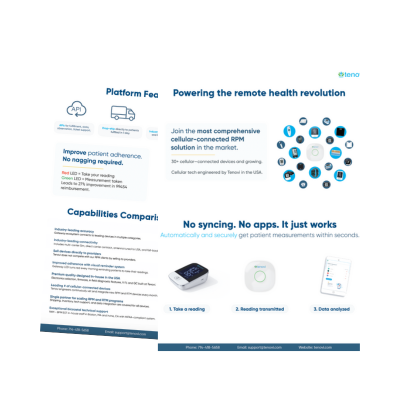
Remote monitoring shifts attention toward preventive care rather than reactive care. With Tenovi, data transmits automatically from cellular-connected devices through the Tenovi Gateway, so care teams can act on changes before they become emergencies. Hospitals that adopt RPM now are positioned to earn more, grow faster, and manage population health more effectively.
Star ratings also overlap heavily with other quality frameworks, so gains often show up in more than one place. For a closer look at that connection, see our related resource on how to improve HEDIS measures with remote patient monitoring.
Frequently Asked Questions
1) What are star ratings for hospitals?
Star ratings for hospitals are CMS scores on a 1 to 5-star scale that summarize quality across mortality, safety of care, readmission, patient experience, and timely and effective care. They appear on the CMS Care Compare website.
2) How often does CMS update hospital star ratings?
CMS updates the Overall Hospital Quality Star Ratings once a year. The most recent refresh was released May 13, 2026, and covered 3,203 hospitals.
3) How many measures go into a hospital star rating?
The 2026 ratings used 52 quality measures, up from 46 in earlier years. The measures are grouped into five categories, each with a set weight toward the final score.
4) Can remote patient monitoring improve a hospital’s star rating?
Remote patient monitoring can support better ratings by reducing readmissions, improving chronic condition management, and raising patient satisfaction. These outcomes map directly to several of the categories CMS scores.
5) Do hospitals earn bonus payments for high star ratings?
Hospitals do not receive direct bonuses the way Medicare Advantage plans do. They benefit indirectly through value-based contracts, shared savings, and partnerships with high-rated plans.
Understanding Star Ratings for Hospitals
Star ratings for hospitals shape patient trust, financial performance, and long-term growth. Ratings run on a 1 to 5-star scale across mortality, safety of care, readmission, patient experience, and timely and effective care, and CMS now weighs 52 measures in its annual refresh. Hospitals that invest in accurate documentation, quality improvement, and digital tools like remote patient monitoring are best positioned for stronger scores, steadier revenue, and healthier patients.
Tenovi provides remote patient monitoring hardware and connectivity that helps care teams collect patient data automatically and act on it sooner. If you want to see how connected monitoring can support your quality and star rating goals, contact us for a free demo and consultation.
This material is provided for general informational and educational purposes only and does not constitute legal, compliance, billing, coding, or reimbursement advice. CPT® codes, descriptions, and Medicare payment rates referenced here are drawn from publicly available sources, are subject to change, and may vary by payer, locality, and patient circumstances. Tenovi makes no representation or guarantee regarding coverage, payment, or the appropriateness of any code for a particular patient or service, and any presented are illustrative only. Providers are solely responsible for independently determining medical necessity and applicable coding, coverage, documentation, and billing requirements and for submitting accurate claims. Consult applicable payer guidance and qualified billing, coding, compliance, or legal professionals before making billing decisions. CPT® is a registered trademark of the American Medical Association.