Evaluating telemonitoring devices in healthcare is better supported by evidence. What began as a promising set of pilot programs is now a mature field, with large-scale clinical research confirming that remote patient monitoring (RPM) reduces hospitalizations and improves outcomes for patients managing chronic and post-acute conditions. This article looks at what the newest research says about telemonitoring devices, where they deliver the most value, and what healthcare organizations should consider when evaluating devices for their own programs.
What Are Telemonitoring Devices?
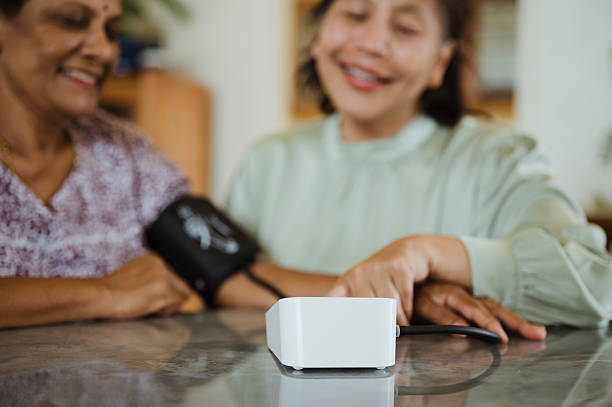
Telemonitoring devices are connected medical devices that capture patient health data at home and transmit it to care teams for review. Common examples include blood pressure monitors, glucose meters, weight scales, pulse oximeters, and peak flow meters that send readings automatically, allowing clinicians to review patient data in near real time.
With these devices, qualified healthcare professionals can track vital signs between visits and intervene before a trend becomes an emergency. Conditions commonly managed with telemonitoring include diabetes, hypertension, obesity, cancer, asthma, COPD, and heart failure.
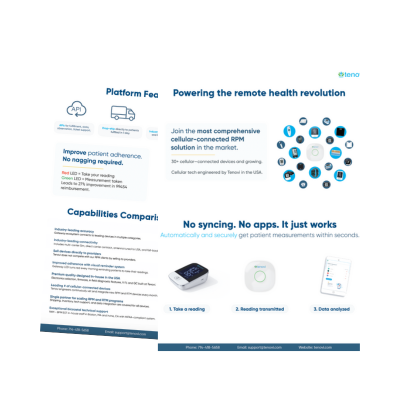
Connectivity matters as much as the device itself. Devices that rely on smartphone apps, pairing, and Wi-Fi introduce setup friction that many patients — particularly seniors — never get past. Cellular-connected approaches, like a plug-and-play gateway that transmits readings from multiple Bluetooth devices over a cellular network, remove that friction so that patient data keeps flowing without apps, syncing, or troubleshooting.
What the Latest Research Shows
The evidence base for telemonitoring has grown dramatically. A 2026 meta-analysis published in npj Digital Medicine pooled 79 randomized trials covering more than 31,000 heart failure patients, comparing remote monitoring with standard care across heart failure hospitalizations and all-cause mortality — and examining which monitoring modalities work best for which patients.
A separate 2026 systematic review and meta-analysis of 65 randomized controlled trials with roughly 23,000 participants found that remote patient monitoring significantly reduced all-cause mortality in heart failure patients — approximately a 9% relative reduction — with consistent results across trials.
Research is also getting more specific about how programs succeed. A 2025 meta-analysis in the European Journal of Heart Failure analyzed which program components drive results, finding that patient education and regular clinician touchpoints, such as video check-ins, were associated with fewer heart failure–related hospitalizations. The takeaway for program design: devices work best when paired with engagement.
Telemonitoring Across Care Settings
Telemonitoring devices are used consistently across many settings. Patients with chronic disease make up a high population of those who use devices at home to help manage their conditions. Remote patient monitoring is also used in respiratory and cancer care. It is also used in post-surgical recovery and maternal health as explained below.
Post-Surgical and Acute Recovery
Telemonitoring devices extend beyond chronic care. A randomized clinical trial published in PLOS ONE evaluated outpatient bariatric surgery supported by telemonitoring compared with conventional overnight hospitalization. Outcomes were comparable between the two approaches, while same-day discharge with remote monitoring reduced total hospitalization days without sacrificing patient satisfaction or safety. For health systems under pressure to free up beds, post-surgical remote monitoring is a proven lever.
Maternal and Fetal Health
Traditional fetal monitoring is time-consuming for both clinicians and patients. A systematic review and meta-analysis in JMIR mHealth found that remote fetal monitoring reduced the incidence of neonatal asphyxia and lowered healthcare costs compared with routine in-office monitoring, while expanding access for patients in remote areas. With maternal health outcomes a national priority, remote monitoring in pregnancy continues to be one of the fastest-growing telemonitoring use cases.
AI, Machine Learning, and the Next Generation of Telemonitoring
Machine learning has moved from research promise to practical tool. Algorithms trained on continuous monitoring data can flag deterioration earlier than periodic office visits ever could, helping care teams prioritize outreach across large patient panels. Researchers continue to emphasize two requirements highlighted in the European Heart Journal: models must be trained on data that represents the full diversity of patient populations to avoid biased results, and patient-level requirements must stay simple, with minimal out-of-pocket cost, for adoption to scale.
That second point is where device selection and AI in remote patient monitoring intersect. Algorithms are only as good as the data they receive — which means reliable, continuous transmission from easy-to-use devices is the foundation of every AI-enabled monitoring program.
How to Evaluate Telemonitoring Devices for Your Program
When evaluating telemonitoring devices in healthcare, five criteria separate programs that scale from programs that stall:
1) Accuracy and clearance
Look for FDA-cleared devices with validated accuracy. Inaccurate readings erode both clinical confidence and patient trust.
2) Connectivity and reliability
Cellular connectivity with multi-carrier coverage keeps data flowing for patients without reliable Wi-Fi or smartphones — often the patients who need monitoring most.
3) Patient experience
If a device requires app downloads, account creation, or Bluetooth pairing, expect adherence to suffer. Devices should work out of the box, with simple visual cues that remind patients to take readings and confirm the measurement was received.
4) Data integration
Readings should aggregate from every device type into a single feed your care platform can consume through one API, so clinicians see a complete, uninterrupted record of each patient rather than fragments spread across portals.
5) Logistics and support
Device fulfillment, replacement, and technical support determine whether monitoring continues uninterrupted over months and years of patient care. A device that fails without a fast replacement path breaks the continuity of data that makes monitoring valuable in the first place.
Explore Telemonitoring Devices With Tenovi
Tenovi powers remote patient monitoring for RPM software companies, chronic care management companies, and telehealth providers with 60+ FDA-cleared, cellular-connected devices, the plug-and-play Tenovi Cellular Gateway, and a single API for data aggregation, fulfillment, and support. If you are evaluating telemonitoring devices for your program, schedule a free demo and consultation to see how Tenovi keeps patient data flowing from the home to your platform.