What is a care manager? A care manager is a clinician who coordinates a patient’s care over time. The job is keeping treatment plans, medications, and follow-up on track between visits. Many care managers are registered nurses. Social workers, pharmacists, and behavioral health clinicians fill the role too.
For patients living with diabetes, heart failure, hypertension, or COPD, care rarely happens in one place. They see a primary care clinician, one or more specialists, a pharmacist, and sometimes a home health team. Someone has to connect those pieces. That person is usually the care manager.
This guide covers what a care manager does, who fills the role, and which Medicare programs depend on care managers. It also explains how remote patient monitoring (RPM) gives care managers better information to act on.
What Is a Care Manager?
A care manager is the care team member accountable for coordinating a patient’s care across clinicians, settings, and time. The role grew out of care coordination. AHRQ defines care coordination as the deliberate organization of care activities among everyone involved in a patient’s care, including the patient. AHRQ also names care managers alongside physicians, nurses, and social workers as professionals who share accountability for handoffs.
The CMS CCM booklet puts the idea in practical terms. It calls for a continuous relationship with a chosen care team member who stays in regular contact with the patient. In practice, that person is usually the care manager.
The goal is easy to state and hard to do well. Patients should not have to carry their own care plan from office to office. A care manager carries it for them.
What Does a Care Manager Do?
What does a care manager do on a typical day? The details change by setting, but most care managers handle the same core work.
Assess the Whole Patient
Care managers start with an assessment that goes past the diagnosis list. CMS expects chronic care management assessments to cover physical, mental, cognitive, psychosocial, functional, and environmental needs, along with available resources and supports. A patient with well-controlled diabetes may still be at risk if they live alone and can’t get to the pharmacy.
Build and Update the Care Plan
The care plan is a care team’s main working document. Under CMS guidance, a comprehensive care plan may include:
- A problem list with expected outcomes and prognosis
- Measurable treatment goals
- Symptom and medication management
- Planned interventions
- Caregiver assessment
- Coordination with outside resources and practitioners
- Periodic review and revision
Care managers revise the plan as conditions change. They share it with the patient, caregivers, and other clinicians.
Coordinate Across Clinicians and Settings
One patient may see a cardiologist, a nephrologist, and a primary care physician who never speak directly. The care manager closes those gaps. They track referrals and confirm test results reach the right clinician. They also check that a medication change from one office shows up in the other office’s records.
Manage Care Transitions
Hospital discharges and emergency visits are high-risk moments. Care managers follow up after discharge, reconcile medications, and confirm the patient has a follow-up appointment. CMS lists follow-up after emergency department visits and facility discharges as part of managing care transitions.
Support Medications and Self-Management
Care managers review medications for interactions and help patients take them as prescribed. They coach patients on daily self-care, such as checking blood pressure, logging weight, or spotting early warning signs. Better patient adherence often starts with these conversations.
Stay Reachable Between Visits
Chronic conditions don’t keep office hours. CMS calls for 24/7 access to a clinician or clinical staff for urgent needs. It also calls for ways to communicate by phone or secure messaging. For many patients, the care manager is the first call.
Review Home Monitoring Data
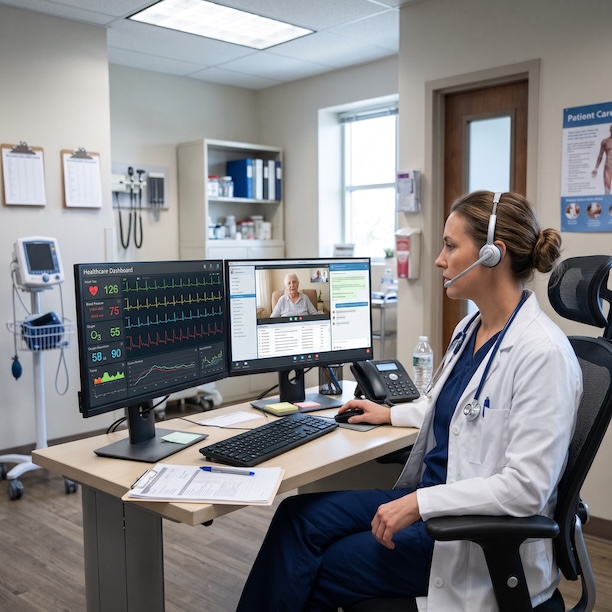
In programs that use RPM, care managers review readings from connected devices at home. A reading outside the range a clinician has set triggers outreach. A steady weight gain in a heart failure patient, for example, can signal fluid buildup. A call that day can head off a trip to the emergency department later in the week.
Types of Care Managers and Who Fills the Role
“Care manager” can describe a job title, a set of tasks, or a billable service. The background of the person in the role usually depends on the patients they serve.
Nurse
Registered nurses are common care managers in primary care and specialty practices. Their clinical training fits patients with complex medical needs, frequent medication changes, and symptom questions.
Behavioral Health
In collaborative care models, a behavioral health care manager works with the primary care clinician and a consulting psychiatrist. They track symptoms, support treatment, and flag patients who aren’t improving. Nurses and psychologists often fill this role.
Pharmacist
Pharmacists manage care for conditions where medication adjustment drives results, such as hypertension and diabetes. Many work under collaborative practice agreements with physicians.
Health Plan
Payers employ care managers to support members with complex or costly conditions. They often work by phone. Their focus is connecting members to benefits, referrals, and community services.
Geriatric Care
Families sometimes hire a private geriatric care manager, also called an aging life care professional. Most are nurses or social workers. They help plan long-term care, arrange services at home, and keep relatives who live far away informed. Families typically pay for this service out of pocket.
Across settings, scope matters. Under Medicare chronic care management rules, clinical staff deliver services under the billing practitioner’s general supervision. What staff can do still depends on state law, licensure, and scope of practice.
Care Manager vs. Case Manager
The two titles overlap, and many organizations use them interchangeably. When they are separate roles, the difference usually comes down to time frame and focus.
A case manager often works on a defined episode. Hospital case managers, for instance, focus on discharge planning, utilization review, and safe transfer to the next setting. Payer case managers may follow a single high-cost event, such as a transplant.
A care manager usually works with a patient over months or years. The work centers on chronic conditions, prevention, and day-to-day self-management. Both roles coordinate care. The care manager is the one who stays.
Medicare Programs That Rely on Care Services
Medicare pays for several care management services that care managers deliver under a billing practitioner. Each has its own eligibility rules and documentation requirements.
Chronic Care Management (CCM)
CCM serves patients with two or more chronic conditions. Those conditions must be expected to last at least 12 months and place the patient at significant risk. Clinical staff report the first 20 minutes each month with CPT 99490. Each additional 20 minutes uses 99439. Complex CCM uses 99487 and 99489. Our guide to CCM and RPM shows how the two programs work together.
Principal Care Management (PCM)
PCM covers one high-risk condition expected to last at least three months. It suits patients whose care centers on a single disease, such as heart failure. PCM codes are 99424 through 99427.
Transitional Care Management (TCM)
TCM covers the 30 days after a patient leaves a hospital, skilled nursing facility, or rehabilitation facility. Care managers often handle early outreach, medication review, and scheduling. TCM codes are 99495 and 99496.
Advanced Primary Care Management (APCM)
APCM bundles elements of CCM, PCM, TCM, and other services into one monthly payment. It does not require counting minutes. CMS created three APCM codes, G0556, G0557, and G0558, tiered by the patient’s number of chronic conditions and Medicare status.
Remote Patient Monitoring and Remote Therapeutic Monitoring
RPM and remote therapeutic monitoring (RTM) give care teams data from home between visits. CMS allows RPM or RTM, but not both, alongside CCM or TCM for the same patient. Time counted toward one service cannot count toward another.
This material is provided for general informational and educational purposes only and does not constitute legal, compliance, billing, coding, or reimbursement advice. CPT® codes, descriptions, and Medicare payment rates referenced here are drawn from publicly available sources, are subject to change, and may vary by payer, locality, and patient circumstances. Tenovi makes no representation or guarantee regarding coverage, payment, or the appropriateness of any code for a particular patient or service, and any presented are illustrative only. Providers are solely responsible for independently determining medical necessity and applicable coding, coverage, documentation, and billing requirements and for submitting accurate claims. Consult applicable payer guidance and qualified billing, coding, compliance, or legal professionals before making billing decisions. CPT® is a registered trademark of the American Medical Association.
What the Research Shows About Care Management
Strong trials support care manager models when the role is clearly defined and tied to the treating clinician.
The IMPACT trial randomized 1,801 primary care patients age 60 and up with depression to collaborative care or usual care. The intervention group worked with a depression care manager. Each care manager was a nurse or psychologist supervised by a psychiatrist and a primary care physician. At 12 months, 45% of those patients had cut their depressive symptoms by half or more. Only 19% of patients in usual care did the same.
A hypertension trial published in JAMA paired home blood pressure telemonitoring with pharmacist case management. Patients sent readings from home, and pharmacists adjusted medications based on that data. Blood pressure was controlled at both 6 and 12 months in 57.2% of intervention patients, compared with 30.0% in usual care.
Both studies point the same way. A care manager with timely information and a clear path to adjust treatment can improve outcomes.
How Remote Patient Monitoring Supports Care
A care manager can only act on what they know. Without home data, they depend on scheduled calls and whatever patients remember to report.
With RPM, patients take readings at home on connected devices such as blood pressure monitors, scales, glucose meters, and pulse oximeters. Readings transmit to the care team automatically. Care managers review trends, respond to out-of-range alerts, and talk with patients about what the numbers mean. Our overview of how RPM works walks through each step.
RPM also helps care managers decide where to spend their time. Instead of calling every patient on the same schedule, they can start with patients whose readings are moving in the wrong direction. For heart failure programs, that earlier outreach supports efforts to lower readmission rates.
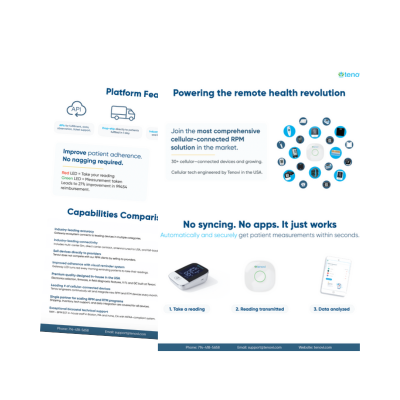
Device design matters too. Cellular-connected devices send readings with no syncing, no apps, and no Wi-Fi. Patients who aren’t comfortable with technology can still take part. Care managers spend less time troubleshooting connections and more time on care.
Frequently Asked Questions About Care Managers
1) What is a care manager?
This role is filled by a clinician who coordinates a patient’s care across providers, settings, and time. They assess needs, maintain the care plan, manage transitions, and stay in regular contact with the patient. Most work with patients who have chronic or complex conditions.
2) What does a care manager do for patients with chronic conditions?
A care manager helps patients follow their care plan between visits. That includes medication review, self-management coaching, follow-up after hospital stays, and coordination with specialists. In RPM programs, the care manager also reviews home readings and contacts patients when a reading falls outside their target range.
3) Is a care manager a nurse?
Many are registered nurses, but not all. Social workers, pharmacists, psychologists, and other licensed clinicians also work as care managers. Under Medicare chronic care management rules, clinical staff work under the billing practitioner’s supervision and within state scope-of-practice limits.
4) What is the difference between a care manager and a case manager?
The roles overlap, and many organizations use the titles interchangeably. When they differ, case managers usually focus on a defined episode, such as a hospital discharge. Care managers usually support patients over months or years.
5) Does Medicare pay for care services?
Yes. Medicare pays for chronic care management, principal care management, transitional care management, and advanced primary care management when program requirements are met. Patient cost sharing may apply. Patients must also give consent before chronic care management services begin.
6) How can families find a care manager for a loved one?
Start by asking the patient’s primary care practice whether it offers chronic care management. Many health plans also run care management programs for members. For local aging services, the Eldercare Locator at 800-677-1116 can connect families with their Area Agency on Aging.
Understanding the Role of a Care Manager
What is a care manager? It is the person who keeps a patient’s care connected from one visit to the next. Care managers assess needs, maintain the care plan, manage transitions, and stay reachable between appointments. Nurses, social workers, pharmacists, and behavioral health clinicians all fill the role. Medicare supports their work through CCM, PCM, TCM, and APCM. Remote patient monitoring adds the home data care managers need to act early. With timely readings and a clear plan, care managers help patients get care that keeps up with daily life.
Tenovi provides cellular-connected remote patient monitoring and remote therapeutic monitoring infrastructure. Our customers include RPM software companies, chronic care management companies, telehealth platforms, health systems, payers, and pharmacies. Tenovi offers 60+ devices, the Tenovi Cellular Gateway, and one API. We handle fulfillment, provisioning, and support so care managers can focus on patients. Contact us for a free demo and consultation.