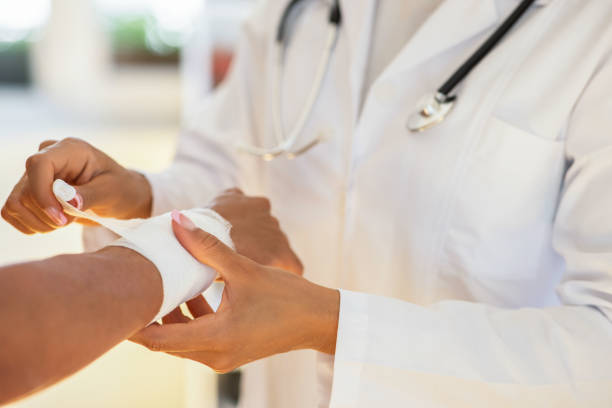
Proper wound care promotes healing, prevents infections, and minimizes complications. However, frequent in-person wound care visits may be a challenge for patients with mobility issues, chronic conditions, or those recovering from surgery. By integrating remote patient monitoring (RPM) into wound care management, patients can receive high-quality wound care services at home while closely monitoring their healing progress.
This article explores the benefits of remote wound monitoring for both patients and healthcare providers.
Wound Care and Chronic Conditions
About 6.5 million U.S. adults are affected by chronic wounds each year. Wounds often intersect with chronic conditions such as diabetes, obesity, or heart disease. Medicare estimates that as much as $96.8 million is directly spent on acute and chronic wound treatments.
Wounds, whether acute or chronic, can significantly impact an individual’s quality of life and pose serious health risks if left untreated. Proper wound care promotes healing, prevents infection, and minimizes complications.
Heel ulcers are particularly prevalent in diabetic patients, and diabetes can slow down the wound healing process. It also causes stiffer, thinner skin, which puts this population at high risk for pressure injuries beyond just their feet.
Patients with cardiovascular disease may have poor perfusion and reduced circulation. This can cause slower tissue repair, decreased lymphatic drainage, and make the skin less resilient, which may cause pressure injuries. Stroke patients can develop pressure injuries due to being immobilized. If the stroke was a result of atherosclerotic cerebrovascular disease, poor perfusion is also a concern. A wound care center is a medical facility that treats wounds that do not heal.
It’s easy to see that mobility issues may make it challenging for chronic care patients to attend traditional in-person visits. Remote wound monitoring is one solution available to wound care patients. The following section explains how remote patient monitoring can effectively treat post-surgical and chronic care wounds at home.
Wound Care Services at Home
Remote patient monitoring in wound care can be conducted using video conferencing appointments where patients can have their wounds assessed regularly. Remote wound monitoring technology includes medical devices or apps that allow patients to scan wounds at home with a smartphone. These devices then automatically transmit the wound images to their physicians so they can review the wound condition.
The vital signs routinely monitored with remote monitoring devices may include include oxygen saturation, heart rate, respiration, blood pressure, temperature, and stress levels. With remote patient monitoring, patients take measurements, and the physiological data is automatically transmitted to their physician for review. Any deviations in readings often help a wound care physician determine if an adverse wound healing process is ongoing.
The following sections describe the benefits of receiving wound care services at home with remote monitoring for wound care.
Enhanced Patient Engagement and Adherence
Negative pressure wound therapy is a method of drawing out fluid and infection from a wound to help it heal. A medical bandage is sealed over the wound, and a vacuum pump is attached. Receiving wound care services at home with remote therapeutic monitoring (RTM) allows patients to experience negative pressure wound therapy away from a clinical setting.
RTM can support treatment adherence, especially when patients receive educational resources and support for self-care. A study of negative pressure wound therapy found that using remote therapeutic monitoring with regular adherence calls was associated with increased therapy adherence in 73% of patients, leading to greater wound volume and surface area reductions.
Timely Intervention and Patient Satisfaction
Remote patient monitoring of wounds enables healthcare providers to monitor wound healing progress closely for early identification of potential complications or setbacks. Key findings from a study on remote monitoring for wound care in diabetic foot ulcers showed a 41.6% decrease in wound area over the study period. Additionally, with wound care services at home, patient satisfaction was high, with 94% finding the system useful and reporting feeling more involved in their care.
Cost-Effectiveness With Wound Care Services at Home
Wound care costs can account for a significant portion of hospital budgets. With surgical, pressure ulcers, diabetic foot wounds, or traumatic injuries, healthcare systems face the challenge of delivering effective and cost-efficient services. Some health systems leverage virtual appointments and remote monitoring technologies that enable the assessment and management of wounds remotely.
Telemedicine reduces frequent in-person appointments, which saves time and resources in healthcare and for patients. A recent study of portable negative pressure wound therapy (NPWT) showed the potential for cost savings. The treatment uses suction to promote wound healing.
With NPWT, patients use an RTM medical device that transmits data to a qualified healthcare professional for monitoring. In this case, the associated cost savings were $3,753 per patient. Additional research showed that telemedicine costs for managing diabetic foot ulcer patients by telemedicine were approximately $2222 lower per patient compared to traditional in-person monitoring.
Implementation of Wound Care Services at Home
Implementing remote patient monitoring for wound care services at home requires collaboration among healthcare providers, patients, and technology partners. Key considerations include technology integration with data privacy and security, patient education and training, and understanding reimbursement and regulatory frameworks.
Some remote patient monitoring companies specialize in remote patient monitoring for wound care. For instance, Health Recovery Solutions offers WoundConnect, which combines a wound care consultation and remote patient monitoring services with trained Wound and Osteomy Certified (WOC) nurses. This wound care consultant service is available to clinicians attending to patients at home, in the doctor’s office, or in any outpatient setting with limited access to wound care.
Recent Research on Clinical and Economic Value
Recent studies continue to highlight the efficiency and cost-effectiveness of integrating digital health into wound management. For example, recent 2024 research evaluating a shared care model using an advanced digital wound care platform demonstrated remarkable clinical efficiency. The study reported that using a remote assessment tool alongside continuous topical oxygen therapy resulted in a 92% mean reduction in wound area over 12 weeks (Lee et al., 2024). Furthermore, the remote platform increased clinical interactions by 54% while simultaneously reducing the required clinical time by nearly 26% (Lee et al., 2024).
Additionally, a retrospective cohort study on outpatient negative pressure wound therapy found that patients utilizing remote therapeutic monitoring (RTM) experienced significantly lower 90-day wound-related costs—$11,119 compared to $14,752 for those without RTM.
Frequently Asked Questions (FAQs) About Remote Wound Care
1. Can any wound be monitored remotely?
While many chronic and post-surgical wounds are excellent candidates for remote monitoring, severe wounds requiring immediate surgical intervention or complex debridement may still require frequent in-person care. A qualified healthcare provider must assess the wound to determine if remote monitoring is a safe and effective option.
2. Do I need special equipment at home to use RPM for wound care?
Not necessarily. Many remote wound monitoring programs utilize smartphone applications that guide patients or caregivers in taking high-quality, standardized photos of the wound. Some programs may also provide connected medical devices, such as negative pressure wound therapy (NPWT) systems equipped with RTM, or sensors to monitor vital signs like blood pressure and oxygen saturation.
3. Is my medical data secure when transmitted remotely?
Yes. Reputable RPM and telehealth platforms are strictly designed to comply with HIPAA regulations, ensuring that all transmitted images, patient measurements, and communications are encrypted and securely stored.
4. Will insurance or Medicare cover remote wound care?
Medicare and many private insurance providers recognize the value of RPM and often cover remote physiological monitoring and remote therapeutic monitoring services. Coverage depends on the patient’s specific condition and the exact billing codes used by the healthcare provider.
Understanding Remote Patient Monitoring for Wound Care
Integrating remote patient monitoring for wound care services at home enables remote assessment early detection of complications, and personalized care delivery. With this patient-centered approach, a patient can recover from a surgical while being effectively monitored from the comfort of one’s home.
Schedule a free demo with Tenovi to learn more about our remote health monitoring services.