
Cardiac care no longer stops at the clinic door. Remote patient monitoring (RPM) now lets care teams follow blood pressure, weight, heart rate, and oxygen levels between visits. For patients with heart failure, hypertension, or arrhythmia, those readings often show trouble days before symptoms do.
This article looks at what the research says about cardiac care delivered at home. We cover wearable rhythm monitoring, a smartphone-based study in newly diagnosed heart failure, and a large randomized trial of structured telemonitoring. We also explain what these studies have in common and what that means for program design.
Why Cardiac Care Needs Data Between Visits
Heart disease remains the leading cause of death in the United States. The American Heart Association’s 2025 statistics update reported 941,652 cardiovascular deaths in 2022, the most recent year with complete data. The same report found that about 47% of U.S. adults have high blood pressure.
Those numbers describe a large group of patients who need steady follow-up. Most of them see a clinician a few times a year. The rest of the time, their condition changes quietly.
That gap matters in cardiac care. Heart failure decompensation usually builds over several days. Blood pressure can drift for weeks. An irregular rhythm may come and go without the patient noticing. Home readings give care teams a way to see those changes between visits while there is still time to act.
What Cardiac Care Teams Can Monitor Remotely
Most cardiac programs track a small set of vitals. Each one answers a specific clinical question.
- Blood pressure. Daily readings show whether hypertension treatment is working and flag dangerous highs or lows.
- Body weight. A sudden gain can signal fluid retention in heart failure, often before shortness of breath begins.
- Heart rate and rhythm. Resting heart rate trends and rhythm data can point to arrhythmia or worsening heart function.
- Oxygen saturation. A falling SpO2 reading may reflect fluid in the lungs or other cardiopulmonary strain.
- Activity and sleep. Step counts and sleep duration help track recovery and functional status over time.
The device matters less than the response. A reading only helps if someone reviews it and knows what to do next.
Research on Remote Cardiac Care
The original version of this article summarized two studies. Below, we revisit those findings and add a large randomized trial that tested remote cardiac care at scale.
Wearable Rhythm Monitoring and Atrial Fibrillation
Atrial fibrillation (AF) is the most common sustained arrhythmia. It is also easy to miss. Episodes can be brief, and many patients feel nothing at all.
A review in Frontiers in Cardiovascular Medicine examined smart wearables for remote rhythm monitoring. The authors noted that early detection of arrhythmia is central to good patient management. They also described chest patches that record ambulatory ECG data for several days to weeks.
Continuous recording solves a basic problem. A 12-lead ECG in the office captures a few seconds. A wearable captures the moments in between.
During the COVID-19 pandemic, these tools gained wider use. Clinics needed ways to follow cardiac patients without bringing them in. That experience showed that rhythm data collected at home can support real clinical decisions. It also raised questions about accuracy, alert volume, and which devices carry FDA clearance.
The practical lesson for cardiac care teams is to match the device to the question. Consumer wearables can prompt a conversation. FDA-cleared devices belong in a monitored clinical program.
Smartphone-Based Monitoring After a New HFrEF Diagnosis
The months after a heart failure diagnosis carry high risk. Patients are adjusting to new medications and learning what symptoms to watch for. Emergency visits are common.
A retrospective cohort study in JMIR Cardio looked at patients newly diagnosed with heart failure with reduced ejection fraction (HFrEF). One group used a smartphone-based platform to report vital signs for at least three months. A matched control group received usual care without remote monitoring.
The study included 146 patients, 73 in each group, with a mean age of 63. Researchers tracked emergency department use, hospital admissions, outpatient visits, and costs over three months. They included the cost of the monitoring platform in the analysis.
The monitored group had about half as many emergency department visits. Emergency admissions fell roughly fourfold. Secondary care costs were significantly lower, even after accounting for the platform. Outpatient demand did not rise.
There are limits. The study was retrospective, and the patients were younger than a typical heart failure population. Still, the direction is clear. Early, structured monitoring helped patients avoid urgent care during a vulnerable period.
Structured Telemonitoring in the TIM-HF2 Trial
Smaller studies raise a fair question. Do these results hold up in a randomized trial?
The TIM-HF2 trial, published in The Lancet, offers one of the strongest answers. Researchers in Germany enrolled 1,538 patients with heart failure who had been hospitalized for worsening symptoms in the prior year. Half received remote patient management on top of usual care.
Patients in the remote group sent daily readings, including weight, blood pressure, heart rate, and oxygen saturation. A telemedical center staffed around the clock reviewed the data. That team worked directly with each patient’s cardiologist and primary care physician.
The intervention reduced the share of days lost to unplanned cardiovascular hospitalization or death. All-cause mortality was about 30% lower in the monitored group over roughly a year of follow-up.
The design is worth noting. TIM-HF2 did not rely on passive data collection. Clinicians acted on the readings every day, and patients received education alongside monitoring.
What the Studies Have in Common
These three bodies of research differ in size, setting, and technology. Yet they point to the same principles for effective cardiac care at home.
- Daily data catches problems early. Each approach gave clinicians information they would not have had until the next visit or the next emergency.
- Response matters as much as collection. The strongest results came from programs with clinicians assigned to review and act on readings.
- Simple devices support adherence. Patients who find a device easy to use keep using it. Consistent use is what makes the data reliable.
- Education strengthens results. Patients who understand their numbers are more likely to report symptoms and follow treatment changes.
- Timing matters. The period after a diagnosis or hospital discharge is when monitoring may do the most good.
Fewer emergency visits also reduce the strain on patients and families. Lower costs follow from better health, not the other way around. For more on how monitoring supports patients after discharge, see our article on hospital readmissions.
Putting Remote Cardiac Care Into Practice
Cardiology practices, health systems, and RPM companies can apply these findings in a few concrete steps.
- Start with high-risk patients. Recent heart failure admissions, uncontrolled hypertension, and new diagnoses are strong starting points.
- Choose FDA-cleared devices. Clinical decisions should rest on validated data, not consumer estimates.
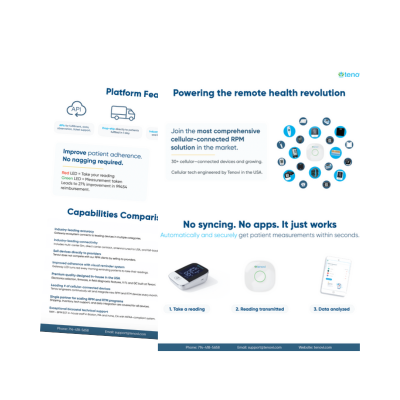
- Remove setup barriers. Cellular-connected devices send readings automatically. Patients do not need a smartphone, Wi-Fi, or Bluetooth pairing.
- Define alert thresholds in advance. Decide who reviews readings, what triggers a call, and how issues reach the physician.
- Pair monitoring with education. Teach patients what a weight gain or blood pressure spike means and who to call.
- Track your own outcomes. Measure emergency visits, admissions, and enrollment length for monitored patients.
Heart failure programs deserve particular attention. Daily weight is one of the most useful signals in cardiac care, and our guide to heart failure monitoring explains why. For a broader look at clinical guidance and recent meta-analyses, read our overview of cardiac RPM.
Frequently Asked Questions About Cardiac Care and Remote Monitoring
This section answers common questions about cardiac care delivered at home. It covers which patients benefit, which devices are used, and what the research shows about outcomes.
1) What is remote cardiac care?
Remote cardiac care uses connected medical devices to track a patient’s heart health from home as part of telehealth in cardiology. Common readings include blood pressure, weight, heart rate, and oxygen saturation. The data goes to a care team that reviews it and steps in when values move outside a set range.
2) Which patients benefit most from cardiac care at home?
Patients with heart failure have the strongest evidence of benefit, especially after a recent hospital stay. People with uncontrolled hypertension, atrial fibrillation, or a new cardiac diagnosis also benefit. Patients recovering after a heart attack are another common group.
3) What devices are used in remote cardiac care programs?
Most programs use a connected blood pressure monitor, a weight scale, and a pulse oximeter. Some add an activity tracker or a wearable ECG device for rhythm monitoring. Cellular-connected devices are often easier for older patients because they need no app or pairing.
4) Does remote monitoring reduce hospital visits for heart patients?
Research suggests it can. In one study of newly diagnosed HFrEF patients, emergency department visits fell by about half and emergency admissions fell roughly fourfold over three months. In the TIM-HF2 trial, structured telemonitoring reduced unplanned cardiovascular hospital days and lowered all-cause mortality.
5) Can wearable devices detect atrial fibrillation?
Some wearables can flag irregular rhythms, and ECG patches can record heart activity for days or weeks. Consumer devices are useful as prompts for follow-up. Clinical programs should use FDA-cleared devices and have a clinician confirm any findings.
6) How do care teams respond to remote cardiac readings?
Effective programs set alert thresholds in advance and assign staff to review readings each day. When a value is out of range, a nurse or clinician contacts the patient. They may adjust medication, schedule a visit, or escalate to the cardiologist.
Understanding Cardiac Care at Home
Cardiac care at home is now supported by a growing body of evidence. Wearable rhythm monitoring helps catch arrhythmias that office visits miss. Smartphone-based monitoring after a new HFrEF diagnosis reduced emergency visits and admissions. The TIM-HF2 trial showed that structured telemonitoring, with clinicians acting on daily data, lowered hospital days and mortality. The common thread is simple. Daily readings, easy-to-use devices, patient education, and a clinician who responds give heart patients a better chance of staying well at home.
Tenovi provides cellular-connected remote patient monitoring devices and the Tenovi Cellular Gateway to RPM software companies, chronic care management organizations, telehealth platforms, health systems, payers, and pharmacies. Our FDA-cleared devices send readings automatically with no app, pairing, or Wi-Fi required. That simplicity helps cardiac patients stay engaged and keeps care teams informed. Contact us for a free demo and consultation.