Can blood pressure be managed effectively between doctor visits? With a remote blood pressure monitoring device, the answer is increasingly yes. These devices let patients measure blood pressure at home and automatically send each reading to their healthcare provider, who can review the data, spot dangerous trends, and adjust treatment without waiting for the next office appointment.
That matters more than ever. Nearly half of U.S. adults, 47.7%, have hypertension, yet only about 1 in 4 have it under control. A single blood pressure reading every few months at the doctor’s office simply is not enough to close that gap.
This article explains why in-office readings alone fall short, what the research says about a remote blood pressure monitoring device improving outcomes, and how providers can put one to work in a hypertension management program.
Hypertension: A Quick Overview
Hypertension is a prevalent cardiovascular condition that requires accurate, consistent blood pressure monitoring. As blood pressure rises, so does the risk of heart disease, heart attack, stroke, and kidney disease. According to the Cleveland Clinic, a high blood pressure diagnosis means the top number is at least 130 and the bottom number is at least 80.
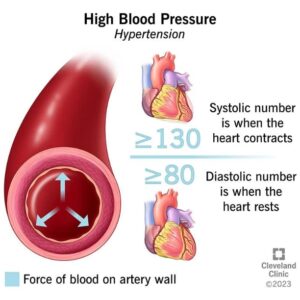
The top number, systolic blood pressure, gauges the pressure on artery walls when the heart beats. The bottom number, diastolic blood pressure, measures the pressure between beats when the heart is relaxed. Both are measured in millimeters of mercury (mmHg).
The Problem With Episodic Clinic Readings
Most hypertension care still revolves around blood pressure readings taken at the doctor’s office — a handful of measurements per year, captured in a setting that may not reflect a patient’s everyday life. Research shows those episodic snapshots can mislead providers in two important ways: readings fluctuate significantly from one visit to the next, and the office environment itself can push readings artificially higher or hide elevated pressure entirely.
Visit-to-Visit Variability
Blood pressure taken only at office visits can be surprisingly unreliable. A Yale New Haven Health study published by the American Heart Association analyzed 537,218 adults and more than 7.7 million blood pressure readings and found marked visit-to-visit variability (VVV) in real-world practice — fluctuations large enough to complicate treatment decisions based on outpatient readings alone.
Visit-to-visit variability makes it difficult to know whether a medication change is working, whether a high reading reflects a true trend or a one-off spike, and whether a patient’s blood pressure is genuinely stable between appointments.
White Coat and Masked Hypertension
Office readings can also mislead in both directions. White coat hypertension — elevated readings in the clinic but normal readings at home — and masked hypertension — normal readings in the clinic but elevated readings at home — each affect roughly 10% to 30% of patients, depending on the population studied. Masked hypertension is especially dangerous because its cardiovascular risk is similar to sustained hypertension — yet it goes undetected in the office. Home monitoring is one of the most effective ways to control white coat syndrome and unmask hidden hypertension.
What a Remote Blood Pressure Monitoring Device Does Differently
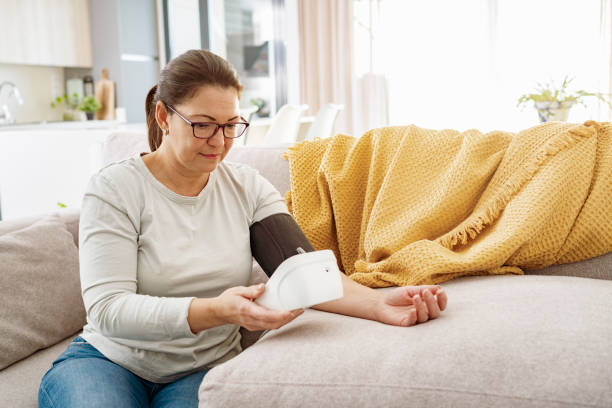
A traditional home cuff still leaves gaps: patients must remember to take readings, write down the numbers correctly, and relay them to their care team. Handwritten logs are prone to missing or erroneous data.
A remote blood pressure monitoring device closes those gaps. Each measurement transmits automatically to the provider in near real time — no manual logging, no transcription errors, no waiting for the next visit. Care teams can set alert thresholds, so if a patient’s reading crosses a specified limit, the provider is notified and can respond right away by adjusting medication, scheduling a telehealth visit, or bringing the patient in.
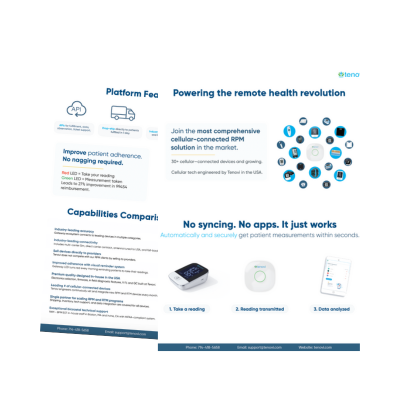
Cellular-connected devices remove even more friction. Unlike Bluetooth models that require smartphone pairing and an app, a cellular blood pressure monitor transmits readings over a built-in cellular connection — no smartphone, Wi-Fi, or technical setup required. That matters for older adults and patients in rural or underserved areas, who are often at the highest cardiovascular risk. Tenovi devices also give patients a simple visual daily reminder that it’s time to take a measurement, supporting adherence with Tenovi, Omron, or A&D blood pressure units.
What the Research Shows
The evidence for remote monitoring of blood pressure between visits has grown substantially. A large retrospective cohort analysis of 6,595 patients enrolled in a remote patient monitoring program found that after at least 90 days, the share of patients with uncontrolled hypertension fell from 66.3% to 40.2%. Systolic blood pressure improved by an average of 7.3 mmHg across all patients — and 16.7 mmHg for patients with stage 2 hypertension.
A 2025 multicenter evaluation of mobile-enhanced remote patient monitoring in hypertensive patients with comorbidities found the proportion of patients meeting blood pressure control thresholds rose from 62.4% to 90.1% over the monitoring period.
The American Heart Association and American Medical Association reached a similar conclusion in their joint policy statement on self-measured blood pressure monitoring, finding it cost-effective and associated with improved diagnosis and management of hypertension — with the strongest results when home monitoring is paired with clinical support. An individual patient data meta-analysis found self-monitoring reduced systolic blood pressure by 3.2 mmHg at 12 months on average, rising to 6.1 mmHg when combined with intensive support — exactly the model a remote blood pressure monitoring device with provider review delivers.
Enhancing Patient Care Through a Comprehensive Strategy
Neither approach works best alone. When healthcare providers combine periodic office visits with continuous data from a remote blood pressure monitoring device, they get the complete picture: accurate assessment of blood pressure control, treatment response, and long-term stability. Out-of-office data fills the space between appointments, and proper measurement technique plus automatic transmission keeps that data trustworthy.
For providers building or scaling a program, hypertension remote patient monitoring also creates a practical workflow: enroll the patient, ship a cellular-connected cuff, set alert thresholds, and review remote patient monitoring of blood pressure data in one dashboard.
FAQs About Remote Blood Pressure Monitoring Devices
Providers and patients considering remote monitoring tend to ask the same practical questions — what the device actually does, how it differs from a drugstore cuff, and whether insurance pays for it. Here are answers to the most common ones.
1)What Is a Remote Blood Pressure Monitoring Device?
A. A remote blood pressure monitoring device is a blood pressure cuff that automatically transmits each reading to a healthcare provider through a cellular gateway or Bluetooth connection. Unlike a standard home cuff, the patient doesn’t need to record or report anything — the care team sees the data in near real time.
2) How Is It Different From a Regular Home Blood Pressure Cuff?
A. A regular cuff displays a reading; the patient must log it and share it later. A remote blood pressure monitoring device sends the reading directly to the care team, eliminating transcription errors, supporting adherence, and enabling alerts when readings fall outside safe parameters.
3) Does Insurance Cover Remote Blood Pressure Monitoring?
A. Yes, in many cases. Medicare reimburses remote physiologic monitoring under dedicated CPT codes (including 99453, 99454, 99457, and 99458), and many Medicaid programs and commercial payers offer similar coverage. Coverage details vary by payer and state, so providers should verify billing requirements for their programs.
4) How Often Should Patients Take Blood Pressure Readings at Home?
A. Most programs ask patients to measure once or twice daily at consistent times. Medicare’s RPM billing requirements generally call for at least 16 days of readings in a 30-day period, which aligns well with a daily measurement routine.
5) Are Home Blood Pressure Readings Accurate?
A. Yes, when patients use a validated, properly fitted cuff and follow correct measurement technique. Home readings taken consistently often represent a patient’s true blood pressure better than a single office reading, which can be skewed by white coat effect or visit-to-visit variability.
Understanding the Remote Blood Pressure Monitoring Device
Visit-to-visit variability, white coat effect, and masked hypertension all point to the same conclusion: episodic clinic readings alone are not enough to manage a condition that affects nearly half of U.S. adults. A remote blood pressure monitoring device gives care teams continuous, reliable data between visits — and the research shows that translates into meaningfully better blood pressure control.
Tenovi provides chronic care, telehealth, and remote patient monitoring software and service companies with intuitive, continuous, real-time access to patient health and billing data. Contact Tenovi today for a free demo and consultation.