
Implementing chronic care remote patient monitoring services changes how practices manage high-risk patient populations between traditional office visits. By combining connected health technology with dedicated clinical coordination, healthcare providers can offer proactive, rather than reactive, treatment. For medical professionals unfamiliar with this approach, integrating these programs is an opportunity to improve patient health. It also opens up an avenue for sustainable practice revenue through Medicare reimbursement pathways.
Defining Chronic Care Remote Patient Monitoring Services
Chronic care remote patient monitoring services refer to a care delivery model that uses connected digital tools to track a patient’s physiological data from home and transmit it securely to healthcare providers. This creates a continuous stream of health information to give clinicians a real-time window into a patient’s condition without requiring them to physically travel to a clinic.
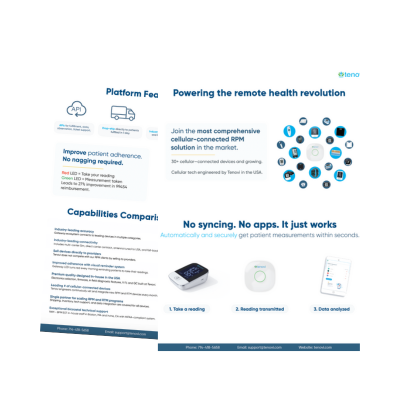
What exactly do these programs entail? Patients are typically provided with cellular or Bluetooth-enabled remote patient monitoring devices, such as blood pressure monitors, blood glucose meters, pulse oximeters, or weight scales. As patients take their daily readings, the data is automatically uploaded into a centralized dashboard or directly into the practice’s Electronic Health Record (EHR) system.
This setup removes the reliance on patient self-reporting, which is often hindered by memory lapses or manual logging errors. Clinical staff monitor this incoming data, establish baseline metrics, and set custom alerts for abnormal readings. When a patient’s metrics cross a predetermined threshold, the care team is notified immediately. This structure changes the fundamental rhythm of chronic disease management. Instead of waiting three to six months to see if a treatment plan is working, providers have the daily data needed to evaluate efficacy and make prompt adjustments.
How Care Services Impact Care Delivery
The primary goal of chronic care remote patient monitoring services is to maintain patient stability and prevent acute exacerbations. When it comes to actual care delivery, these services act as an early warning system. By consistently tracking vital signs, providers can detect the subtle physiological changes that often precede a serious health event.
Instead of a patient arriving at the emergency room with severe complications, the care team notices a steady increase in blood pressure or weight over several days. The provider then initiates an intervention, which might involve a simple medication adjustment, a phone call to discuss dietary choices, or scheduling a timely telehealth appointment.
Care delivery under this model relies heavily on consistent communication. Clinical staff, usually registered nurses or medical assistants, review the data and engage with patients directly. They interpret what the numbers mean in the context of the patient’s overall health history. This proactive oversight means that care is continuous. The practice is no longer unaware of symptoms between appointments. It establishes a longitudinal care relationship where patients feel seen and monitored every single day, drastically reducing the anxiety often associated with managing a severe chronic illness.
The Support Provided by Chronic Care Remote Patient Monitoring Services
The clinical and emotional support offered by chronic care remote patient monitoring services bridges the gap between the doctor’s office and the patient’s daily life. While the devices capture the data, it is the human element of these services that drives long-term success and patient adherence.
Support usually begins with comprehensive onboarding. A dedicated care team educates the patient on how to use their specific device, ensuring they understand the mechanics of taking accurate readings. But the education goes far beyond hardware. Care coordinators teach patients how their daily habits, such as sodium intake, stress, or physical activity—directly influence the numbers appearing on their devices.
Furthermore, these services provide ongoing motivational interviewing and goal setting. A patient struggling with hypertension might receive weekly calls from a care coordinator who helps them strategize ways to reduce salt in their diet. If a patient fails to transmit data for a few days, the support team reaches out to check on their well-being and troubleshoot any technical or personal barriers. This routine interaction fosters a sense of accountability and partnership. Patients are no longer managing their disease in isolation; they have a dedicated medical team actively invested in their daily progress.
Common Situations Encountered in Chronic Care Remote Patient Monitoring Services
Healthcare professionals operating chronic care remote patient monitoring services encounter a wide variety of clinical and behavioral scenarios on a daily basis. The conditions most frequently monitored include hypertension, Type 1 and Type 2 diabetes, chronic obstructive pulmonary disease (COPD), and congestive heart failure (CHF).
One common situation involves medication titration. A physician may prescribe a new antihypertensive drug and use the remote data to see exactly how the patient’s blood pressure responds over the first two weeks, allowing for rapid dosage optimization. Another frequent scenario is the detection of fluid retention in CHF patients; a sudden weight gain of three pounds over two days triggers an alert, prompting the care team to adjust diuretics before the fluid buildup requires hospitalization.
Providers also encounter behavioral challenges. Patients may experience alarm fatigue, where they become anxious about every minor fluctuation in their numbers. Here, the care team steps in to provide context, explaining normal physiological variances. Additionally, digital literacy and compliance are recurring hurdles. Some older adults or patients from underserved communities may struggle with the technology or forget to use it. Effective services anticipate these situations, utilizing devices that require zero technical setup (like cellular devices that work right out of the box) and employing care managers trained in overcoming resistance and building patient routines.
What Makes Top-Tier Chronic Care Remote Patient Monitoring Services Companies Stand Out
Not all vendors in this space are created equal, and choosing the right partner to implement chronic care remote patient monitoring services is critical for a practice’s clinical and financial success. A superior services company removes the administrative and logistical burdens from the healthcare provider, allowing the physicians to focus purely on medical decision-making.
A good company offers end-to-end logistics. This means they have a trusted network to handle device procurement, inventory management, shipping the hardware directly to the patient’s home, and managing technology questions. They should provide FDA-cleared medical devices that do not require complex pairing, as this dramatically increases patient adherence.
Seamless EHR integration is another hallmark of a top-tier provider. The data must flow directly into the physician’s existing workflow without requiring them to log into multiple third-party portals. Furthermore, excellent companies supply their own highly trained, licensed clinical staff to monitor the data and triage alerts based on the practice’s custom protocols. Finally, they provide robust compliance and billing support. They track the exact minutes of clinical staff time and the number of device transmission days through top tier softward, generating automated billing reports that ensure the practice can compliantly claim Medicare CPT codes without fear of audit failures.
How CCM and RPM Services Work Together
Understanding the synergy between chronic care management (CCM) and chronic care remote patient monitoring services is essential for maximizing both patient outcomes and practice revenue. While they are distinct Medicare programs with separate billing codes, CMS designed them to complement one another in a comprehensive care strategy.
CCM provides the structural framework for care coordination. It involves non-face-to-face time spent managing a patient with two or more chronic conditions—developing comprehensive care plans, coordinating with specialists, and managing prescription refills. Remote monitoring, on the other hand, supplies the objective, real-time physiological data that informs the CCM care plan.
When used together, RPM captures the data, and CCM provides the framework for acting on that data. For example, the remote devices might show a diabetic patient struggling with elevated blood glucose levels. The clinical time spent reviewing this data counts toward RPM requirements, while the time spent adjusting the broader care plan, calling the patient’s pharmacy, and coordinating with their endocrinologist counts toward CCM. According to a brief by the Department of Health and Human Services, combining these approaches creates a comprehensive picture of a patient’s health status over time, facilitating shared decision-making. By legally stacking these programs—provided time and requirements are tracked independently—practices can generate significantly higher monthly revenue per patient while delivering a profoundly higher standard of longitudinal care.
Studies Showing Improved Outcomes from Chronic Care Remote Patient Monitoring Services
The clinical efficacy of chronic care remote patient monitoring services is heavily supported by recent data, demonstrating clear reductions in hospitalizations and measurable improvements in disease control. The integration of daily data collection with clinical oversight simply yields better results than episodic, in-person care alone.
A study from UC San Diego Health published in JMIR Cardio analyzed a reimbursable, team-based remote blood pressure monitoring program. The research revealed that patients with hypertension experienced an average systolic blood pressure reduction of nearly 10 mm Hg. Even more impressively, patients managing one or two additional chronic diseases still achieved significant reductions of 6.6 mm Hg, proving the model’s effectiveness for complex, high-risk populations.
Furthermore, a survey of 141 healthcare executives by MD Revolution (Now CoachCare) highlighted the operational and clinical consensus regarding these programs. The survey found that 78% of respondents had already seen improved patient outcomes after implementing digital monitoring tools and clinical services. Additionally, 70% of respondents attested to the positive influence of care management on patient satisfaction. The evidence clearly indicates that when patients receive continuous oversight and the technology is backed by a proactive clinical team, they experience fewer emergency room visits, gain better control over their chronic conditions, and report a much higher quality of life.
FAQs About Chronic Care Remote Patient Monitoring Services
To help summarize the core concepts, here are some frequently asked questions regarding chronic care remote patient monitoring services.
Q: Do Medicare and commercial insurance cover these services?
A. Yes. Medicare reimburses for remote monitoring and chronic care management. Many commercial payers and state Medicaid programs have also adopted similar coverage policies, recognizing that proactive monitoring saves the healthcare system money by preventing expensive hospitalizations.
Q. Can a patient be enrolled in both CCM and RPM at the same time?
A. Yes, Medicare allows for program stacking. A patient can be enrolled in both programs simultaneously, provided the practice meets the distinct requirements for each code and does not double-count clinical staff time. The time spent on device data review must be tracked separately from the time spent on broader care coordination.
Q. What kind of staff is required to run this program?
A. While a billing provider (MD, DO, NP, PA) must order the service, the day-to-day monitoring and patient communication can be performed by clinical staff (like RNs or Medical Assistants) under general supervision. Many practices opt to outsource this to a specialized third-party company that provides licensed clinical staff to act as an extension of the practice, thereby avoiding the overhead of hiring new internal employees.
Q. How do you handle patients who are not tech-savvy?
A. The most successful programs utilize cellular-enabled devices rather than Bluetooth devices. Cellular devices arrive pre-configured; the patient simply takes the device out of the box and uses it. The data transmits automatically via local cellular networks, removing the need for Wi-Fi passwords, smartphone apps, or syncing, making it highly accessible for elderly or less tech-savvy individuals.
Are you ready to learn more about how to get started with RPM? Schedule a free demo and consultation today with Tenovi. You’ll discover why Tenovi offers a better RPM experience for patients, physicians, and healthcare teams.