
For the first time in five years, the number of hospitals facing readmission penalties is increasing. As healthcare executives look for strategies to improve patient outcomes and protect revenue, a new initiative from the CMS Innovation Center is emerging as a powerful tool: the CMS ACCESS Program.
While our previous article covered the basics of how the CMS ACCESS Model works, today we are looking at a different angle. We are exploring how health systems can leverage the CMS ACCESS Program to deliver timely, technology-enabled post-acute care that actively reduces hospital readmissions and mitigates future financial penalties.
The Rising Threat of Hospital Readmission Penalties
According to a recent report published by the Advisory Board, the financial impact of hospital readmissions is ticking upward. In 2026, an estimated 240 hospitals are expected to pay readmission penalties of 1% or more under the CMS Hospital Readmissions Reduction Program—the first increase in half a decade. Overall, more than 70% of hospitals will face at least some level of financial penalty.
The immediate increase is partly due to CMS reinstating data on pneumonia patients. However, industry experts warn that a much larger cliff is approaching in 2027. CMS plans to begin including Medicare Advantage (MA) enrollees in their readmission evaluations. Because prior authorizations from private insurers can frequently delay post-acute care for MA patients, hospitals are highly concerned about a potential spike in readmissions.
Akin Demehin, senior director for quality and patient safety policy at the American Hospital Association, noted in the Advisory Board brief: “We know that timely access to post-acute care can be a key determinant in how a patient recovers and, therefore, the likelihood of readmission.”
This is exactly where the CMS ACCESS Program comes into play.
What is the CMS ACCESS Program?
The digital health regulatory pathway entered a new pilot phase with the FDA’s Technology-Enabled Meaningful Patient Outcomes (TEMPO) initiative. TEMPO allows select manufacturers to launch their technologies into clinical settings under FDA enforcement discretion. The FDA expects TEMPO pilot manufacturers to collect real-world data on device use, share this data with the FDA, and then use it, with other information, to seek appropriate marketing authorization, while offering devices for care covered by the CMS ACCESS model. This temporary authorization is contingent on meeting rigorous requirements for safety, clinical oversight, and data reporting.
The CMS ACCESS Program (Advancing Chronic Care with Effective, Scalable Solutions) is a value-based care initiative that replaces traditional fee-for-service (FFS) billing with Outcome-Aligned Payments (OAPs). Instead of reimbursing providers for the time spent monitoring patients, it financially rewards practices for actual, measurable clinical improvements in patients with chronic conditions.
The program focuses on four distinct clinical tracks:
- Early Cardio-Kidney-Metabolic (eCKM): Hypertension, prediabetes, and obesity.
- Cardio-Kidney-Metabolic (CKM): Heart disease, advanced diabetes, and chronic kidney disease.
- Musculoskeletal (MSK): Chronic pain management.
- Behavioral Health (BH): Depression and anxiety.
Bridging the Post-Acute Care Gap to Prevent Readmissions
By participating in the CMS ACCESS Program, hospitals and integrated health networks can build a robust, technology-driven safety net for patients discharging from the hospital. Here is how the program directly combats the root causes of readmissions:
1. Continuous Visibility Post-Discharge
The period immediately following a hospital discharge is critical. Without continuous visibility, a patient’s condition can deteriorate unnoticed until an emergency room visit is inevitable. The CMS ACCESS Program incentivizes the use of Remote Patient Monitoring (RPM) technologies, allowing clinicians to capture biometric data (such as blood pressure, weight, and blood glucose) and Patient-Reported Outcome Measures (PROMs) daily.
2. Proactive Instead of Reactive Interventions
Because OAPs are tied to keeping clinical metrics (like HbA1c or blood pressure) stabilized, the model inherently funds proactive care. When a patient with congestive heart failure shows a sudden spike in weight on their cellular-connected scale, care teams can intervene immediately with medication adjustments, effectively bypassing a readmission event.
3. Solving the Medicare Advantage Bottleneck
With CMS evaluating Medicare Advantage readmissions starting in 2027, health systems need a streamlined way to manage these patients even if traditional post-acute facility placements are delayed by prior authorizations. Utilizing the technology frameworks established by the CMS ACCESS Program allows health systems to deploy at-home monitoring kits rapidly, ensuring patients receive high-quality oversight in their own homes from day one.
Equipping Your Practice for Outcome-Aligned Success
Transitioning to outcome-aligned payments and preventing readmissions requires more than just a shift in strategy; it requires the right technological infrastructure. To succeed under the CMS ACCESS Program, hospitals must seamlessly distribute devices, capture accurate biometric data, and route that data electronically via FHIR-based APIs directly into the clinical workflow.
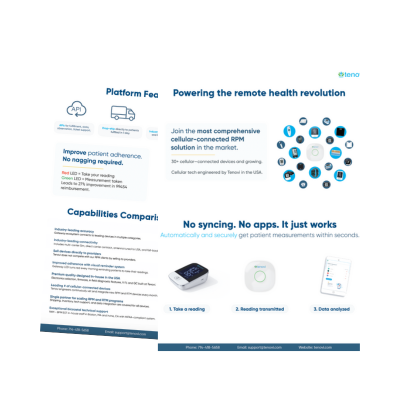
Tenovi provides the purpose-built cellular remote patient monitoring devices and data integration APIs that health systems need to execute this strategy flawlessly. By removing the friction of patient tech-literacy (our devices work right out of the box with no Wi-Fi or app required), we help you capture the reliable data necessary to prevent readmissions and maximize your CMS ACCESS reimbursements.
Are you ready to protect your health system from rising penalties? Contact us today to learn how Tenovi can serve as your infrastructure partner for the CMS ACCESS Program.