Research shows that roughly 80% of pregnancy-related deaths in the U.S. are preventable, according to the Centers for Disease Control and Prevention (CDC). Yet maternal care statistics remain concerning in the United States, where the maternal mortality rate is higher than in most other high-income nations. While progress is being made globally, Black and American Indian/Alaska Native birthing people still face dramatically higher risks. Integrating remote fetal monitoring into maternal care is one of the more promising steps toward improving prenatal outcomes, reaching underserved populations, and hitting the targets that value-based care models demand.
The healthcare landscape increasingly rewards new models of care that blend convenience, continuity, and clinical insight from a distance. This article explores how remote fetal monitoring is emerging as a vital tool to improve maternal health outcomes, reduce disparities, and support scalable, value-based prenatal care, offering remote health companies a timely opportunity to drive impact in one of healthcare’s most urgent areas.
What Is Remote Fetal Monitoring?
Remote fetal monitoring refers to the use of wireless, connected medical devices that collect and transmit data about the fetus and the pregnant patient between in-person visits. The measurements typically include fetal heart rate, uterine activity, and maternal vitals such as blood pressure, weight, and oxygen saturation. These tools let OB-GYNs and maternal-fetal medicine (MFM) specialists track pregnancy progression from afar—sometimes in near real time, and often through daily or weekly trend monitoring.
Unlike traditional fetal monitoring that requires in-office or hospital-based equipment, remote fetal monitoring solutions are generally FDA-cleared devices that transmit data securely over cellular or Bluetooth connections. These systems frequently integrate with electronic health records (EHRs) or a centralized remote patient monitoring (RPM) dashboard, so clinicians can review readings, respond to alerts, and adjust care plans as data arrives rather than waiting weeks for the next appointment.
It helps to distinguish two overlapping use cases:
- Maternal vitals monitoring: connected blood pressure cuffs, weight scales, and pulse oximeters used to catch conditions like gestational hypertension, preeclampsia, and gestational diabetes early. This is where most RPM programs begin, because the devices are widely available, FDA-cleared, and reimbursable.
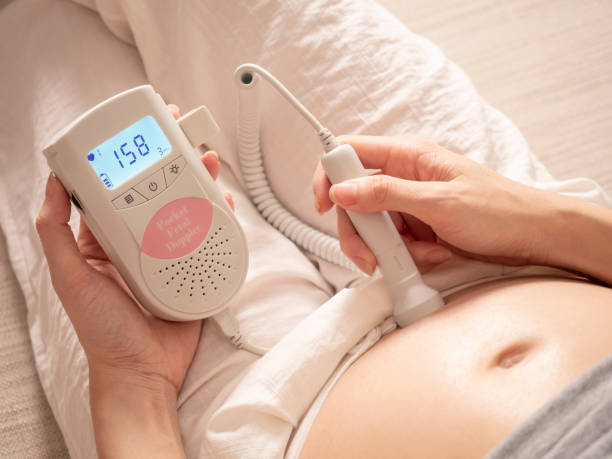
- Fetal-specific monitoring: home fetal Dopplers and emerging wearable fetal heart-rate and contraction sensors that extend monitoring to the fetus directly. This category is younger, and clinical validation is still maturing, so programs should pair it with clear escalation protocols rather than treating consumer-grade Dopplers as diagnostic.
Why Remote Fetal Monitoring Matters Now
The need for remote fetal monitoring is growing, particularly among high-risk pregnancies and populations with limited access to consistent in-person care.
Access is the core problem. More than one-third of U.S. counties are “maternity care deserts” with no obstetric hospital, birth center, or OB provider, according to March of Dimes—and that gap falls hardest on rural and lower-income communities. When the nearest provider is an hour away, every prenatal visit becomes a logistical and financial hurdle. Remote fetal monitoring shrinks that distance by moving routine surveillance into the home.
The clinical stakes are high, too. Hypertensive disorders of pregnancy, including preeclampsia, which affects roughly 1 in 25 pregnancies in the U.S., are a leading driver of maternal morbidity, and they often develop quietly between appointments. Home blood pressure monitoring is one of the clearest, best-supported applications of remote fetal monitoring: it surfaces dangerous trends days earlier than a once-a-month office reading would.
What the Evidence Says
A 2025 study examining how telehealth services affect social-need-related health outcomes drew on the 2022 American Hospital Association survey and area health resource files. Researchers analyzed responses from 1,005 U.S. acute care general hospitals using mixed-effects logistic regression, and found that:
- Post-discharge telemonitoring was associated with significantly better patient outcomes—patients were about 1.72 times more likely to experience improved health and 2.39 times less likely to need additional hospital services.
- Telepsychiatry and addiction treatment users had roughly 1.66 times higher odds of improved community health status.
- Teleconsultation and virtual visits were associated with about a 38% reduction in the odds of poor community health outcomes.
The takeaway: telehealth services focused on monitoring after discharge—and on behavioral health—can improve outcomes, reduce system burden, and support healthier communities, especially where unmet social needs are high.
Maternal care offers a concrete example. Mayo Clinic’s virtual prenatal program, OB Nest, was evaluated in a study published in the American Journal of Obstetrics & Gynecology for low-risk pregnancies. Patients in the OB Nest model reported higher satisfaction and lower pregnancy-related stress despite fewer in-person visits, while quality of care, lab testing, and imaging stayed consistent with standard care. Patients valued the reduced disruption to daily life, less travel, and the reassurance of home-monitoring tools like fetal Dopplers and blood pressure cuffs.
More recent evidence points the same direction. Multiple health systems running hypertension-focused remote monitoring in pregnancy and postpartum have reported earlier detection of dangerous blood pressure, fewer unnecessary visits, and—critically—more equitable follow-up for patients who historically slipped out of care after delivery.
Building a Remote Fetal Monitoring Program
For remote health companies and practices considering remote fetal monitoring, the timing is favorable. As telehealth policy stabilizes and RPM reimbursement becomes mainstream, maternal health represents a high-impact growth vertical. Programs that succeed tend to share a few traits.
Start With FDA-Cleared, Connected Devices
Build on cellular-connected RPM devices that auto-upload readings without asking patients to pair a phone, log in to an app, or troubleshoot Bluetooth. Friction is the enemy of adherence, and adherence is what makes the data clinically useful. Blood pressure cuffs and weight scales are the natural anchor devices for a maternal program; add pulse oximetry and glucose monitoring where the patient population warrants it.
Design for Equity
Because the populations who benefit most from remote fetal monitoring are often the same ones with limited broadband or smartphone access, cellular connectivity isn’t a luxury—it’s an equity requirement. A program built only for patients with reliable Wi-Fi and the latest phone will widen the very disparities it set out to close.
Build Dashboards That Flag Risk Early
The value of remote fetal monitoring lives in the response, not the readings. Provider dashboards should surface abnormal blood pressure, weight changes, or vitals at a glance, route alerts to the right clinician, and document the review for billing. Clear escalation protocols—who gets called, how fast, and what happens next—turn raw data into prevented complications.
Get Reimbursement Right
Work with Medicaid and commercial payers early. Medicaid covers a large share of U.S. births, so equitable maternal RPM depends on Medicaid coverage in particular. Map your program to the existing RPM CPT codes (device supply, data transmission, and the monthly treatment-management time), and make sure your documentation supports them.
Understanding Remote Fetal Monitoring
Remote fetal monitoring won’t single-handedly fix the U.S. maternal health crisis, but it directly targets several of its root causes: distance from care, late detection of hypertensive disorders, and inequitable follow-up. With the right FDA-cleared devices, frictionless cellular data flow, and clear clinical protocols, remote fetal monitoring can improve outcomes for mothers and babies while delivering sustainable value across the digital health ecosystem.
If you’re a provider, practice, or digital health company looking to launch a maternal monitoring program, Tenovi’s connected RPM platform is built for exactly this kind of low-friction, cellular-first deployment. Get in touch to talk through what a remote fetal monitoring rollout could look like for your patients.