RPM research solutions confirm what care teams observe. Remote patient monitoring (RPM) research solutions help patients manage chronic conditions from home while lowering avoidable hospital use. This round-up reviews five studies in diabetes, pregnancy, and cancer care. Each one adds evidence that remote patient monitoring improves outcomes and supports proactive, preventive care.
RPM Research Solutions Advancing Diabetes, Pregnancy, and Cancer Care
The studies below span gestational diabetes, insulin-treated type 2 diabetes, colorectal cancer, and cancer surgery recovery. Read together, they point to a clear pattern. Patients monitored at home submit more readings, reach clinical targets sooner, and avoid preventable setbacks. For a broader view of the evidence base, see an overview of additional remote patient monitoring studies.
Below are what the five RPM research solutions in the article cover:
- Remote monitoring for diabetes in pregnancy
- Connected glucose meters for insulin-treated type 2 diabetes
- Remote patient monitoring across oncology care
- Remote exercise strategies for colorectal cancer patients
- Perioperative telemonitoring after cancer surgery
1) RPM Research Solutions in Pregnancy Improve Maternal and Neonatal Outcomes
Managing diabetes during pregnancy takes frequent, accurate glucose data. A study in the American Journal of Obstetrics & Gynecology compared remote patient monitoring against paper glucose logs. Bluetooth glucometers uploaded readings straight to the care team for review and treatment updates.
The RPM group submitted more glucose values than the paper-log group. They reached glycemic control in the target range far more often, 79.2% versus 52.0%. They also hit that target sooner, a median of 3.3 weeks versus 4.1 weeks. These gains came without adding in-person visits.
The clinical outcomes followed the data. RPM patients had lower rates of preeclampsia, 5.8% versus 15.0%. Their infants had lower rates of neonatal hypoglycemia in the first 24 hours of life, 29.8% versus 51.7%. The authors concluded that remote patient monitoring is superior to paper-based care for glycemic control and is linked to better maternal and neonatal outcomes.
Newer guidance reinforces the finding. In 2025, the American Diabetes Association expanded its perspective on continuous glucose monitoring in pregnancy. Care teams now have stronger support for remote glucose data during high-risk pregnancies. Learn how programs apply this in practice through remote patient monitoring for diabetes.
2) Connected Glucose Meters Improve Glycemia in Insulin-Treated Type 2 Diabetes
The second of these RPM research solutions looked at telemonitoring for insulin-treated type 2 diabetes. Participants used a connected glucose meter with a smartphone app. They shared weekly blood glucose diaries with their physicians, who then adjusted insulin doses remotely.
Telemonitoring and remote insulin titration produced significant improvements in glycemia. Researchers reported a lower HbA1c, more time in range, and less glycemic variability. Importantly, patients saw these gains without a rise in hypoglycemia. The full paper appears in the Journal of Diabetes Science and Technology.
Larger evidence backs the single-center result. A 2025 systematic review and meta-analysis in Medicine Advances pooled many trials of remote glucose monitoring. It found that remote monitoring significantly lowered HbA1c and fasting blood glucose versus conventional care. The signal is consistent across study sizes and settings.
3) RPM Research Solutions Across Oncology Show Fewer Hospital Visits
Cancer care generates frequent symptoms between visits. A 2025 systematic review of remote patient monitoring in oncology reviewed 38 randomized controlled trials and 13,627 patients. Most of the trials appeared between 2020 and 2024, which shows how fast this field is growing. The review is indexed in PMC.
Programs combined electronic patient-reported outcomes with device-based biometrics. Early alerts flagged warning signs such as unplanned weight loss and rising pain. That head start shortened the time to clinical intervention and reduced avoidable emergency visits and hospitalizations.
One widely cited trial, the ProWide study in JCO Oncology Practice, tested remote symptom monitoring in advanced lung cancer after palliative treatment. Research like this supports remote monitoring as a practical layer of oncology care. See how care teams structure these programs in remote patient monitoring for cancer.
4) Remote Exercise Strategies Improve Physical Activity in Colorectal Cancer
Physical activity supports recovery in colorectal cancer, yet many patients struggle to stay active. A meta-analysis in Healthcare examined remote and unsupervised exercise strategies paired with remote patient monitoring. The pooled results were encouraging.
Patients reported improved muscle strength and better mental health. They also had fewer sensory neuropathic symptoms. Supervised and remote exercise training improved functional capacity after colorectal cancer surgery. It also promoted a faster return to normal daily activity.
The authors noted that remote technologies are valid tools to inform, motivate, and remind patients about the benefits of activity. That steady contact improves adherence, which is often the hardest part of any exercise plan. Remote monitoring turns a one-time discharge instruction into ongoing support.
5) Perioperative Telemonitoring Supports Recovery After Cancer Surgery
Less invasive surgery lets many cancer patients recover at home. Remote patient monitoring helps care teams watch that recovery closely. A 2025 randomized trial in npj Digital Medicine tested remote perioperative telemonitoring in cancer surgery patients.
Continuous home data gives teams the chance to catch problems early. Rising heart rate, low oxygen saturation, or an unexpected symptom can prompt a quick check before a small issue becomes an emergency. That early view is the core value of these RPM research solutions in surgical care.
Earlier reviews of gynecologic and urologic surgical oncology reached a similar conclusion. Remote monitoring after cancer surgery is feasible and acceptable to patients. Researchers still call for larger trials on surgical and cost outcomes. Smooth remote patient monitoring workflows make these programs sustainable for busy teams.
What These RPM Research Solutions Mean for Care Teams
The five studies share a theme. Home data collected on connected devices gives clinicians a clearer, more frequent view of each patient. That view leads to earlier action and better outcomes across very different conditions.
The practical benefits are consistent across the research:
- Connected devices upload readings automatically. This is how care teams can see trends.
- Early alerts shorten the time from warning sign to clinical response.
- Catching problems early can reduce emergency visits and readmissions.
- Ongoing contact can keep patients engaged between appointments.
Remote patient monitoring works best as proactive, preventive care. The goal is to keep patients stable at home and to intervene before conditions worsen. Lower costs follow from better care, not the other way around.
Frequently Asked Questions About RPM Research Solutions
1) What are RPM research solutions?
RPM research solutions are studies and programs that use remote patient monitoring to collect health data at home. Connected devices send readings to care teams. Researchers then measure how this data affects outcomes such as glycemic control, symptoms, and hospital use.
2) Does remote patient monitoring improve diabetes outcomes?
Studies in pregnancy and type 2 diabetes show better glycemic control with remote monitoring. Patients reach target ranges sooner and lower their HbA1c. A 2025 meta-analysis confirmed these gains across many trials without raising hypoglycemia.
3) How can RPM help cancer patients?
Remote monitoring tracks symptoms and vital signs between oncology visits. Early alerts prompt faster intervention for issues like weight loss or pain. Research links this approach to fewer emergency visits, fewer readmissions, and better quality of life.
4) What devices support RPM research solutions?
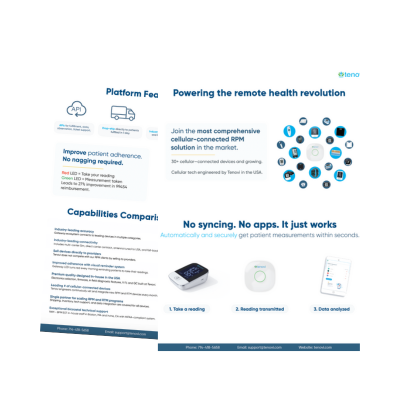
Programs use connected devices such as glucometers, blood pressure monitors, pulse oximeters, and scales. Tenovi devices pair with the Tenovi Gateway to upload readings automatically. This removes manual logging and gives care teams reliable, timely data.
Understanding RPM Research Solutions
Remote patient monitoring gives care teams more complete and consistent data, and earlier alerts. Studies in diabetes, pregnancy, and cancer care show better clinical outcomes and fewer avoidable hospital visits. Expanded 2026 reimbursement makes these programs easier to sustain. As the evidence grows, remote monitoring is becoming a standard layer of proactive, preventive care.
Tenovi helps chronic care, telehealth, and RPM software companies build reliable remote monitoring programs. Our cellular Tenovi Gateway and connected devices deliver accurate patient data with no apps, Wi-Fi, or Bluetooth pairing for patients. Contact Tenovi today for a free demo and consultation.