
Remote patient monitoring in primary care helps providers extend care beyond the exam room and act on patient data sooner. By adopting remote patient monitoring (RPM), primary care practices can strengthen prevention, gain richer patient insights, improve engagement, and support a sustainable revenue model. This article covers the top benefits of RPM in primary care, the 2026 CPT code updates, and a practical path to implementation.
Remote Patient Monitoring and Primary Care
Primary care providers are the first point of contact for most patients in the healthcare system. A primary care visit is often the first step in identifying patients at risk for chronic conditions such as hypertension, congestive heart failure, and diabetes. Remote patient monitoring in primary care lets clinical teams follow patients between appointments. This continuity supports earlier intervention, better patient engagement, and stronger chronic disease management.
Chronic disease drives most healthcare spending. The CDC reports that six in ten U.S. adults live with a chronic condition, and four in ten have two or more. These are exactly the patients primary care teams see every day. RPM gives those teams a steady stream of vital-sign data, so care no longer depends on a single reading taken during a rushed visit.
Adoption reflects that need. Primary care has become one of the largest users of RPM services, and most U.S. clinicians now use some form of remote monitoring in practice. The U.S. remote patient monitoring market continues to grow at a strong pace as practices look for ways to manage rising chronic disease burden with limited staff.
5 Benefits of Remote Patient Monitoring in Primary Care
Early detection keeps conditions from escalating. Home-based measurement is often more comfortable for patients. RPM also helps clinicians focus their time where it matters most. The following five benefits show why primary care teams continue to expand their programs.
1) Remote Patient Monitoring Strengthens Prevention
The World Health Organization notes that at least 80% of premature heart disease, stroke, and type 2 diabetes can be prevented. Many emergency visits are avoidable with appropriate care between office visits. Early symptoms are far easier to treat than advanced disease.
Patients often seek care only when symptoms become disruptive. By then the condition has progressed, and treatment gets harder and more costly. Remote patient monitoring in primary care helps providers spot warning signs between visits, so preventive care can start sooner. Research in BMJ Open found that RPM can reduce acute care use for patients with cardiovascular disease and COPD.
2) It Gives Clinicians More Complete Patient Data
Consistent, quality data improves clinical decisions. With RPM, patients take frequent readings at home using connected remote patient monitoring devices. These measurements build a fuller picture than occasional in-office checks. Primary care physicians can see trends, adjust treatment plans, and catch problems early. Day-to-day data is far more useful than a single snapshot taken twice a year.
3) It Improves Physician-Patient Relationships
A common concern is that remote care weakens the physician-patient bond. In practice, the opposite often holds true. RPM is not a substitute for in-person visits. It adds consistent contact between them, so care feels continuous rather than episodic.
Remote patient monitoring requires regular interaction with the patient each month, whether by phone, video, or message. Most patients only connect with their doctor at scheduled appointments. These added touchpoints open more room for communication and build trust over time.
4) It Supports a Sustainable Reimbursement Model
Remote patient monitoring lets primary care teams care for more patients while earning reimbursement for that work. RPM claim volumes have risen sharply since 2019 as adoption spread. The Centers for Medicare and Medicaid Services (CMS) updates its rules and CPT codes each year, so practices can bill for the monitoring they provide.
RPM is proactive and preventive. Keeping patients stable at home reduces avoidable hospital stays and lowers total cost of care. Unlike some telehealth services, RPM has no originating-site restrictions, which widens access for patients who face transportation or scheduling barriers.
5) It Encourages Patient Self-Management
Remote patient monitoring brings care into the patient’s daily life. When patients know their care team reviews their data, they feel motivated to take measurements and stick to their plans. That engagement often improves adherence to medication and lifestyle changes.
Frequent readings help patients learn what a normal range looks like for their bodies. They can see whether their health is improving and how diet, exercise, and stress affect their numbers. The better patients understand their condition, the more likely they are to act on it and stay in contact with their provider.
Advanced Primary Care Management and Remote Patient Monitoring
Advanced primary care management (APCM) is a patient-centered model focused on comprehensive, proactive care. Adding RPM to APCM improves care coordination. Providers can track health trends continuously instead of relying on intermittent visits.
With RPM, providers can spot early signs of worsening conditions and intervene sooner. This helps prevent costly hospitalizations and supports better management of hypertension, diabetes, and heart disease. Patients benefit from more personalized care and stronger engagement in their own health.
For practices, combining RPM with APCM improves workflow efficiency and helps allocate staff time. Shifting from reactive to proactive care lets primary care teams deliver higher-quality, data-driven care that supports long-term patient health.
2026 CPT Codes for Remote Patient Monitoring in Primary Care
In the 2026 Medicare Physician Fee Schedule, CMS finalized two new codes that lower long-standing thresholds. This gives primary care practices more flexibility for patients who may need shorter or lighter monitoring.
Here is how the 2026 RPM codes fit together:
- CPT 99453 covers the initial setup and patient education for the monitoring device. It is billed once per episode of care.
- CPT 99454 covers device supply and daily readings for 16 to 30 days in a 30-day period.
- CPT 99445 is new for 2026. It covers device supply for 2 to 15 days of data in a 30-day period. Providers bill either 99445 or 99454, not both, based on how many days of data are transmitted.
- CPT 99457 covers the first 20 minutes of monthly treatment management, including at least one interactive communication with the patient.
- CPT 99458 covers each additional 20 minutes of treatment management.
- CPT 99470 is new for 2026. It covers a first 10-minute increment of treatment management and requires at least one real-time interactive communication during the month.
The new 2 to 15 day code and the 10-minute management code remove barriers created by the older 16-day and 20-minute minimums. Always confirm current values and documentation rules against the CMS final rule before billing.
How to Implement Remote Patient Monitoring in Primary Care
If you are considering remote patient monitoring for your practice, a few questions can guide the decision. They help clarify whether RPM fits your patients, staff, and goals.
- Is there a real clinical need for RPM in your patient population?
- Which patients will benefit most, and how many will qualify for reimbursement?
- What are your goals: better outcomes, stronger engagement, or program revenue?
- Which connected devices match your patients’ conditions and comfort level?
- Will you lease or buy RPM devices?
- Will you use care coordination software to manage the program?
- Have you planned staffing ratios, training, and workflow?
- Should you outsource monitoring, or can your staff support it in-house?
- How will you enroll and educate patients?
- Does your team understand the current CMS billing codes?
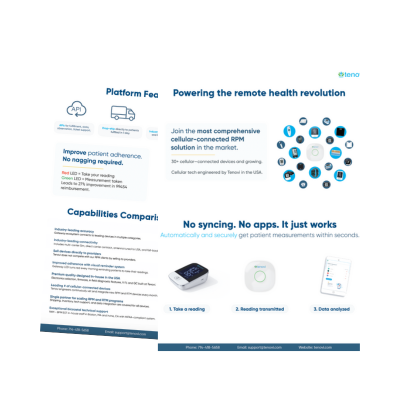
A clear answer to each question makes the rollout smoother. Tenovi supports practices with cellular-connected devices and the Tenovi Gateway, which sends readings automatically with no patient app, Wi-Fi setup, or Bluetooth pairing required. That simplicity helps enrollment and keeps adherence high, especially for older patients.
Frequently Asked Questions About Remote Patient Monitoring in Primary Care
1) What is remote patient monitoring in primary care?
Remote patient monitoring in primary care is the use of connected devices to collect patient health data at home. Vital signs such as blood pressure, weight, and blood glucose transmit to the care team. Providers review the data between visits to guide treatment and catch problems early.
2) Which patients benefit most from RPM?
Patients with chronic conditions benefit most, including those with hypertension, diabetes, heart failure, and COPD. High-risk patients with a family history of chronic disease are also strong candidates. Primary care teams often start with their most frequently monitored conditions.
3) What are the new 2026 RPM CPT codes?
CMS added two RPM codes for 2026. CPT 99445 covers device supply for 2 to 15 days of data in a 30-day period. CPT 99470 covers a first 10-minute treatment management increment with at least one interactive patient communication.
4) Does RPM replace in-person primary care visits?
No. Remote patient monitoring adds continuous care between appointments. It does not replace in-person visits. The goal is steady contact and earlier intervention, which supports the relationship rather than reducing it.
5) How does RPM help primary care revenue?
RPM lets practices bill Medicare for monitoring and management services they already want to provide. Because the model is preventive, it can also reduce avoidable hospitalizations and lower total cost of care. Revenue follows better care, not the other way around.
Understanding Remote Patient Monitoring in Primary Care
Remote patient monitoring in primary care gives clinical teams a way to follow patients between visits and act on health data sooner. The five benefits are clear: stronger prevention, richer patient data, better relationships, a sustainable revenue model, and greater patient self-management. The 2026 CPT updates, including the new 99445 and 99470 codes, make RPM available for a wider range of patients. Paired with advanced primary care management, RPM helps practices shift from reactive to proactive care.
Tenovi provides cellular-connected remote patient monitoring devices and the Tenovi Gateway, built to make setup simple for patients and data delivery reliable for care teams. If you want to see how RPM can fit your primary care practice, contact Tenovi for a free demo and consultation.