Remote patient monitoring vendors fall into several categories, and the differences matter more than they first appear. Some remote patient monitoring vendors only manufacture devices. Others bundle hardware, software, billing, and full care services. Choosing the right partner shapes how well your program performs for years.
Demand for these programs keeps climbing. The global remote patient monitoring (RPM) market is projected to grow from about $55 billion in 2025 to roughly $64 billion in 2026, a growth rate near 15% (The Business Research Company). North America held about 53% of that market in 2025.
A tightening clinician workforce adds urgency. The AAMC projects a shortage of up to 86,000 physicians by 2036, driven partly by an aging population (AAMC). RPM helps stretch limited staff across more patients with chronic conditions, which affect roughly 3 in 4 U.S. adults (CDC).
This article shares 7 tips for evaluating remote patient monitoring vendors. Use them to find a partner with reliable devices, secure data handling, billing support, fulfillment, and responsive service.
How to Evaluate Remote Patient Monitoring Vendors
Evaluating remote patient monitoring vendors starts with one question: will this partner make care easier or harder to deliver? The right vendor streamlines device integration, billing, shipping, and technical support for your teams and patients.
Programs succeed when devices, software, and processes run efficiently and securely. Patients want steady, private monitoring and quick help when something looks off. Providers want fewer administrative burdens, not more.
A trusted third-party vendor should manage those moving parts on your behalf. Done well, clinicians and patients communicate clearly while patient data stays secure and easy to act on. The seven tips below break the decision into practical steps.
1) Build a Structured Proposal and Vetting Process
A disciplined process protects you from a poor fit. Treat vendor selection like any major purchase, with clear criteria and evidence.
- Write a detailed request for proposal (RFP) tied to your clinical and operational goals.
- Build a scoring checklist that maps each RFP response to stakeholder requirements.
- Ask remote patient monitoring vendors for case studies, references, and outcomes data.
Your partner must support you through implementation and well beyond it. Ask how they handle a change in device brands. Can they offer additional pairing options as your needs shift? With Tenovi, you can use Tenovi devices or choose from a growing list of FDA-cleared Bluetooth RPM devices with proven accuracy.
2) Understand the Value of a Cellular Gateway
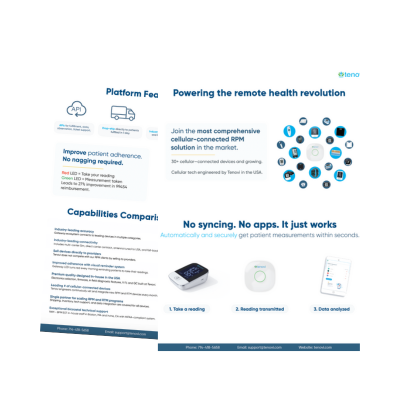
RPM devices connect through either cellular or Bluetooth technology. A cellular gateway, sometimes called a health hub, transmits vitals automatically from Bluetooth-enabled devices without a smartphone or home internet.
The Tenovi Gateway connects third-party FDA-cleared Bluetooth devices and sends data securely to HIPAA-compliant servers. It reaches most cellular towers across North America. Providers pick the best device for each patient, and the Gateway handles the transmission.
The Tenovi Gateway offers clear advantages:
- FDA-cleared Bluetooth RPM devices arrive pre-paired with the Gateway.
- The patient plugs the Gateway into power, and data flows to the Tenovi Cloud.
- No app, login, or setup is required.
- It uses advanced Cat-M1 cellular technology.
- It connects to major U.S. carriers, including AT&T, T-Mobile, and Verizon.
- Data moves through HIPAA-compliant servers.
Providers view results in the Tenovi dashboard, or route data to their own platform through API calls.
3) Offer a Broad Range of FDA-Cleared Devices
Good remote patient monitoring vendors give providers real choice. A wider device menu keeps patients engaged and improves adherence to care plans. RPM is not a one-size-fits-all model.
Bluetooth devices carry trade-offs worth weighing:
- They tend to cost less up front.
- They work over home internet when cellular is unavailable.
- Paired with a ready-to-use cellular gateway, they connect out of the box.
- Many device types are available for common conditions.
Some Bluetooth devices are harder to pair, especially for older patients or those less comfortable with technology. Connectivity can drop and require repeat setup. Ask each vendor how they reduce that friction for patients.
Typical RPM device categories include wireless blood pressure monitors, weight scales, blood glucose meters, pulse oximeters, peak flow meters, and thermometers. Confirm every device is FDA-cleared before you commit.
4) Prioritize Vendors With Proven, Reliable Technology
Technology quality separates strong remote patient monitoring vendors from weak ones. Consider how cellular and Bluetooth options will perform with your partner’s specific patient population.
Schedule live demos with each vendor. Test the setup experience a patient would actually face. Ask about device accuracy, data latency, uptime, and how the vendor handles a lost connection.
The best option is the one that fits the patient population, the workflow, and the program goals. Reliability and FDA-cleared accuracy should never be optional.
5) Weigh Experience and Scalability
Experience shows in how a vendor handles growth. RPM, chronic care management, and telehealth companies all compete to deliver quality care quickly and affordably. Outsourcing RPM services to an experienced vendor can save time and money.
Steady support during and after implementation is what makes a program stick. Value-added services matter here, including project management, staff training, and patient education. Many remote patient monitoring software companies also handle device setup, data review, and HIPAA-compliant support.
Ask a direct question: can this vendor support a fast, large rollout? A partner experienced in scaling brings the infrastructure and staff to expand across many patients without service gaps.
6) Evaluate Total Cost
Cost analysis should reflect care first, revenue second. RPM is proactive, preventive care that can lower long-term costs by catching problems early. A clear ROI picture will map every fee and service.
Ask which of these services a vendor includes:
- storing device inventory
- shipping devices to patients
- subscription and platform fees
- onboarding and training patients
- data management and monitoring
- patient and staff technical support
For 2026, CMS finalized new remote monitoring codes in the Physician Fee Schedule, including shorter-duration options (CMS). The traditional RPM codes 99453, 99454, 99457, and 99458 remain, and CMS added 99445 for 2 to 15 days of device data and 99470 for 10 minutes of clinical staff time. Our 2026 RPM CPT code guide breaks down each one.
This material is provided for general informational and educational purposes only and does not constitute legal, compliance, billing, coding, or reimbursement advice. CPT® codes, descriptions, and Medicare payment rates referenced here are drawn from publicly available sources, are subject to change, and may vary by payer, locality, and patient circumstances. Tenovi makes no representation or guarantee regarding coverage, payment, or the appropriateness of any code for a particular patient or service, and any presented are illustrative only. Providers are solely responsible for independently determining medical necessity and applicable coding, coverage, documentation, and billing requirements and for submitting accurate claims. Consult applicable payer guidance and qualified billing, coding, compliance, or legal professionals before making billing decisions. CPT® is a registered trademark of the American Medical Association.
7) Confirm Support for Chronic and Acute Care
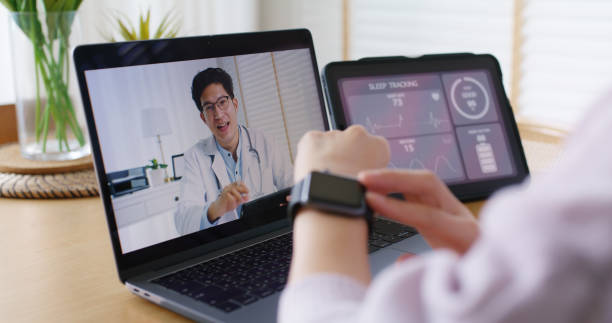
RPM pairs naturally with telehealth when patients need condition-specific monitoring. As telehealth adoption grows, so does remote patient monitoring, supported by better devices and broader insurance coverage.
Strong remote patient monitoring vendors accommodate both chronic and acute programs. RPM helps manage chronic diseases such as asthma, COPD, diabetes, heart failure, and hypertension (Cleveland Clinic). It also supports acute patients after hospitalization or surgery during recovery.
Sustaining a program means managing many parts at once. Choose a vendor with dependable operational support and guidance through implementation and beyond. Remote therapeutic monitoring (RTM) may also fit programs that track respiratory or musculoskeletal therapy adherence.
Frequently Asked Questions About Remote Patient Monitoring Vendors
1) What is a remote patient monitoring vendor?
A remote patient monitoring vendor supplies the devices, technology, and services that let providers track patient health data from home. Some sell only hardware, while others add software, billing, fulfillment, and care services.
2) How do I choose the right remote patient monitoring vendor?
Start with a structured RFP and scoring checklist tied to your goals. Compare device options, connectivity, technical support, scalability, and total cost. Request references and run live demos before you decide.
3) Do remote patient monitoring vendors handle billing and reimbursement?
Many do. Full-service vendors often provide a billing platform and support for CMS codes like 99453, 99454, 99457, and 99458, plus the new 2026 codes. Confirm what billing help is included before signing.
4) What is the difference between cellular and Bluetooth RPM devices?
Cellular devices, or Bluetooth devices paired with a cellular gateway, transmit data without a smartphone or home internet. Standalone Bluetooth devices often need an app and can be harder for some patients to pair.
5) Why does vendor experience matter for RPM programs?
Experienced vendors bring the infrastructure and staff to launch quickly and scale without service gaps. They also reduce the operational burden on clinical teams through training, setup, and ongoing support.
Understanding Remote Patient Monitoring Vendors
Choosing among remote patient monitoring vendors comes down to fit, reliability, and support. The strongest partners offer FDA-cleared device choice, a simple cellular gateway, secure data handling, billing help, and staff to scale with you. A structured RFP, live demos, references, and a clear ROI analysis turn a hard decision into a confident one. Above all, the right vendor makes preventive care easier to deliver, which benefits patients and clinicians alike.
Tenovi serves RPM, chronic care management, and telehealth companies with FDA-cleared cellular-connected devices that all pair with the Tenovi Gateway. Tenovi also provides an RPM dashboard, billing platform, fulfillment services, and live technical support, with requests answered quickly. To see how Tenovi can support your program, book a free demo and consultation today.
This material is provided for general informational and educational purposes only and does not constitute legal, compliance, billing, coding, or reimbursement advice. CPT® codes, descriptions, and Medicare payment rates referenced here are drawn from publicly available sources, are subject to change, and may vary by payer, locality, and patient circumstances. Tenovi makes no representation or guarantee regarding coverage, payment, or the appropriateness of any code for a particular patient or service, and any presented are illustrative only. Providers are solely responsible for independently determining medical necessity and applicable coding, coverage, documentation, and billing requirements and for submitting accurate claims. Consult applicable payer guidance and qualified billing, coding, compliance, or legal professionals before making billing decisions. CPT® is a registered trademark of the American Medical Association.