A home blood pressure monitoring kit is more than a cuff in a box. For the patient, it is a validated monitor, a cuff that fits, and instructions that make the first reading easy. For a remote patient monitoring (RPM) program, the kit also includes the connection that carries each reading to the care team.
The American Heart Association recommends home monitoring for all people with high blood pressure. It helps their health care professionals see whether treatment is working.
This guide covers what belongs in a home blood pressure monitoring kit and how patients take a good reading. It also explains what drives the cost of a blood pressure machine and how kits reach patients.
What Is a Home Blood Pressure Monitoring Kit?
A retail kit usually holds a monitor, a cuff, batteries, and a quick guide. The patient records readings on paper or in an app, then shares them at a visit.
An RPM kit adds a connection and a program around it. Readings travel to the care team automatically, and staff can review trends between appointments. The patient’s job stays simple: take the measurement.
What Belongs in a Home Blood Pressure Monitoring Kit
Six items make a kit complete.
1. A Validated Upper Arm Monitor
The AHA recommends an automatic, cuff-style upper arm monitor. Check the exact model on the AMA’s validated listing before it goes into a kit. Validation shows the monitor’s readings were tested against a reference.
2. Cuffs That Fit
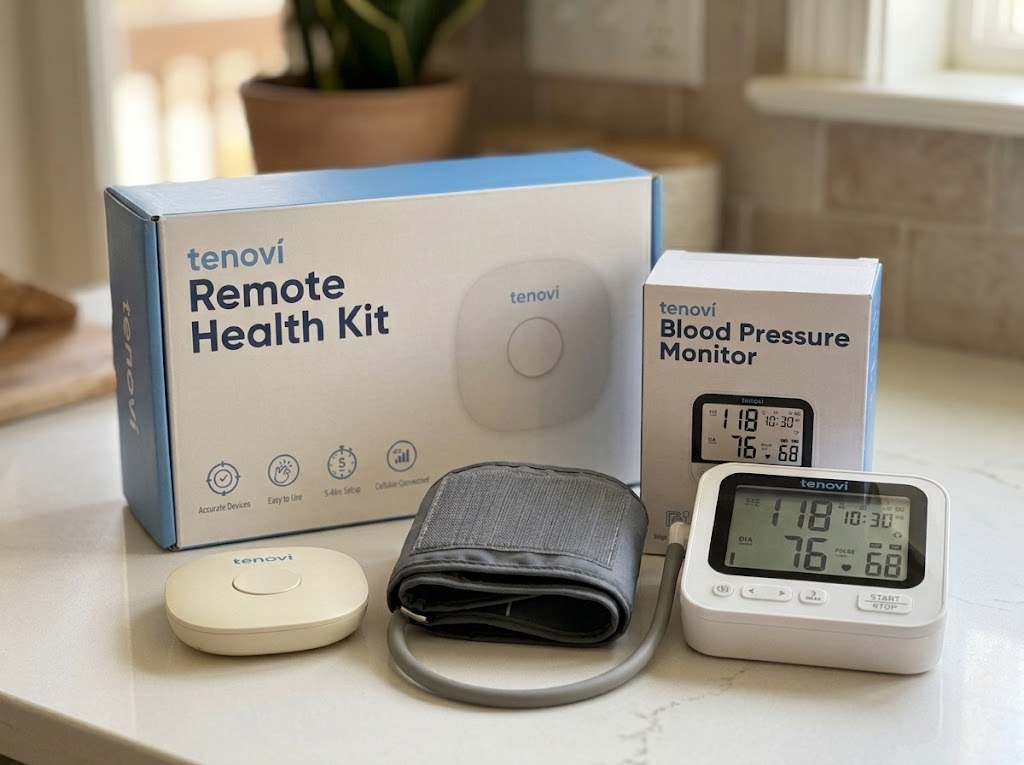
A cuff of the wrong size gives an inaccurate reading. Include the right size for each patient, or offer several. The Tenovi Blood Pressure Monitor Gen 3 has three cuffs that fit arms from 15 to 52 cm.
3. Batteries and Power
Include batteries so the first reading works on day one. The Gen 3 ships with four AA batteries. The Tenovi Cellular BPM runs on AA batteries too, lasting about 9 to 12 months, and it alerts patients when power runs low.
4. A Cellular Connection
Cellular service sends readings without Wi-Fi, an app, or pairing. Bluetooth monitors connect through the Tenovi Gateway. A patient plugs it in once. The LED ring turns green to confirm a reading arrived and red each morning as a reminder.
5. Plain-Language Instructions
A one-page quick start guide and a short video cut first-week questions. Our Gen 3 guide shows what setup looks like, and our instructions cover daily use.
6. A Support Channel
Patients need a clear place to ask questions. Providers need help with dashboards and orders. Include contact details for both in the kit.
How Patients Take a Good Reading at Home
A good kit still depends on good technique. Patients can follow these steps, which draw on AHA guidance and the Tenovi setup guides.
- Rest quietly for about five minutes.
- Sit with the back supported, feet flat, and legs uncrossed.
- Place the cuff on bare skin, with the bottom edge just above the bend of the elbow.
- Rest the arm on a flat surface so the middle of the cuff sits at heart level.
- Avoid eating, exercise, caffeine, and alcohol for at least 30 minutes beforehand.
- Take two readings about a minute apart, and measure at the same time each day.
One high reading is not a diagnosis. Care teams look at patterns and averages over time.
Cost of a Home Blood Pressure Monitoring Kit
The cost of a blood pressure machine depends on what comes with it. A basic retail monitor costs less than a connected kit with cuff options, cellular service, and delivery to the patient’s home. ValidateBP shows a price band for each listed device, which gives a rough comparison.
For a program, cost has several parts.
- The monitor and its cuffs.
- Cellular connectivity.
- Kit assembly and shipping.
- Replacements and returned devices.
- Patient and provider support.
Ask suppliers to itemize each part. A kit that fits and works on day one spares patients a second delivery and keeps readings flowing. The AMA notes that some insurers and health departments also offer monitor options to patients.
Cellular vs. Bluetooth Home Blood Pressure Monitoring Kits
Bluetooth monitors that sync to a phone need a smartphone, a downloaded app, and a pairing step. Each step is a place where a patient can stall.
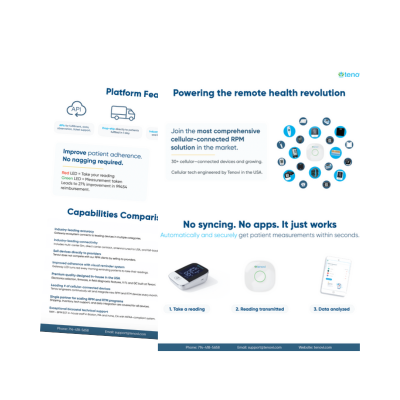
Cellular kits remove those steps. The patient presses one button, and the reading goes to the care team. Tenovi’s cellular-connected approach means no syncing, no apps, and no Wi-Fi. Our device guide compares the options Tenovi supports.
Matching the Home Blood Pressure Monitoring Kit to the Patient
No single kit fits every patient. These pairings show how a program can match the kit to a need.
| Patient Need | Kit Choice |
|---|---|
| Larger or smaller upper arm | Tenovi Blood Pressure Monitor Gen 3, with cuffs for arms from 15 to 52 cm |
| Low vision | Gen 3, which reads results aloud |
| No smartphone or home internet | A cellular-connected or cellular-enabled monitor |
| A single device only | Tenovi Cellular BPM, which needs no Gateway |
| More than one condition | One Gateway, which supports several devices in the same home |
How Kits Reach Patients
Programs order kits through an API, and fulfillment ships them to patients. Tenovi handles fulfillment, provisioning, and support, so care teams do not stock devices or answer setup calls. Tracking and returned devices are part of the service.
Programs choose the devices, cuff sizes, and kit contents for each patient group. That keeps each kit matched to the people who will use it.
FAQs About Home Blood Pressure Monitoring Kits
These answers cover the questions patients and care teams ask most.
1) What is included in a home blood pressure monitoring kit?
A complete kit holds a validated upper arm monitor, a cuff that fits, batteries, and clear instructions. An RPM kit also includes a connection, such as a cellular Gateway, and a support channel for patients and providers.
2) What is the cost of a blood pressure machine for home use?
Cost depends on the monitor, the cuff options, and what comes with it. Retail monitors cost less than connected kits that include cellular service and delivery. ValidateBP lists a price band for each device, and programs should ask suppliers to itemize each part.
3) What type of home blood pressure monitor does the AHA recommend?
The AHA recommends an automatic, cuff-style upper arm monitor. It does not recommend wrist or finger monitors, which give less reliable readings. The cuff should fit the arm, because the wrong size causes inaccurate readings.
4) Does a home blood pressure monitoring kit need Wi-Fi?
Not when the kit is cellular. Cellular-connected monitors send readings through the Tenovi Gateway. Cellular-enabled monitors have a built-in SIM. Neither type needs Wi-Fi, an app, or a smartphone.
5) Can one kit support more than one device?
Yes. One Tenovi Gateway can support several devices in the same home. A patient with hypertension and another condition can add a device without a second connection.
6) What should a patient do if a reading seems high?
One high reading is not a diagnosis. The patient should rest, measure again after five minutes, and follow the program’s instructions to contact the care team. The AHA states that readings above 180/120 mm Hg need medical attention. Patients with symptoms such as chest pain, shortness of breath, or trouble speaking should call 911.
Understanding the Home Blood Pressure Monitoring Kit
A home blood pressure monitoring kit works when every part does its job. A validated upper arm monitor gives trustworthy numbers. A cuff that fits keeps them accurate. Batteries, clear instructions, and a support channel get the first reading taken. For an RPM program, a cellular connection carries each reading to the care team without apps, syncing, or Wi-Fi. Cost depends on how many of these parts a supplier includes, so itemized pricing makes comparison easier. Programs that match each kit to the patient give people the best chance of measuring every day.
Tenovi provides the infrastructure behind remote monitoring programs. One API and one partner give healthcare organizations 60+ devices, cellular connectivity, patient data, fulfillment and support for RPM and RTM. Programs add new devices and patient populations on the same integration they started with. Want to see how remote patient monitoring works with Tenovi? Contact us for a free demo and consultation.