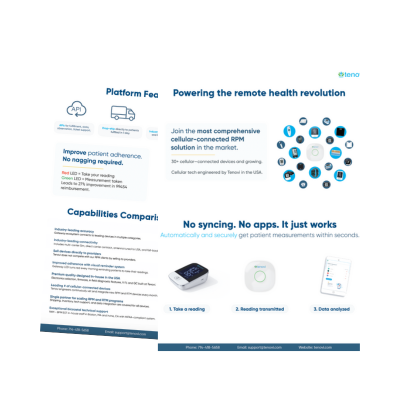

A press release published on February 6, 2024. View the original Tenovi Smart Watch Cellular-Connected Activity Tracking press release here.
Smartwatch cellular-connected activity tracking gives care teams a live view of a patient’s daily movement, heart rate, and sleep. With smartwatch cellular-connected activity tracking, that data moves from the wrist to the clinician without a phone, an app, or a home Wi-Fi network. A cellular gateway does the work in the background.
This matters for chronic care. Many patients on remote patient monitoring (RPM) programs are older adults, rural residents, or people who are not comfortable with smartphones. A device that syncs on its own removes a common barrier to steady data. The result is fewer gaps in the record and more reliable trends for the clinical team.
Tenovi built its Smart Watch to solve this exact problem. It pairs with the Tenovi Cellular Gateway so patient data transmits automatically over a cellular network. This guide explains how the technology works, what it measures, and where it fits in a modern monitoring program.
How Cellular-Connected Smartwatches Work With the Tenovi Gateway
A cellular-connected smartwatch collects health data throughout the day and stores it on the device. When the patient is within range of the Tenovi Gateway, the watch offloads that data automatically. The Gateway then sends the readings to the care team over a cellular signal.
The patient does not pair a phone or open an app. They do not enter a password or connect to home internet. They wear the watch and keep the Gateway plugged in nearby. This “no-hassle” setup is the core advantage of cellular-connected activity tracking for chronic care populations.
Care managers keep control on their end. A clinician can update a patient’s daily step goal remotely through the Gateway. The new goal appears on the watch without a visit or a call. This two-way flow keeps the plan current as the patient’s condition changes.
The Tenovi Smart Watch is one of more than twenty cellular-connected devices that transmit through the same Gateway. That shared infrastructure lets a program mix a watch with a blood pressure monitor, a scale, or a glucometer under one connection. You can review the full device lineup on the Tenovi Smart Watch page.
What a Cellular-Connected Smartwatch Tracks
Activity data is more than a step count. A clinical-grade watch captures several signals that help a care team read a patient’s trend over time. The Tenovi Smart Watch tracks three core metrics:
- Records step counts and movement, hourly. Steady activity supports cardiovascular health, weight, and mobility after a hospital stay.
- Hourly heart rate readings help clinicians spot changes tied to medication, exertion, or a worsening condition.
- Daily sleep tracking gives context for fatigue, recovery, and conditions where rest affects outcomes.
Together these signals form a picture that a single office visit cannot. A clinician sees whether a patient is moving less this week, whether resting heart rate is climbing, and whether sleep is breaking down. Each of these can be an early warning.
Why Activity Data Matters in Chronic Care
Physical activity is one of the strongest levers in chronic disease. The Centers for Disease Control and Prevention reports that regular activity lowers the risk of heart disease, type 2 diabetes, and several cancers. Tracking that activity lets a care team turn a general recommendation into a measured plan.
The evidence for wearables in this setting continues to grow. A study published in the Medical Journal of Australia found that chronic disease patients using a smartwatch-based digital intervention after a heart attack had a 27% lower risk of all-cause hospital readmission than usual care alone. Small, consistent nudges toward activity can change outcomes.
Adoption trends support wider use. Rock Health’s 2025 Consumer Adoption Survey found that most wearable owners wear their devices five or more days per week, and many track activity, sleep, and heart rate daily. Patients are already comfortable with the form factor. Cellular connectivity extends that comfort to people who lack a smartphone or reliable home internet.
Remote patient monitoring is proactive, preventive care. When a care team catches a downward trend early, it can adjust a plan before a patient needs the emergency room. Better activity data helps that happen sooner. For a broader view of how these programs run, see how remote patient monitoring works.
Clinical Use Cases for Activity Tracking
A cellular-connected smartwatch fits many chronic and post-acute programs. Common use cases include:
- Heart failure and cardiac recovery. Activity and heart rate trends help teams manage patients after a cardiac event. Pairing a watch with a remote patient monitoring program for heart failure adds a movement signal to weight and vitals.
- Hypertension management. Activity data supports lifestyle coaching alongside blood pressure readings.
- Post-surgical and post-hospital care. Step counts show whether a patient is regaining mobility on schedule.
- Diabetes and weight management. Movement data reinforces the daily habits that support blood sugar control.
- Older adults and fall risk. Declining activity or disrupted sleep can flag a patient who needs a check-in.
In each case, the watch does not replace vitals monitoring. It adds context that helps a clinician act with more confidence.
Benefits for Care Teams and Patients
Cellular-connected activity tracking helps both sides of the care relationship. The main benefits include:
- No setup burden for the patient. No phone, app, or Wi-Fi is required, which widens access for rural and older populations.
- Reliable data capture. Automatic transmission reduces missed readings and manual entry errors.
- Real-time visibility. Care teams see trends as they form rather than at the next visit.
- Remote goal setting. Clinicians adjust step targets without a visit, keeping the plan current.
- Higher engagement. A visible daily goal encourages patients to stay active and involved in their own care.
Reimbursement and Program Value
Activity tracking can support a monitored care plan that qualifies for RPM reimbursement. The Centers for Medicare & Medicaid Services recognizes remote physiologic monitoring codes for the setup, supply, and management of connected devices. Payment rules change each year, so confirm current CPT requirements and covered devices with your billing team before you build a program.
The financial case follows the clinical one. When monitoring helps a team prevent an avoidable readmission, it lowers cost while improving the patient’s experience. That patient-first framing is the point of the model. Revenue follows good care rather than the other way around.
How to Choose a Cellular-Connected Activity Tracker
Not every wearable suits a clinical program. When you evaluate a device, weigh these factors:
- Connectivity method. Cellular transmission through a gateway removes the phone and Wi-Fi dependency that limits consumer wearables.
- Accuracy. Look for reliable step, heart rate, and sleep measurement suited to a care setting.
- Platform integration. The device should feed a single dashboard alongside your other monitoring tools.
- Ease of use for the patient. Minimal setup and a simple interface drive adherence.
- Fulfillment and support. A vendor that handles logistics and device support saves your team time.
Tenovi’s cellular-connected platform is built around these needs. Its proprietary Gateway and API-driven fulfillment let telehealth, chronic care, and remote patient monitoring companies deploy devices without building infrastructure from scratch.
Frequently Asked Questions
1) What is smartwatch cellular-connected activity tracking?
It is the use of a smartwatch that sends activity, heart rate, and sleep data to a care team over a cellular network. A gateway transmits the data automatically, so the patient does not need a phone, app, or home internet.
2) How does the smartwatch send data without a phone?
The watch stores readings and offloads them to a nearby cellular gateway when in range. The Tenovi Gateway then transmits the data to the care team over a cellular signal.
3) What does the Tenovi Smart Watch measure?
It tracks steps and physical activity hourly, heart rate hourly, and sleep duration daily. Care managers can also update a patient’s daily step goal remotely.
4) Who benefits most from cellular-connected activity tracking?
Patients who lack a smartphone or reliable Wi-Fi, older adults, rural residents, and anyone in a chronic or post-acute program that benefits from steady activity data.
5) Does activity tracking support remote patient monitoring reimbursement?
It can support a monitored care plan that uses RPM codes. Reimbursement rules change yearly, so confirm current CPT requirements and covered devices with your billing team.
Understanding Smartwatch Cellular-Connected Activity Tracking
Smartwatch cellular-connected activity tracking closes a common gap in remote patient monitoring. It captures steps, heart rate, and sleep, then sends that data to the care team automatically over a cellular network. Because it needs no phone, app, or Wi-Fi, it reaches patients who other wearables leave behind. Care teams gain real-time trends, remote goal setting, and earlier warning signs, while patients get a device they can simply wear. Paired with the Tenovi Gateway and a wider set of connected devices, activity tracking strengthens chronic care, cardiac recovery, and post-hospital programs.
Tenovi is a data aggregation and automation platform that connects medical device manufacturers with remote patient monitoring companies. Its cellular Gateway and API-driven fulfillment services let care organizations launch connected device programs quickly and reliably. To see how cellular-connected activity tracking can fit your program, contact us for a free demo and consultation.