Telemedicine research has matured from a pandemic-era scramble into a large, steady body of evidence. The early questions were about whether virtual care worked at all. The current questions are narrower and more useful: which conditions benefit most, how remote patient monitoring changes outcomes, and where the data still has gaps. This guide pulls together what telemedicine studies now show, written for providers, care teams, and the partners who build virtual care programs.
We cover adoption trends, clinical outcomes, the evidence behind remote patient monitoring, the policy backdrop, and the open questions researchers are still working on.
Where Telemedicine Adoption Stands in 2026
Telemedicine research consistently shows a market that surged, corrected, and settled. The share of physicians whose practices used telehealth reached 74% in 2022, up from about 25% in 2018, according to the American Medical Association. Actual visit volume has since leveled off, holding at roughly 4 to 6% of outpatient visits. That gap between capability and everyday use is one of the more studied findings in the field.
Patient willingness stays high even where routine use is modest. A Deloitte survey found that 44% of U.S. adults had a virtual visit in the prior 12 months, and 94% said they would do it again. Telemedicine studies describe this as a high-willingness, moderate-usage equilibrium. People accept virtual care and rate it well, but in-person habits and reimbursement rules still shape how often they use it.
Mental health is the clear anchor. Telemedicine usage in behavioral health was more than three times higher than in other specialties, per Epic Research. Analysts expect behavioral and mental health to remain the fastest-growing application of virtual care through the next decade.
What Telemedicine Research Says About Clinical Outcomes
The strongest theme across recent telemedicine studies is that virtual visits hold up well for many common needs. Research on patient satisfaction, including work reported through JAMA Network, finds that roughly three-quarters of patients rate telemedicine as good as or better than in-person care. Dissatisfaction has fallen over time. In 2020, 31% of patients rated a virtual visit as worse than in person; by 2023 that figure had dropped to 19%.
Outcome research points in the same direction for chronic disease. Conditions such as hypertension, type 2 diabetes, and COPD respond well to virtual follow-up paired with home data, a pattern we cover in more depth in our look at telemedicine outcomes. These are the conditions where telemedicine and remote patient monitoring overlap most, because regular measurement matters more than a physical exam.
Access research adds another layer. Telemedicine narrowed the rural-urban gap in specialist access by about 23% in the U.S. between 2019 and 2023. Rural patients report fewer delays and fewer long trips for routine follow-up. At the same time, barriers persist. Pew Research found that 22% of U.S. adults cite not knowing how to use the technology as an obstacle, and the National Rural Health Association reported that 68% of rural patients face insufficient internet access.
Telemedicine Versus Telehealth in the Research
Telemedicine research often uses precise definitions, and the terms are worth separating. Telemedicine refers to the remote delivery of clinical services by licensed clinicians: diagnosis, treatment, and prescribing over video or phone. Telehealth is the broader umbrella. It includes telemedicine plus remote patient monitoring, patient education, care navigation, and administrative services.
Put simply, all telemedicine is telehealth, but not all telehealth is telemedicine. A nurse practitioner running a video follow-up is practicing telemedicine. A wearable transmitting blood glucose data to a care dashboard is telehealth. This distinction matters for anyone reading study results, because a paper on “telehealth outcomes” may be measuring something broader than clinician visits alone.
The Evidence Behind Remote Patient Monitoring
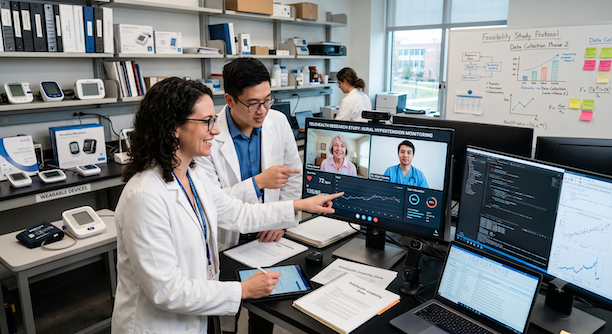
Remote patient monitoring (RPM) is where much of the newest telemedicine research is concentrated. RPM uses connected devices, such as blood pressure cuffs, glucometers, weight scales, and pulse oximeters, to capture patient vitals at home. That data transmits automatically to the care team, so clinicians can act on trends between visits rather than waiting for the next appointment.
The research value of RPM is that it turns single snapshots into continuous signal. A blood pressure reading in a clinic captures one moment. A stream of home readings shows how a patient responds to a medication change over weeks. Studies of chronic care programs report that this continuous view supports earlier intervention, fewer avoidable escalations, and stronger patient engagement. For a closer look at how the two fit together, see our overview of telemedicine and remote patient monitoring.
RPM also reframes how virtual care is measured. Older telemedicine studies counted visits. Newer work looks at data continuity: how consistently a patient’s measurements arrive, and whether care teams act on them. This shift toward continuous measurement is one reason device sales for remote monitoring have grown steadily as programs move from pilots to standard practice.
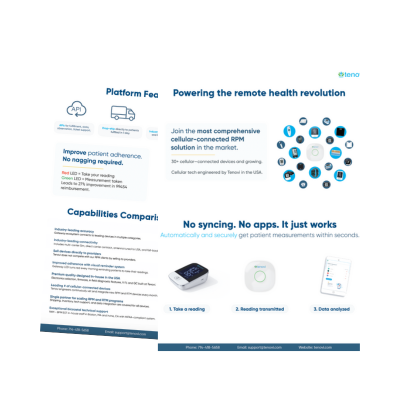
Tenovi supports this model on the hardware and data side. Our FDA-cleared remote patient monitoring devices pair with a cellular Gateway that transmits readings automatically, without apps, Bluetooth pairing, or home Wi-Fi. That reliability is what makes the underlying data usable for the kind of longitudinal measurement telemedicine research increasingly depends on.
The Policy Backdrop Shaping Telemedicine Research
Medicare policy sets much of the frame for U.S. telemedicine studies. In February 2026, Congress passed the Consolidated Appropriations Act of 2026, which extended Medicare telehealth flexibilities through December 31, 2027. Those provisions allow the patient’s home to serve as an originating site, waive earlier geographic restrictions, and preserve coverage for behavioral telehealth.
The extension matters for research because coverage drives volume, and volume produces data. When flexibilities lapse or nearly lapse, as they did during the 2025 government shutdown, virtual care volume becomes unstable and harder to study. Behavioral telehealth is the exception that proves the point: it was made a permanent Medicare benefit, and it now has the deepest and most consistent evidence base of any telemedicine application.
For care programs, the takeaway is practical. The policy window is open through 2027, which gives providers and their technology partners a defined runway to build, measure, and refine virtual care and RPM programs while the reimbursement picture is stable.
Where Telemedicine Studies Still Have Gaps
Most virtual care programs are young, so evidence on multi-year outcomes for chronic disease is only now accumulating. Equity is a persistent concern, since the patients most likely to benefit from remote care are often the ones facing connectivity and digital-literacy barriers. Comparative effectiveness is another gap: research is still sorting out which conditions truly do as well virtually as in person, and which need a hybrid approach.
The consensus emerging from the field is not that telemedicine replaces in-person care. It is that hybrid care, a deliberate blend of virtual and in-person visits supported by home data, is the model both patients and providers prefer. That is the direction most current telemedicine research is pointed.
Frequently Asked Questions About Telemedicine Research
1) What is the difference between telemedicine and telehealth in research?
Telemedicine refers specifically to remote clinical services delivered by licensed clinicians, such as diagnosis, treatment, and prescribing. Telehealth is broader and includes telemedicine plus remote patient monitoring, patient education, and care navigation. All telemedicine is telehealth, but not all telehealth is telemedicine.
2) Does telemedicine research show virtual visits are as effective as in-person care?
For many common and chronic conditions, yes. Around 75% of patients rate telemedicine as good as or better than in-person care in JAMA research, and chronic conditions like hypertension and diabetes respond well to virtual follow-up. Some acute and exam-dependent conditions still require in-person care, so most researchers favor a hybrid model.
3) How does remote patient monitoring fit into telemedicine research?
Remote patient monitoring is one of the most active areas of study. It captures patient vitals at home and transmits them automatically to care teams, turning single readings into continuous data. This supports earlier intervention and gives researchers longitudinal data that older visit-based telemedicine studies could not.
4) What does the 2026 Medicare policy mean for telemedicine?
The Consolidated Appropriations Act of 2026 extended Medicare telehealth flexibilities through December 31, 2027, including home as an originating site and behavioral telehealth coverage. Behavioral telehealth is already a permanent Medicare benefit. Stable coverage gives providers a defined window to build and measure virtual care programs.
5) What are the biggest gaps in current telemedicine research?
The main gaps are long-term chronic-disease outcomes, equity for patients with limited connectivity or digital skills, and comparative effectiveness across conditions. Most programs are still young, so multi-year evidence is only now becoming available.
Understanding Telemedicine Research
Telemedicine research in 2026 describes a field that has settled into a clear shape. Adoption surged and corrected, patient acceptance is high, and clinical evidence supports virtual care for many common and chronic conditions. Remote patient monitoring has become a central research area because it turns occasional snapshots into continuous data that care teams can act on. Medicare policy, now stable through 2027, gives programs room to build and measure. The open questions are about the long term, equity, and which conditions fit which setting, and the field is converging on hybrid care as the answer.
Tenovi builds the connected devices and data infrastructure that make reliable remote patient monitoring possible. Our FDA-cleared devices transmit readings automatically through a cellular Gateway, so care teams get consistent data without apps or Wi-Fi. If you are building or scaling a virtual care or RPM program, book a free demo and consultation to see how Tenovi can support it.