Digital health is often described as a great equalizer, and the case for it is intuitive: when care can travel through a connected device instead of requiring a long drive to a clinic, geography, mobility, and local provider shortages should pose smaller barriers to care. But for remote patient monitoring (RPM) to deliver on that promise and genuinely advance digital health equity, the program behind it has to be designed with equity in mind. The benefit is real. It also depends on deliberate design that accounts for every patient a program intends to serve.
What Digital Health Equity Means
Digital health equity is the goal of ensuring everyone has a fair opportunity to benefit from digital health tools, regardless of income, race, language, disability, or location. It sits at the intersection of three established ideas: health equity, digital access, and the social determinants of health.
The barriers are commonly grouped as the digital determinants of health, and they are concrete: connectivity, device access, digital literacy, language, and trust. A patient managing high blood pressure at home needs a reliable way for readings to reach their care team, some comfort with the technology, and instructions in a language they read fluently. These care gaps are widespread. The Federal Communications Commission’s Rural Health Care Program supports broadband adoption, yet roughly one in five rural Americans still lack access to high-speed home service. How a program handles that gap, whether it depends on home Wi-Fi or uses cellular-connected devices that work without it, often determines who can participate in connected care.
Digital Tools Do Not Close Gaps on Their Own
Recent research challenges the assumption that digital health automatically narrows disparities. A 2026 systematic review in Frontiers in Public Health evaluated 13 equity frameworks for telehealth and digital health equity and found that these technologies can introduce new disparities tied to digital literacy, internet access, and affordability, even as they expand access for others. The same program can help one population while inadvertently excluding another.
A 2026 World Health Organization review reached a similar conclusion: equity is increasingly referenced in digital health strategy but inconsistently built into how tools are regulated, implemented, and evaluated. The review’s central recommendation was an equity-by-design approach, in which equity is integrated at every stage of a program rather than treated as an afterthought.
This is not a dispute against digital health technology. It is simply saying that digital technology alone does not reduce disparities by default. The technology, how it works, is delivered, how patients are engaged and many other factors create a lever, not a guarantee.
When It Is Designed Well, the Results Follow
The evidence that digital health equity can be achieved with remote patient monitoring can by expanding access and improving outcomes for underserved communities is equally substantial and continues to grow. A 2024 single-site cohort study of a rural cardiology practice, where 87 percent of enrolled patients lived in rural areas, found that an active remote management program for heart failure was associated with an 83 percent reduction in heart failure hospitalizations and a 93 percent reduction in heart failure emergency room visits over two years.
The population studied carried a disproportionate burden of heart failure morbidity and mortality tied to socioeconomic and racial inequities, which made the result notable, though the small single-site sample means the data can be read as promising rather than definitive.
Scale does not appear to dilute the effect. A multisite Mayo Clinic RPM program spanning more than 70 rural and community-based sites reported high patient satisfaction across both urban and rural populations, evidence that these programs can extend to underserved areas without leaving rural patients behind.
The consistent qualifier is design. A 2025 qualitative study of rural and regional RPM programs concluded that remote patient monitoring has significant potential to address rural health challenges. It is important to realize that depends on several practical enablers: staff training, workflow integration, technical support, and direct attention to the connectivity and literacy barriers patients face. Programs that plan for those barriers succeed where programs that assume patients will navigate them alone do not.
Digital Health Equity & Design Choices That Make a Difference
Current frameworks and field studies converge on a consistent set of design choices that distinguish equitable remote patient monitoring programs.
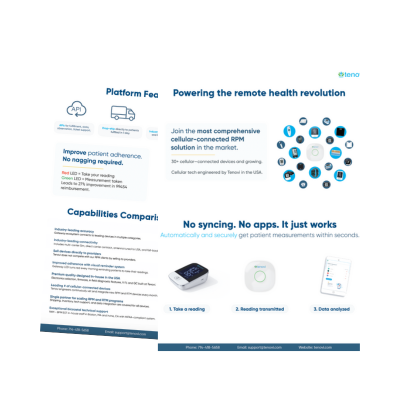
To achieve digital health equity through RPM, programs must meet patients where their access actually is. This may be done by offering device options and a care pathway that do not assume every patient owns a smartphone or has high-speed internet. Cellular-connected devices and phone-based support keep connectivity from becoming a precondition for care.
Digital health equity would include designing for literacy and language by providing setup help, plain-language instructions, and materials in the languages a patient population speaks. Onboarding support is frequently the difference between enrollment and sustained use.
Another aspect to consider in design is measuring who is missing with disaggregated enrollment and outcomes data by population to reveal whether specific groups are under-referred or dropping off. Then, act on what the data shows. If a gap is not measured then it cannot be closed.
Build equity in from the planning stage in vital. The AHRQ-funded Digital Healthcare Equity Framework, developed at Johns Hopkins, sets out how to assess equity across the full lifecycle of a digital health solution, from planning and development through implementation and ongoing monitoring. Treating equity as a design input rather than a reporting afterthought is the throughline across nearly all current guidance.
Where Policy Is Heading
Payment policy increasingly reflects this thinking. The CMS ACCESS Model, an outcome-aligned payment model launching July 5, 2026, pays for technology-supported chronic care in Original Medicare and includes a fixed payment adjustment for rural patients, an explicit acknowledgment that reaching underserved populations carries different costs and warrants different support. Separately, a 2026 Health Affairs analysis calls for digital inclusion or digital health equity to be treated as a measurable quality metric, tracking whether patients are digital health ready with the devices, connectivity, and literacy they need to participate.
For providers and the partners who serve them, the implication is practical. As reimbursement shifts toward outcomes and access, RPM programs built to reach every patient are better aligned with where payment is heading, not only with equity goals.
Understanding Digital Health Equity
Remote patient monitoring is neither a shortcut to health equity nor a threat to it. Its impact depends almost entirely on how thoughtfully it is deployed. Programs that anticipate the digital divide, support patients through setup, offer connectivity-independent options, and measure who is being reached can extend genuinely better care into communities that have long been underserved. That is digital health equity done right, and it is well within reach for programs willing to design for it.
Frequently Asked Questions
Remote patient monitoring sits at the center of a fast-moving conversation about access, technology, and fairness in care. The questions below address the points that come up most often when providers and care organizations weigh how RPM fits into a digital health equity strategy.
Does remote patient monitoring improve health equity?
It can, but not automatically. Research shows RPM can expand digital health equity with access and improved outcomes for rural and underserved patients when programs are designed to address barriers such as broadband access, device availability, digital literacy, and language. Without that intentional design, digital tools can unintentionally widen gaps.
What is the digital divide in healthcare?
The digital divide refers to unequal access to the internet, devices, and digital skills needed to use digital health tools. In healthcare, it means some patients cannot fully benefit from telehealth or remote monitoring because they lack reliable broadband, a suitable device, or comfort with the technology.
What are the digital determinants of health?
These are the technology-related factors that shape whether someone can benefit from digital health, including broadband connectivity, device access, digital literacy, language access, and trust. They sit alongside the traditional social determinants of health.
How can RPM programs be made more equitable?
Effective steps include offering cellular-connected devices and phone-based support for patients without home internet, providing setup help and multilingual materials, designing care pathways that do not require patients to own specific devices, and tracking enrollment and outcomes data by population to identify and close gaps.
What is the CMS ACCESS Model and how does it relate to equity?
The CMS ACCESS Model is an outcome-aligned payment model launching July 5, 2026 that pays care organizations for managing chronic conditions in Original Medicare, with payment tied to measurable health improvement. It includes a fixed payment adjustment for rural patients, reflecting a policy emphasis on reaching underserved populations.