
Remote patient monitoring healthcare has moved from a promising pilot to a standard part of chronic care. Providers now use remote patient monitoring (RPM) to track patients between office visits and act on problems sooner. This article looks at how remote patient monitoring healthcare has grown. It covers the current evidence and how reimbursement supports it in 2026.
Adoption climbed fast over the past few years. One provider survey found RPM use among clinicians rose from 20% in 2021 to 81% in 2023. Growth has continued since, and the tools are now common across primary care, cardiology, and hospital-at-home programs.
Remote Patient Monitoring in Healthcare: From Niche to Norm
Remote patient monitoring healthcare uses connected devices to send patient vital signs to the care team from home. Clinicians review the readings and step in early when something looks wrong. The model supports value-based healthcare by keeping patients stable and out of the hospital.
The shift reflects a larger move toward care beyond the hospital walls. RPM reduces readmissions by watching vital signs after discharge. It also closes the gaps between scheduled appointments. Research on connected monitoring links it to fewer acute events in chronic disease populations.
Blood pressure control shows the pattern clearly. A retrospective analysis of 6,595 hypertensive patients found systolic pressure improved by 7.3 mmHg overall on an RPM program. Patients with stage 2 hypertension improved by 16.7 mmHg. Longer time on the program was tied to greater improvement.
The Shift to RPM in Acute and Chronic Care
Remote patient monitoring healthcare now spans both chronic and acute settings. In chronic care, RPM tracks conditions like hypertension, diabetes, heart failure, and COPD. In acute care, hospital-at-home programs use it to monitor patients who would once have stayed inpatient.
This shift changes where care happens. Patient outcomes can improve while the strain on hospital capacity drops. Continuous data also gives clinicians a fuller picture than a single office reading.
Cost data supports the move. A 2026 peer-reviewed analysis studied 597 high-acuity Medicare patients. It reported a median total cost of care drop of $10,932 per patient over a year. Inpatient hospitalizations fell 40.9%, and emergency visits fell 19.9%. The reductions held across every baseline cost group.
Driving Forces Behind Remote Patient Monitoring Adoption
Several forces push remote patient monitoring healthcare forward. The goal of reducing rehospitalization sits at the top. By watching vital signs remotely, care teams can act before a small change becomes an emergency.
Real-time data is the second driver. It lets clinicians offer timely, personalized care instead of waiting for the next visit. Early action on a rising reading can prevent a costly admission.
The human side matters too. Regular contact with a care navigator supports medication adherence and healthy habits. Studies link that steady engagement to better blood pressure control. The device produces a number, but the follow-up turns it into managed care.
Workforce pressure is a quieter force. Rural and underserved areas face clinician shortages, and remote monitoring extends a small team’s reach. It helps practices care for more patients without adding office visits.
What the Evidence Shows in 2026
The evidence base for remote patient monitoring healthcare has grown stronger and more independent. National guidelines now treat home monitoring as standard practice, not an add-on.
Key findings from recent literature include:
- Blood pressure. Home monitoring plus clinical support beats usual care on systolic reduction, across trials and meta-analyses.
- Goal attainment. RPM patients reach blood pressure targets 15 to 25 points more often than usual care.
- Diabetes. RPM programs lower HbA1c by roughly 0.4% to 0.6% across meta-analyses of dozens of trials.
- Cardiovascular events. A five-year hypertension follow-up reported a 50% reduction in cardiovascular events and a 126% return on investment.
- Guidelines. The 2025 AHA/ACC hypertension guideline gives home monitoring with telehealth support its strongest recommendation.
Independent studies reinforce these results. A national program of 23,638 patients reported blood pressure improvement of 7/5 mmHg. Gains were strong in rural and underserved groups. A matched-control Medicare cost study across 15 states found total cost of care fell about $1,300 per patient per year. That figure included the cost of the service.
Benefits of Remote Patient Monitoring Healthcare
Remote patient monitoring healthcare offers benefits beyond the virtual visit. It improves workflows and the day-to-day experience of care. The main benefits include the following.
- Chronic Disease Management: RPM gives clinicians steady health data to guide treatment. It reduces the need for frequent in-person visits while keeping oversight in place.
- Integrated Care: Shared data helps primary care physicians and specialists coordinate. They can review the same readings and reach decisions together.
- Fewer In-Person Appointments: RPM does not replace regular visits. It does let clinicians handle check-ins and follow-ups remotely. That frees office time for urgent needs.
- Simplified Workflow: Connected devices streamline data collection. Less manual work means shorter wait times and better use of clinical staff.
- Lifestyle Support at Scale: Each monitoring contact opens a chance for coaching on diet, activity, and sodium. These are first-line steps in the hypertension guidelines, and RPM delivers them on a recurring schedule.
How Remote Patient Monitoring Works in Practice
A remote patient monitoring healthcare program follows a repeatable process. The steps below apply whether a practice runs the program itself or partners with a vendor.
- Enroll the patient and confirm the condition benefits from regular tracking.
- Ship a connected device, such as a blood pressure monitor, scale, or glucometer.
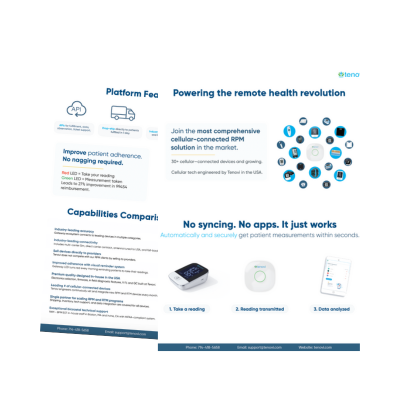
- Collect readings through a cellular Gateway or connected device, with no patient upload step.
- Review the data and respond to alerts through a care team.
- Document time and outcomes to support billing and quality reporting.
The quality of the data step depends on the connectivity layer. A reliable cellular connection removes the friction of apps, pairing, and Wi-Fi. That simplicity supports the steady transmission that drives results.
Understanding Remote Patient Monitoring Healthcare
Remote patient monitoring healthcare has grown from a niche tool into a standard model for chronic and acute care. Adoption climbed sharply, and the evidence has kept pace. Large studies link RPM to better blood pressure control, lower HbA1c, fewer hospitalizations, and lower total cost of care. National guidelines now recommend home monitoring with clinical support as best practice. Reimbursement continues to expand, with new 2026 codes that fund shorter and episodic monitoring. The through line is simple: steady data plus steady follow-up keeps patients stable at home.
Tenovi provides cellular remote patient monitoring devices and a connected platform for healthcare organizations and their partners. The Tenovi Gateway transmits readings automatically, with no apps, pairing, or Wi-Fi for the patient. Care teams get reliable data they can act on, and patients get a simple experience at home. To see how remote patient monitoring healthcare can work for your organization, contact us for a free demo and consultation.
Frequently Asked Questions
1) What is remote patient monitoring healthcare?
Remote patient monitoring healthcare is a service where patients use connected devices at home. The devices send health data like blood pressure, weight, or blood glucose to their care team. Clinicians review the readings and step in early when something looks wrong.
2) How common is remote patient monitoring in 2026?
Adoption has grown quickly and is now common across primary care, cardiology, and hospital-at-home programs. Provider surveys showed clinician use rising from 20% in 2021 to 81% in 2023, and it has continued to climb. Expanded reimbursement and stronger evidence keep driving growth.
3) Does remote patient monitoring reduce hospital visits?
Research links RPM to fewer hospitalizations and emergency visits, especially for high-cost patients. One 2026 Medicare analysis reported a 40.9% drop in inpatient hospitalizations and a 19.9% drop in emergency department visits. Results were consistent across baseline cost groups.
4) Which conditions benefit most from remote patient monitoring?
RPM works well for chronic conditions like hypertension, diabetes, heart failure, and COPD. It also supports acute and post-discharge care in hospital-at-home programs. Any condition that benefits from regular tracking is a candidate.
5) How is remote patient monitoring reimbursed?
Medicare pays for RPM through CPT codes for setup, device supply, and monitoring time. In 2026, CMS added codes 99445 and 99470 for shorter and lighter-touch monitoring. Rates are national averages and vary by locality and final rulemaking.
6) What makes a remote patient monitoring program successful?
Steady patient engagement and reliable data transmission drive results. Programs that pair connected devices with regular care team contact see the largest improvements. A dependable connectivity layer, such as a cellular Gateway, keeps data flowing without patient friction.
Tenovi Expanding Remote Patient Monitoring Healthcare
According to The Boston Consulting Group, healthcare providers anticipate that 60% of primary care patient interactions will be virtual in three to five years. Although, there are still some obstacles associated with digital health reimbursement within private insurance coverage. Embracing remote patient monitoring to align with value-based healthcare can streamline workflows and boost revenue. Discover superior solutions with Tenovi. Reserve your free RPM demo now.