
The global remote patient monitoring (RPM) market is projected to expand rapidly in the next few years, with a compound annual growth rate of 18.9% projected between 2021 and 2028. RPM has become an essential tool for chronic care management, with practices reporting up to with 66% of improved patient outcomes. Yet healthcare professionals may remain hesitant to implement RPM. This article examines the most common perceived barriers to remote patient monitoring adoption and offers evidence-based strategies to help health systems successfully integrate RPM into their care delivery models.
Recent Medicare Data: National Trends in Remote Monitoring
While remote monitoring is highly effective at helping patients manage their medical conditions, national utilization rates have historically been unclear. Tis may be one reason adding to barriers to remote patient monitoring. A recent analysis of comprehensive 2019–2023 Medicare data provides new insights into how these services are being used across the United States.
- Medicare reimbursed over 13.5 million remote monitoring services—totaling roughly $664.5 million.
- Remote patient monitoring was driven primarily by primary care clinicians, who accounted for 48% (over 6.3 million) of these services.
- Driven largely by other specialists, who accounted for 51% (over 173,000) of these services.
- Despite the remote nature of the service, the vast majority of monitoring occurred in physician offices (92% for RPM and 95% for RTM). By contrast, only 4% of these services took place in the patient’s home.
The data demonstrates strong adoption of remote monitoring across various clinical specialties. However, the overwhelming reliance on physician offices rather than at-home care highlights a critical need to address current adoption barriers so that remote monitoring can be fully utilized in the home setting.
Common Barriers to Remote Patient Monitoring
Digital health innovations are widely recognized as a method of preventive care in chronic disease, pregnancy complications, short-term respiratory illness, and more. Still, healthcare professionals may cite these general barriers when considering RPM.
- Behavioral concerns: fear of technology, patient engagement challenges, and questions around clinical evidence.
- Organizational concerns: workflow disruption, care team training, and staff shortages.
- Financial concerns: upfront implementation costs, ROI uncertainty, and reimbursement complexity.
In following sections, we discuss these behavioral, organizational and financial concerns and provide evidence-based strategies to help healthcare professionals better understand the benefits RPM provides.
Fear of the Unknown
Sometimes, fear keeps us safe. Other times, fear prevents us from making significant changes that could provide long-term benefits. One study cites fear of the unknown as a potential barrier to adopting RPM. Some fears noted include motivation, beliefs, or evidence about efficacy.
Technology challenges among less tech-savvy patients and employees can be a barrier. When it comes to setup, syncing, and downloading apps needed for RPM devices patients may need technical support to pair devices. Additionally, access to broadband can present a problem for those living in rural areas.
When devices are user-friendly, work seamlessly, and provide value to patients and a health organizations then outlook, acceptance, and motivation to use new technologies can lessen barriers to remote patient monitoring . Fear becomes less of a factor when technologies are intuitive and improve healthcare services.
RPM Device Set-Up
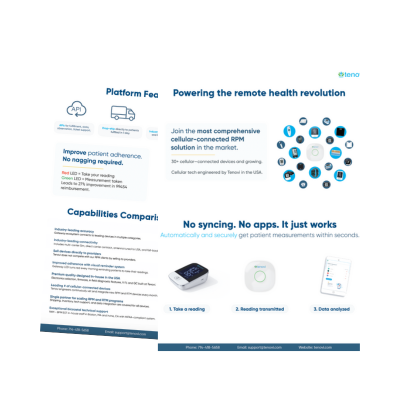
Geriatric patients may experience barriers when it comes to setting up and using RPM devices. Fortunately, some cellular-enabled and cellular-connected RPM devices do not require apps or set up, and work anywhere there is cellular coverage. Cellular RPM devices work out of the box, and an internet connection is unnecessary.
Some Bluetooth devices that connect to a cellular gateway are also ready to use right out of the box for those patients who are not tech-savvy. The patient does not have to log their measurements. The RPM device simply works by transmitting data to a cloud where a physician can view patients’ vital sign data.
Evidence-Based Concerns in RPM
According to a 2023 Nature Medicine study, the last few decades have resulted in unparalleled advancements in medical research. These advances have significantly altered the course and outcome of diseases in all areas of medicine. The COVID-19 pandemic underscored the need for telehealth and telemedicine services. With a whirlwind of digital health advances medicine and clinical research worked to catch up with, understand and improve medical device and software technology. And fortunately, clinical trials and research in telehealth and remote monitoring continue to increase.
The lack of evidence for success is one of the perceived barriers to remote patient monitoring implementation. However, various research studies support the many benefits of telemedicine and RPM services. RPM has minimized readmissions in heart failure, decreased emergency room visits, and lowered the cost of care overall. Remote blood pressure (BP) monitoring can reduce acute care use for patients with hypertension and and COPD, according to a research.
Organizational Barriers to Remote Patient Monitoring
Other barriers to remote patient monitoring originate from workflows at the organizational level. A study of remote patient monitoring during COVID-19 offered many ways health systems can overcome such barriers and expand specialty care to rural regions with healthcare provider shortages.
RPM can lighten the workload for rural healthcare teams by saving time and reducing costs for both the patient and provider. RPM allows clinicians to care for more patients without necessarily spending more time. To create more efficient workflows, healthcare organizations can outsource remote patient monitoring services to third-party remote patient monitoring companies.
Managing patients without RPM, especially those with chronic conditions, is challenging. Remote patient monitoring has been found to maximize patient care and the effectiveness of treatment. With RPM, patient vital sign data is available daily for a healthcare professional to review. Tracking and review of a consistent flow of patient health data promotes better care between visits because clinicians identify complications early and provide prompt treatment.
Barriers to Remote Patient Monitoring in Training
Training for remote patient monitoring platforms was a key concern for healthcare professionals during the COVID-19 pandemic. Formal training is crucial, as healthcare professionals must know how to use RPM devices and platforms. A robust onboarding plan plays a key role in successful remote patient monitoring programs.
Health organizations should focus on training to successfully implement, improve, and increase the use of digital health technologies. For example, daily or weekly briefings with clinical staff, enables teams to ask questions and learn. RPM professionals can discuss how patients are doing and request feedback on procedures and workflow. Frequent communication identifies any changes needed for increased efficiencies in a new remote patient monitoring workflow.
Technical training for staff will be needed in the following areas:
- new clinical workflow procedures
- device hardware
- portal software
- patient onboarding
Financial Concerns as Barriers to Remote Patient Monitoring
One barrier to remote patient monitoring is financial and implementation cost concerns. Remote patient monitoring opens new reimbursement opportunities and enhances performance in value-based payment models. CMS allows Medicare reimbursement for RPM services, which may pose a challenge with medical staff shortages.
One common question is, how many patients can one practice manage? CPT code 99457 enables RPM services to be billed ‘incident to’ under general supervision instead of direct supervision. This means the billing physician does not need to be in the same building while clinical staff performs RPM services. As a result, Medicare providers can contract third-party companies to assist with tasks such as:
- Data review
- Checking up on the patient if they are not using their device regularly
- Device set-up
- Patient Education
Overcoming Financial Barriers to RPM
Understanding what to expect regarding ROI will help your team overcome financial barriers to remote patient monitoring. Medicare reimbursement provides a quick return on investment because the billing period for remote patient monitoring CPT codes is 30 days or at the end of the calendar month.
What can you expect in terms of ROI? The first step for calculating ROI is determining the expected reimbursement amount. If you bill each code once every month, yearly revenue can be estimated using the following equation.
The final step in calculating ROI is subtracting the additional RPM services costs. Third-party RPM companies offer many pricing models. It depends on how much of the RPM process the healthcare practice wants to take on.
For example, a full-service model can cover tasks such as:
- Devices
- Set-up
- Patient education
- Data review
- Patient interaction
Basic service models yield more ROI, though this adds more tasks to the workload. This is why evaluating the cost of the healthcare staff time is essential. Additional charges may include shipping devices to patients, inventory management, onboarding patients, and technical support. Therefore, a full-service model may be worth the investment.
You can visit Tenovi’s ROI Calculator to estimate your ROI by year and month. If you have any questions, you can schedule a time to review the calculator or request a free demo of how our devices work.
Barriers to Remote Patient Monitoring – Understand ROI
Both short- and long-term ROIs can be gained from remote patient monitoring. Not only does RPM lower healthcare costs, but it also improves patient outcomes by promoting timely care. Taking the time to select the right remote patient monitoring company and understanding changes to existing workflows can make a difference in implementing a successful remote patient monitoring program.
The Tenovi RPM platform offers a streamlined solution to boost workflow efficiency and patient satisfaction and generate revenue. Our easy-to-use devices automatically transmit data through our cellular gateway to help optimize care for patients with chronic care conditions such as heart disease, COPD, diabetes, kidney disease, and hypertension. Get in touch to schedule a free demo and consultation.